

 Phoenix 24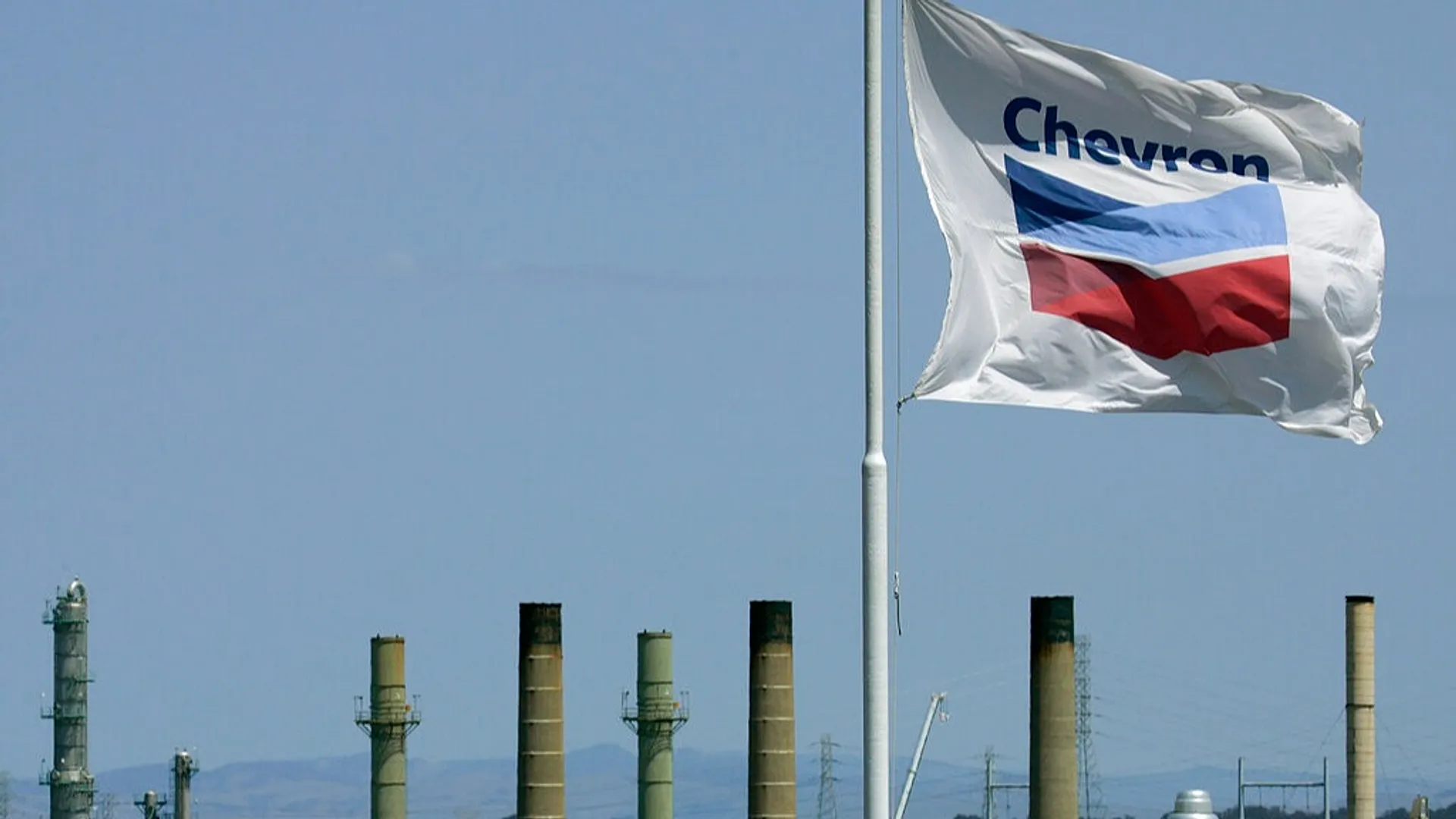
Sanctions are not designed to stop reality, but to reshape its margins.
Caracas, December 29, 2025.
While the United States maintains one of its most extensive sanctions regimes against Venezuela, a single American oil company continues to operate inside the country with formal authorization. The presence of Chevron in Venezuelan oil fields is not an anomaly born of inconsistency, but the visible edge of a calculated sanctions architecture in which prohibition and permission coexist by design.
Chevron’s continued activity does not contradict U.S. sanctions policy; it clarifies it. Washington has not sought a total economic blackout of Venezuela’s energy sector, but a controlled constriction that preserves leverage, information, and optionality. The oil giant’s operations are confined to preexisting joint ventures, tightly regulated, and structurally insulated from becoming a direct financial lifeline for the Venezuelan state. This narrow corridor of legality is not a loophole, but a valve.
At the core of the arrangement lies a pragmatic recognition of oil’s strategic inertia. Venezuela’s reserves remain among the largest globally, and its heavy crude occupies a specific niche in refining systems, particularly in parts of the U.S. Gulf Coast. A complete severance would not only deepen Venezuela’s economic collapse but also remove Washington’s ability to shape outcomes incrementally. Sanctions, in this context, are less about economic punishment in isolation and more about maintaining a calibrated pressure system that can be tightened or relaxed as conditions evolve.
Chevron’s role functions as a form of controlled presence. Its operations are constrained, its revenues limited in scope, and its activities closely monitored. Cash flows are largely absorbed by operational continuity rather than expansion or profit extraction. This arrangement preserves a minimal channel of regulated oil movement while preventing uncontrolled diversification of Venezuelan exports toward less transparent markets. In effect, Chevron becomes a stabilizing placeholder, keeping assets functional without allowing them to become instruments of autonomous state recovery.
For Washington, this configuration offers several strategic advantages. It preserves situational awareness inside a sector otherwise dominated by opaque actors and informal networks. It retains a bargaining chip that can be adjusted in response to political developments. And it avoids the strategic vacuum that would emerge if U.S. firms were entirely absent, leaving the field open to competitors less constrained by regulatory or diplomatic considerations. Sanctions without presence often reduce influence rather than increase it.
From Caracas, the picture is equally pragmatic. With exports constrained, infrastructure aging, and access to capital severely limited, allowing Chevron to operate provides a controlled outlet for crude that might otherwise accumulate unused. The arrangement does not resolve Venezuela’s structural crisis, but it mitigates operational decay. It keeps fields active, preserves technical capacity, and sustains a narrow bridge to international energy markets. In a sanctions environment, survival often depends on managing partial openings rather than seeking full relief.

The broader sanctions regime has intensified elsewhere, particularly in maritime enforcement and third party trade. Interdictions, asset freezes, and transport restrictions signal that Washington is willing to escalate when activity moves outside sanctioned frameworks. Chevron’s immunity from such actions underscores the selective nature of enforcement. Sanctions are not uniform walls; they are grids, designed to channel behavior rather than simply block it.
Critics argue that Chevron’s presence undermines the moral clarity of sanctions by offering relief to an authoritarian system. Supporters counter that absolute isolation rarely produces political transformation and often accelerates humanitarian deterioration. The Chevron licence reflects this tension. It embodies a policy that seeks to balance coercion with containment, punishment with manageability.
What emerges is a portrait of sanctions as an instrument of structural governance rather than blunt force. Chevron is not operating in Venezuela because sanctions failed, but because they are working as intended: restricting uncontrolled flows while preserving strategic points of engagement. The company’s continued presence reveals how modern sanctions function less as total bans and more as adjustable architectures.
In this sense, Chevron is not an exception to the sanctions regime. It is part of its design. Its operations mark the boundary between economic suffocation and strategic oversight. They demonstrate that in contemporary geopolitics, power is exercised not only through denial, but through selective allowance.
Sanctions do not aim to erase economic activity. They aim to shape it. And in Venezuela, that shape still includes Chevron.
Detrás de cada dato, hay una intención. Detrás de cada silencio, una estructura.