

 Phoenix 24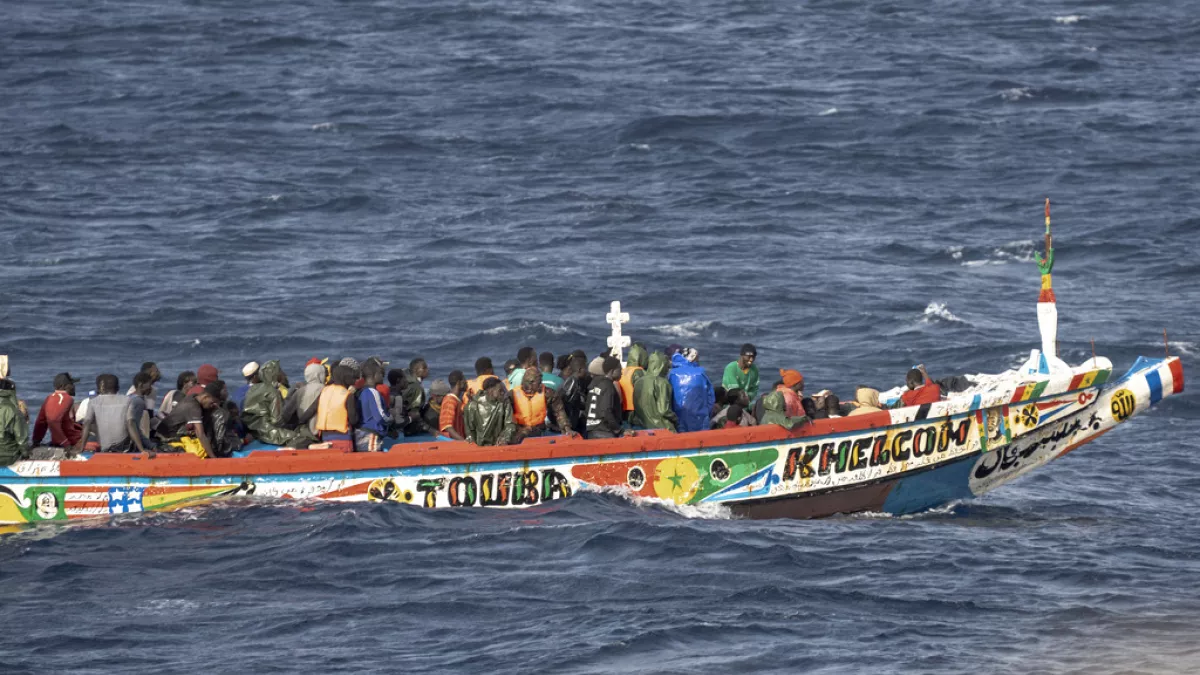
When borders harden on land, they dissolve into water.
Canary Islands, December 29, 2025.
More than three thousand people died in 2025 attempting to reach Spain by sea. The figure, compiled from monitoring of shipwrecks, disappearances, and survivor testimonies, does not describe an accident nor an anomaly. It describes a system. Across the Atlantic route to the Canary Islands and secondary Mediterranean corridors, the sea has become an extension of migration policy, absorbing the risks that states have displaced beyond their territorial lines.
The decline in arrivals to Spain during 2025 has been presented by authorities as evidence of effective border management. Yet this numerical reduction conceals a harsher reality: deterrence has not eliminated movement, it has redistributed danger. As patrols intensified closer to European shores and cooperation with third countries restricted departures, migration routes lengthened, vessels deteriorated, and journeys grew more lethal. Control did not remove the incentive to migrate; it altered the geography of death.
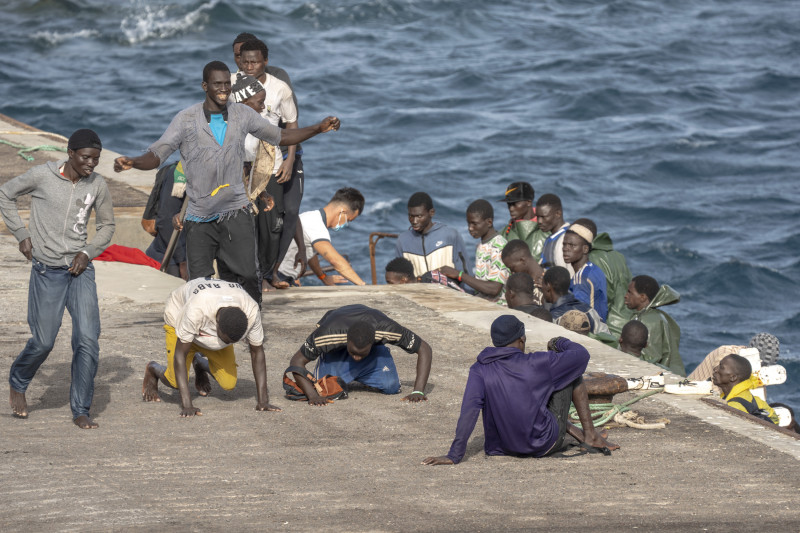
The Atlantic route stands as the clearest illustration. Departures from West African coasts toward the Canary Islands involve days, sometimes weeks, at sea in fragile boats designed for short coastal navigation. Overcrowding, dehydration, engine failure, and navigational error transform these crossings into floating uncertainties. When boats vanish, they rarely do so with witnesses. Disappearances become statistics only after families stop receiving calls, and silence replaces expectation.
What distinguishes 2025 is not only the number of deaths but the normalization of the outcome. Fatalities no longer provoke emergency recalibration; they are absorbed into annual reporting cycles. The sea, in this logic, functions as a buffer zone where responsibility blurs. Death occurs beyond radar, beyond jurisdiction, beyond immediate accountability. It is not that rescue is impossible, but that rescue is conditional.
Among those who died were women and children, undermining narratives that frame maritime migration as a predominantly male risk-taking enterprise. Families board these vessels because legal pathways remain structurally inaccessible, not because danger is misunderstood. The choice is not between safety and risk, but between immobility and exposure. Migration policy often interprets movement as strategy; for migrants, it is survival arithmetic.
Spain occupies a complex position within this architecture. As a frontline state, it balances humanitarian obligations, domestic political pressure, and European coordination. The outsourcing of border control to North African states and the emphasis on interdiction before departure reduce arrivals but increase invisibility. The fewer boats that reach shore, the less visible the cost becomes. Success is measured in arrivals prevented, not lives preserved.
At the European level, migration governance has increasingly prioritized externalization. Agreements, patrol coordination, and funding mechanisms aim to stop movement upstream. This strategy relocates risk without resolving drivers such as economic asymmetry, conflict, environmental stress, and demographic pressure. As long as these drivers persist, routes will adapt. When one corridor closes, another opens further, longer, and deadlier.
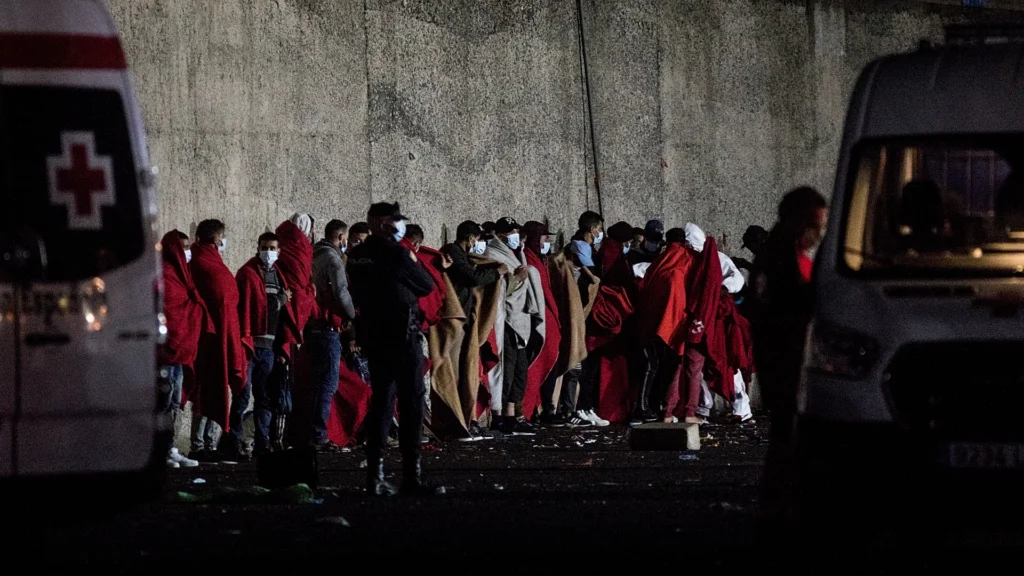
The sea thus becomes a sorting mechanism. Those who survive arrive exhausted, indebted, and traumatized. Those who do not are rarely named. Their absence is registered statistically, not politically. This asymmetry reinforces a system in which mortality functions as an unspoken deterrent. No policy declares death as an objective, yet outcomes suggest it is tolerated.
Maritime law mandates rescue, but enforcement is uneven. Rescue operations are constrained by jurisdictional ambiguity, political hesitation, and selective activation. Civil society vessels that attempt to fill the gap face obstruction and legal pressure, while state capacity remains selectively deployed. The result is a fragmented rescue landscape where survival often depends on chance rather than design.
The reduction in deaths compared to the previous year does not signify resolution. It reflects variability, not improvement. Fewer departures can mean fewer deaths, but it can also mean fewer recorded tragedies while disappearances go uncounted. Absence of evidence does not equal absence of loss when the sea is the archive.
Migration across the Atlantic in 2025 exposes a deeper contradiction at the heart of contemporary border regimes. States seek control without responsibility, deterrence without visibility, enforcement without proximity. The sea provides this distance. It absorbs what policy displaces.
What is unfolding is not a humanitarian crisis in isolation, but a structural outcome of governance choices. When access is denied without alternatives, risk becomes the currency of movement. When borders are externalized, death is externalized with them.
The Atlantic does not kill on its own. It is turned lethal by the pathways forced upon those who cross it. Until migration policy reconciles control with protection, the water between continents will continue to function not as a passage, but as a filter.
Detrás de cada dato, hay una intención. Detrás de cada silencio, una estructura.