

 Phoenix 24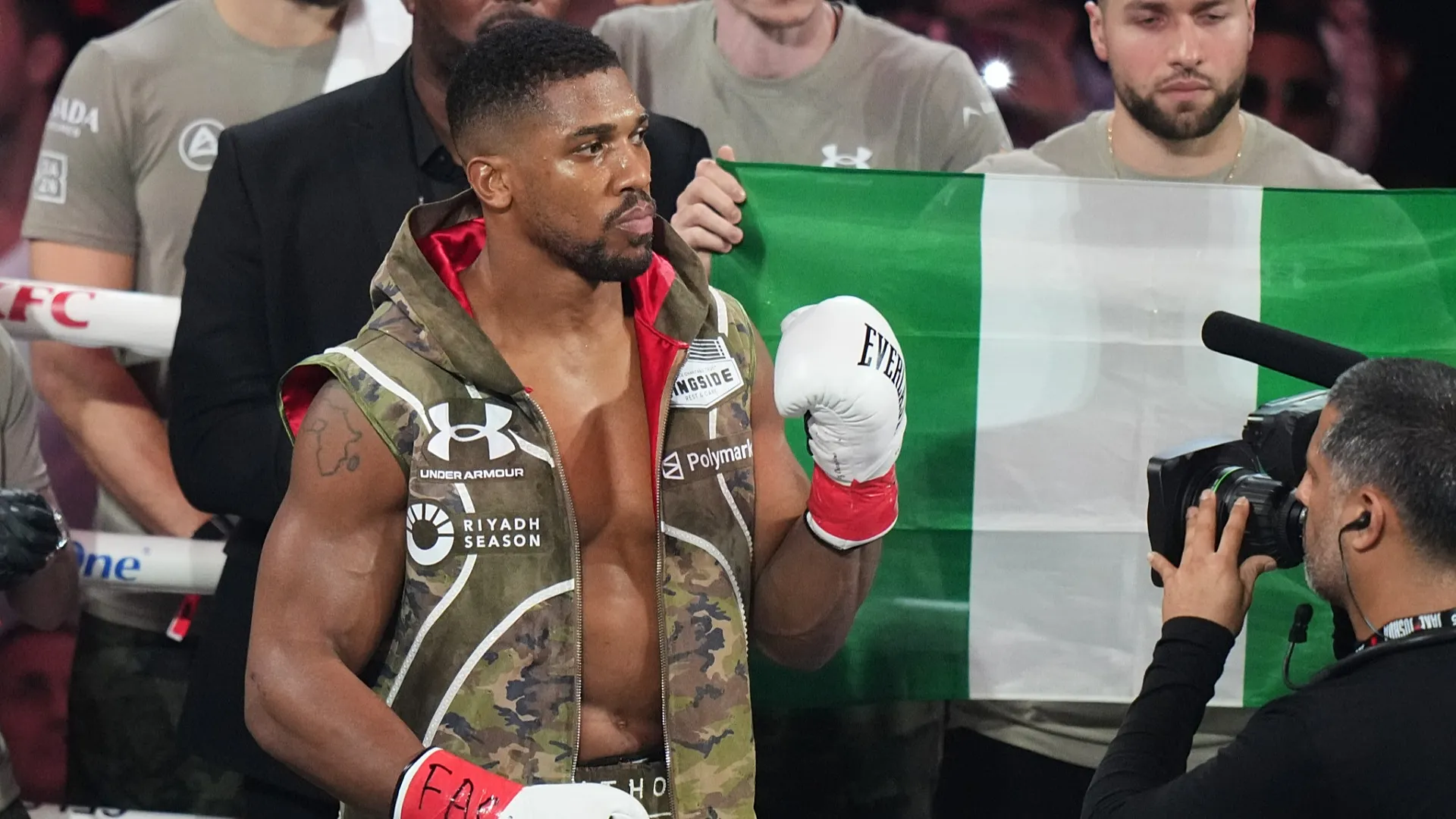
Fame trains the body for impact, but never prepares the body for chance.
Ogun State, Nigeria, December 29, 2025.
Anthony Joshua was injured in a traffic accident in Nigeria, an incident that abruptly shifted attention away from stadiums, scorecards, and training camps toward the unregulated terrain of everyday life. The former heavyweight champion, accustomed to environments where risk is calculated and controlled, encountered a different form of vulnerability, one not framed by rules or rounds, but by circumstance.
The accident occurred while Joshua was traveling by road in southwestern Nigeria, a region he has visited frequently in recent years as part of a personal reconnection with his roots. Reports indicate that he sustained non life threatening injuries and received medical attention shortly after the crash. While his physical condition was described as stable, the event itself resonated far beyond its immediate medical outcome.
Joshua’s public identity has been built on discipline, preparation, and resilience. In the ring, every movement is trained, every impact anticipated. Boxing is violent by design, but it is also contained by structure. Outside of it, there are no referees, no medical teams waiting at the edge, no agreed boundaries for harm. The accident highlighted this contrast with unsettling clarity.
For many, the news carried an emotional weight disproportionate to the injuries themselves. That reaction is inseparable from Joshua’s status as more than an athlete. Over the past decade, he has come to represent a particular modern archetype: global, disciplined, visibly strong, yet publicly reflective. His career has unfolded under intense scrutiny, marked by victories, defeats, reinvention, and a carefully managed public presence that balances confidence with restraint.
The incident also unfolded far from the arenas that usually frame his life. Nigeria, in this context, was not a backdrop but a meaningful setting. Joshua has spoken openly about his connection to the country, about identity shaped across borders, and about belonging that is not confined to citizenship or residence. His presence there was personal rather than promotional, which lent the event a quieter, more intimate dimension.
Unlike injuries sustained in competition, this episode carries no narrative of comeback or redemption. There is no opponent, no rematch, no storyline to resolve. It is simply an interruption. That lack of structure makes it more unsettling. Public figures are often absorbed into narratives that give meaning to harm. Accidents resist that impulse. They are unresolved by nature.
The response from the sporting world was immediate but restrained. Messages of concern focused less on career implications and more on human relief that the outcome was not worse. This tone reflected an unspoken recognition that some moments sit outside analysis. They do not invite speculation about rankings or schedules. They remind audiences that even the most conditioned bodies remain subject to randomness.
Joshua’s career has already included moments of public reckoning. Losses that challenged invincibility, victories that required patience rather than dominance, periods of silence where reinvention occurred away from cameras. This incident does not belong to that arc. It does not add meaning to it, nor subtract. It simply exists alongside it, uninvited.
There is also an asymmetry in how such events are perceived. Similar accidents occur daily without notice. What transforms this one into news is not severity, but recognition. That disparity is uncomfortable, yet revealing. Visibility does not increase vulnerability, but it amplifies awareness when vulnerability surfaces.
For Joshua, the accident may pass quietly, absorbed into private memory rather than public record. For observers, it lingers as a reminder that strength is contextual. The skills that dominate one environment do not transfer automatically to another. Mastery in the ring offers no protection against the unpredictability of a road.
No official narrative will follow. There is nothing to frame, nothing to explain. Recovery, if needed, will be personal. Life will resume without ceremony.
What remains is a brief, dissonant pause in the story of a man usually defined by control. A moment where the limits of preparation became visible. Not as failure, but as fact.
Detrás de cada dato, hay una intención. Detrás de cada silencio, una estructura.