

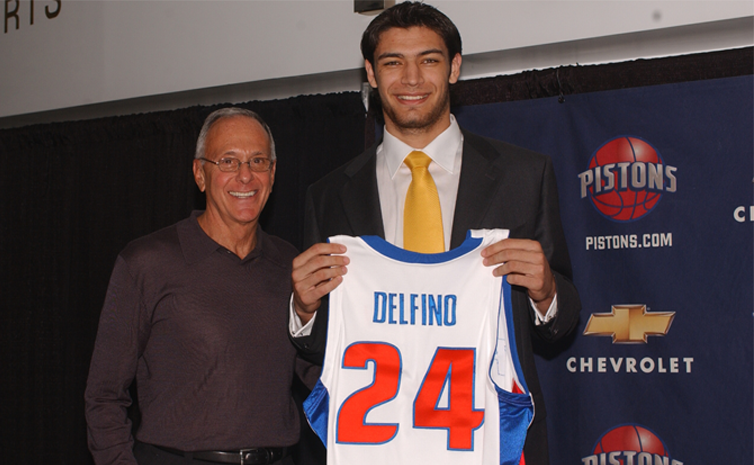
 Phoenix 24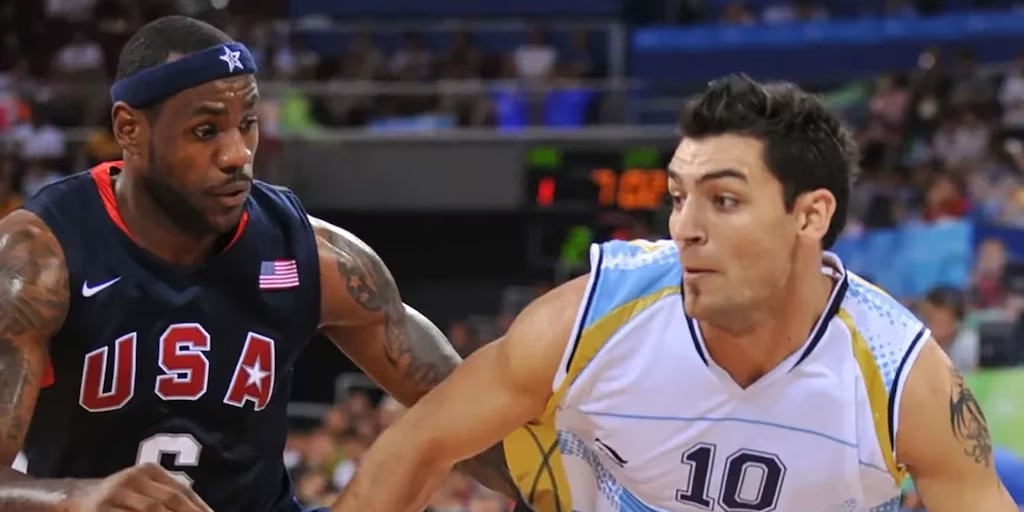
Carlos Delfino’s Second Act Inside the NBA
Ten surgeries didn’t end the story, they rewired it.
Los Angeles, February 2026. The comeback is not the kind that gets measured in points or minutes. Carlos Delfino is back in the National Basketball Association ecosystem in a different uniform, one made of words, timing, and perspective. After walking away from professional basketball at 42, he has returned this season as a television analyst, and this weekend he is scheduled to serve as a featured commentator for the All Star Game in Los Angeles, staged in the Clippers’ new arena. It’s a clean headline, but it hides a messier truth: Delfino didn’t simply retire. He outlasted an injury arc that, for most careers, is a quiet extinction.
In Argentine basketball memory, he sits inside the cultural mythos of the Golden Generation, the team that learned to look at the world’s best and refuse intimidation. Athens 2004 remains the stamp of that era, when Argentina won Olympic gold against a United States roster full of NBA talent. Delfino’s career, however, was never only about that medal or even about the years he spent in the league. His most revealing credential is endurance under surgical reality: a decade-long fight against a devastating sequence of injuries that forced him into the operating room again and again, and still didn’t extract surrender.
The pivot point, as he recounts it, traces back to 2013 with the Houston Rockets. A violent play, a collision of bodies and momentum, ended with a fracture to the scaphoid bone. The moment is memorable partly because it involved an iconic opponent, Kevin Durant, but the real damage was not cinematic. It was clinical, stubborn, the kind of injury that refuses to heal neatly and can quietly demolish a professional future. That fracture didn’t just cost him games. It triggered a long sequence of operations, rehab cycles, setbacks, and psychological whiplash. At one point, the accumulated toll kept him away from the court for three full years.
What makes that stretch hard to translate is that the hero narrative is tempting and incomplete. Surgery is not a single obstacle; it is a lifestyle of limitations, recalibrations, and bargaining with your own body. Delfino describes the period as a long process of injuries and operations that kept stretching in time, yet he also frames it as fuel. Not in the motivational-poster sense, but as a stubborn internal logic: he was still young when the first major injury struck, he still believed his career had chapters left, and he could not accept that other people were declaring his ending without his consent. He wasn’t chasing nostalgia. He was protecting authorship.
That is why his retirement, when it finally arrived, reads as a choice rather than a collapse. Delfino explains that he finished playing at 42 because he recognized a shift that every athlete fears but few articulate calmly: he was no longer having fun the way he used to. He could still train, still compete, still grind, but the internal payoff had changed. His rule was simple and surprisingly strict. He would play as long as he enjoyed it. When the enjoyment faded, he stopped. No forced farewell tour. No dramatic rescue attempt. He decided, down to the last training session, and then closed the door.
That decision matters because it reframes everything that follows. A player who leaves with unresolved hunger often carries the sport like a wound. Delfino claims the opposite sensation: he felt “empty” in a good way, as if he had left everything inside the rectangle and therefore didn’t need to keep chasing the feeling outside it. He says he doesn’t miss the physical act of playing, he doesn’t feel the compulsion to get back on a court and do what he used to do. And that psychological closure, paradoxically, is what allows him to watch basketball again, to attend games, and to speak about the sport without pain. During the worst injury years, he couldn’t even watch. Now he can analyze. That is not a small transition. It’s identity repair.
The broadcast role also reveals a different form of competitiveness. Commentating is not passive. It demands clarity, restraint, and the ability to translate split-second reads into language that carries meaning for people who have never guarded a professional scorer. Delfino admits the vocal side is new territory, but he frames the work as a bridge between experience and audience: sharing stories, explaining what he sees and feels during a game, keeping it as simple as possible without insulting the intelligence of the viewer. The job isn’t to sound clever. The job is to make the game legible.
His presence during All Star weekend is not only a personal milestone; it aligns with a theme he returns to repeatedly: the National Basketball Association is now openly selling the idea that elite basketball is global. Delfino was part of an earlier wave that helped normalize international talent in the United States. Now he watches a league where the most dominant figures are frequently not American, and where the marketing logic increasingly leans into that reality. He reads the new All Star framing, especially the emphasis on international stars, as a recognition of what the sport has already become: there is life outside the NBA, and the NBA feeds on that life. It imports it, repackages it, and then pretends it invented it. Delfino’s tone is not bitter about that. It’s pragmatic. The league is a product machine, and global superstars expand the product.
When he talks about modern leaders, the examples are strategic: Giannis Antetokounmpo lifting a smaller-market franchise to a title, Nikola Jokić turning Denver into a sustained power despite not being a glamour destination. For Delfino, that is the deeper story of the current era. Talent no longer needs the biggest cities to become central. The right player can drag the center of gravity toward himself. That is a league-level shift in how power is distributed, and it mirrors something he lived in micro form: being an Argentine in an American league, carrying a different basketball accent, and proving it could win.
In the end, the “new life” is not that he found a job after retirement. It’s that he found a way to stay close to the game without negotiating with injury anymore. He still trains, still moves, still plays casually, but he refuses to force anything. Pleasure first. Ego second. After ten operations, that hierarchy is not philosophy. It is survival intelligence. And it may be the most transferable lesson Delfino offers now that his voice, not his jumper, is the instrument: longevity is rarely about toughness alone. It’s about knowing when persistence is love and when it becomes self-harm.
Detrás de cada dato, hay una intención. Detrás de cada silencio, una estructura.
Behind every data point, there is an intention. Behind every silence, a structure.