

 Phoenix 24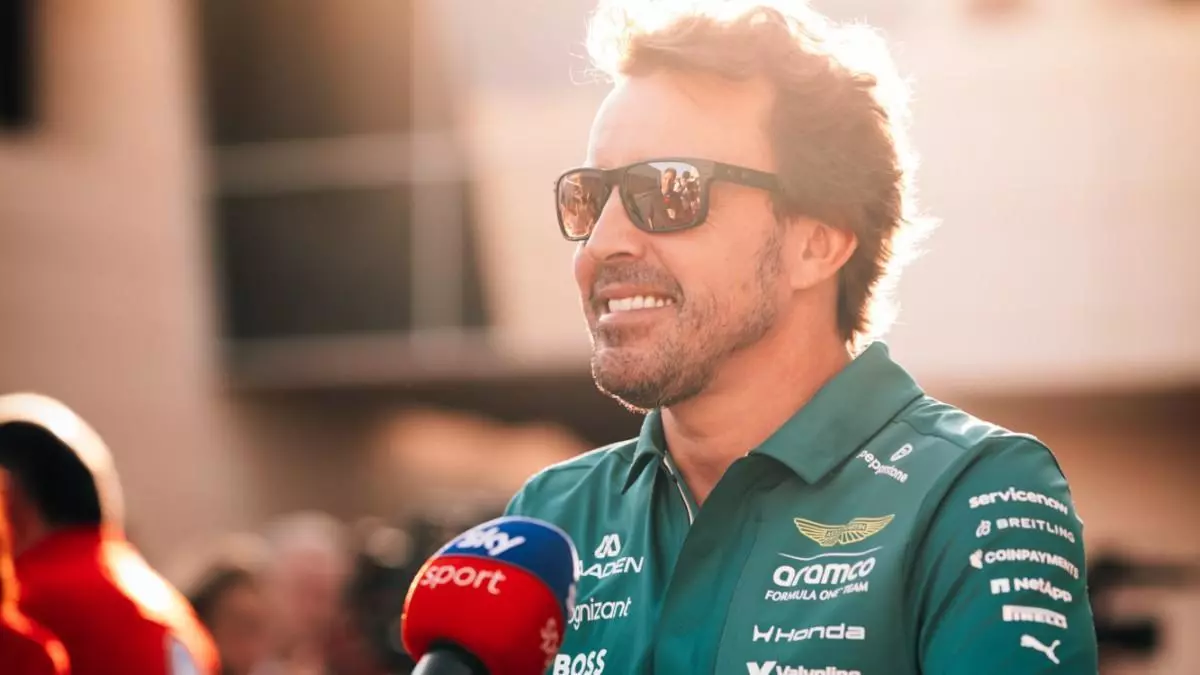
When drivers joke, systems are talking.
Sakhir, February 2026.
Fernando Alonso’s latest jab at Formula 1’s incoming rulebook landed with the casual tone of paddock humor, but it carried a sharper message: the sport is drifting toward a form of driving that feels programmed. Spanish radio coverage captured the essence of his complaint in a line that stings because it is simple, the driver’s primary function is “dying” as energy management and compliance replace instinct. That is not nostalgia for noise or danger as a lifestyle choice. It is a veteran diagnosing a shift in where power sits, from the cockpit to the regulation text.
The 2026 overhaul is not a tweak. Formula 1’s own technical summaries and major broadcasters describe a power balance that moves toward an approximate 50 50 split between electric and combustion, with a much larger role for battery deployment and harvesting. The sport sells that as relevance, sustainability, and modern engineering credibility, which are not trivial aims. Yet the same architecture encourages a kind of lap that is optimized around energy windows, not only around bravery and precision. Once the lap becomes an energy spreadsheet, the driver is still essential, but essential in a different way.
Alonso’s irony resonates because other drivers are voicing parallel frustration, even when they choose different words. Reuters reported Max Verstappen describing the new car as “not much fun” and comparing it to “Formula E on steroids,” language that signals a fear of spectacle decay rather than a fear of change itself. Lando Norris pushed back publicly, framing the new rules as a challenge to solve, a difference in temperament that also reveals a generational split in what drivers expect from the machine. Either way, the paddock is arguing about joy, and joy is the audience’s currency.
What makes Alonso’s critique structurally credible is that he points to the nature of restriction, not only to the sensation of speed. Reporting in specialist outlets noted his frustration with how tightly certain behaviors are prescribed, including the rate at which energy must be reduced and the way overtaking tools are constrained by defined activation zones. In plain terms, the system does not simply reward skill, it instructs the skill. When a driver says it feels “very limited by the FIA,” he is not accusing anyone of bad faith. He is describing a governance model where discretion is treated as a risk to be minimized.
This is the paradox of modern Formula 1 governance. The post scandal era built credibility by making scoring, policing, and engineering more rule bound, because ambiguity is where manipulation lives. Over time, rule bound can become over bound, and the sport begins to resemble a controlled laboratory whose outputs are impressive but whose inputs feel sanitized. The FIA’s mandate is safety and fairness, and the series also needs cost control and manufacturer stability. However, every additional safeguard can also reduce the space where genius looks like genius.
The political economy behind this shift is difficult to ignore. Formula 1 is now a global entertainment product that must satisfy manufacturers, regulators, broadcasters, and host governments, each with different risk tolerances. A power unit that leans harder into electrification signals alignment with the broader industrial direction of mobility and energy transition, which matters for brand logic and sponsorship. It also makes the engineering story legible to policymakers who want the sport to be a “technology platform,” not merely a spectacle. In that environment, the driver becomes one variable among many, not always the headline variable.
The Middle East test setting adds another layer to the story, not because of identity but because of function. Pre season testing in Bahrain is where the sport rehearses its future under controlled visibility, a stage that markets interpret as early truth even when teams disguise performance. When drivers complain there, they are not speaking only to fans. They are also signaling to the rule makers, the teams, and the manufacturers that the user experience of the product is at risk. Alonso’s words matter precisely because he has lived multiple eras and can compare what the sport asked of a driver in each.
There is a psychology of audience risk here that the paddock understands better than it admits. A sport that feels too engineered can lose emotional volatility, and emotional volatility is what converts casual viewers into loyal ones. Alonso’s complaint about needing to conserve energy in corners to deploy it on straights is not a technical quibble, it is an aesthetic warning. The fear is that the most memorable moments, the ones that look like a human wrestling a machine at the edge, become rarer. When those moments thin out, narratives weaken, and the product becomes harder to defend against alternatives.
None of this means the 2026 era is doomed, or that electrification is incompatible with drama. Constraints can also produce new forms of skill, and a more complex car can elevate drivers who think faster and adapt better. Reuters also reported Alonso sounding motivated while remaining uncertain about how far he wants to go beyond 2026, a reminder that even critics are not disengaged. The real question is whether the sport can balance legitimacy and safety with a cockpit experience that still feels expressive. If the rulebook turns every lap into compliance, the next wave of jokes will not sound like jokes.
La narrativa también es poder. / Narrative is power too.