

 Phoenix 24
Observer status can still carry real costs.
Brussels, February 2026.
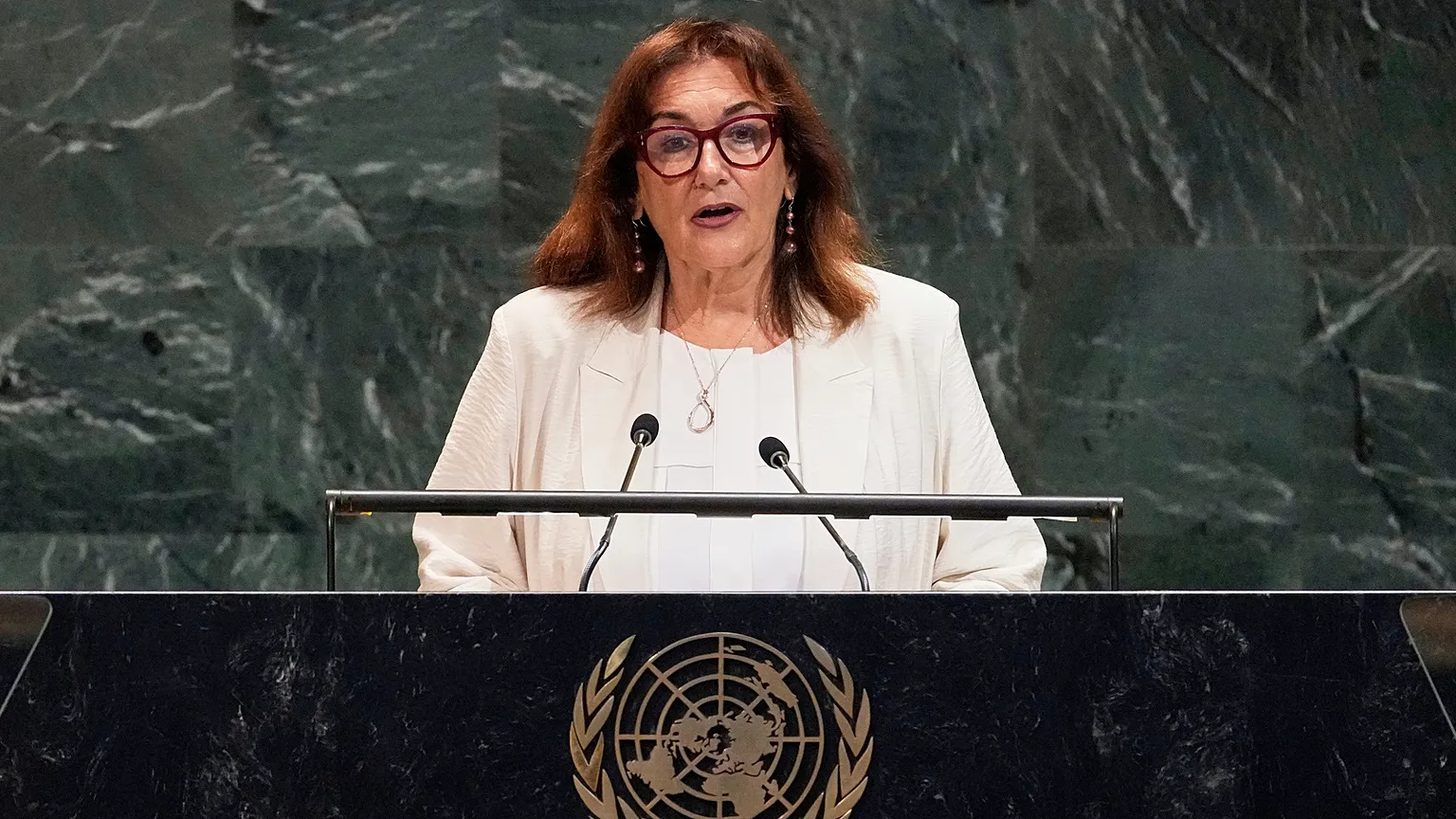
The European Commission will send Commissioner Dubravka Šuica, the EU’s Mediterranean portfolio holder, to Washington for the first formal meeting of President Donald Trump’s so called Board of Peace. The decision is a calculated presence move rather than an endorsement, designed to avoid a familiar trap in high velocity diplomacy: decisions being framed, delegated, and operationalised in rooms where Europe is not represented.
Brussels is drawing a sharp line between attendance and membership. EU officials have indicated the Commission is not joining the board, and Šuica’s role is framed as that of an observer focused on Gaza related discussions, particularly ceasefire implementation, reconstruction, and post war recovery. That distinction matters because it allows Europe to show up where narratives and priorities are being set, while maintaining legal and political distance from a structure whose mandate and governance remain contested.
Those concerns are not cosmetic. Commission representatives have pointed to doubts about the board’s statute and compatibility with established international frameworks, including principles associated with the United Nations system. In practical terms, Brussels is signalling that any parallel forum which starts assigning authority over transitions, mandates, or governance models outside recognised multilateral channels could generate precedents the EU cannot afford to normalise, especially while it continues to argue that rules and legitimacy are not optional in crisis management.
The Gaza file is the immediate driver. The EU has positioned itself as a major humanitarian contributor for Palestinians and a key funder of stabilisation efforts, which creates both leverage and vulnerability. Money can open doors, but it does not guarantee decision rights, and observer status rarely comes with veto power. In reconstruction politics, the actor that controls the framework ultimately controls which funds become central and which are treated as ancillary.
The board’s composition adds a second layer of friction. Reports around the initiative indicate the presence of Russia’s president in the board’s senior structure, a fact that makes formal European membership politically toxic while the war in Ukraine remains unresolved. At the same time, individual EU member states appear tempted by direct channels to Washington, with some signalling participation in observer form and others moving closer to membership. That divergence is precisely what Brussels fears: external forums that reward bilateral access and, over time, erode EU cohesion from within.
For Washington, the design is strategically efficient. Allowing observers projects openness while keeping agenda control concentrated. It also pressures participants to operate inside rules they did not negotiate, because being in the room can quickly become indistinguishable from being part of the machinery. For Brussels, the risk is symmetrical. Staying out invites marginalisation. Showing up risks legitimising the structure through proximity, photographs, and silence, even if formal membership is denied.
Šuica’s portfolio is not accidental. A Mediterranean commissioner can speak credibly about humanitarian corridors, governance transition, basic services, and regional spillover, while keeping the conversation framed as stabilisation rather than geopolitics. Yet that framing can be used against Europe, recasting the EU as a technical payer rather than a political co author. The old division of labour lurks in the background: some actors define the order, others bankroll the recovery.
This episode fits a broader pattern in today’s security environment. When traditional multilateralism is seen as slow or constrained, powerful states create alternative platforms that move faster, concentrate control, and reshape legitimacy in real time. The EU’s instinct is to defend rules. The system’s incentive is to reward speed and leverage. Observer status is the compromise that tries to reconcile both, and it often satisfies neither.
If the Board of Peace becomes a durable venue that shapes post war governance models, Europe’s question will not be whether it attended the first meeting. It will be whether it influenced the architecture before it hardened into a new normal.
Truth is structure, not noise. / Truth is structure, not noise.