

 Phoenix 24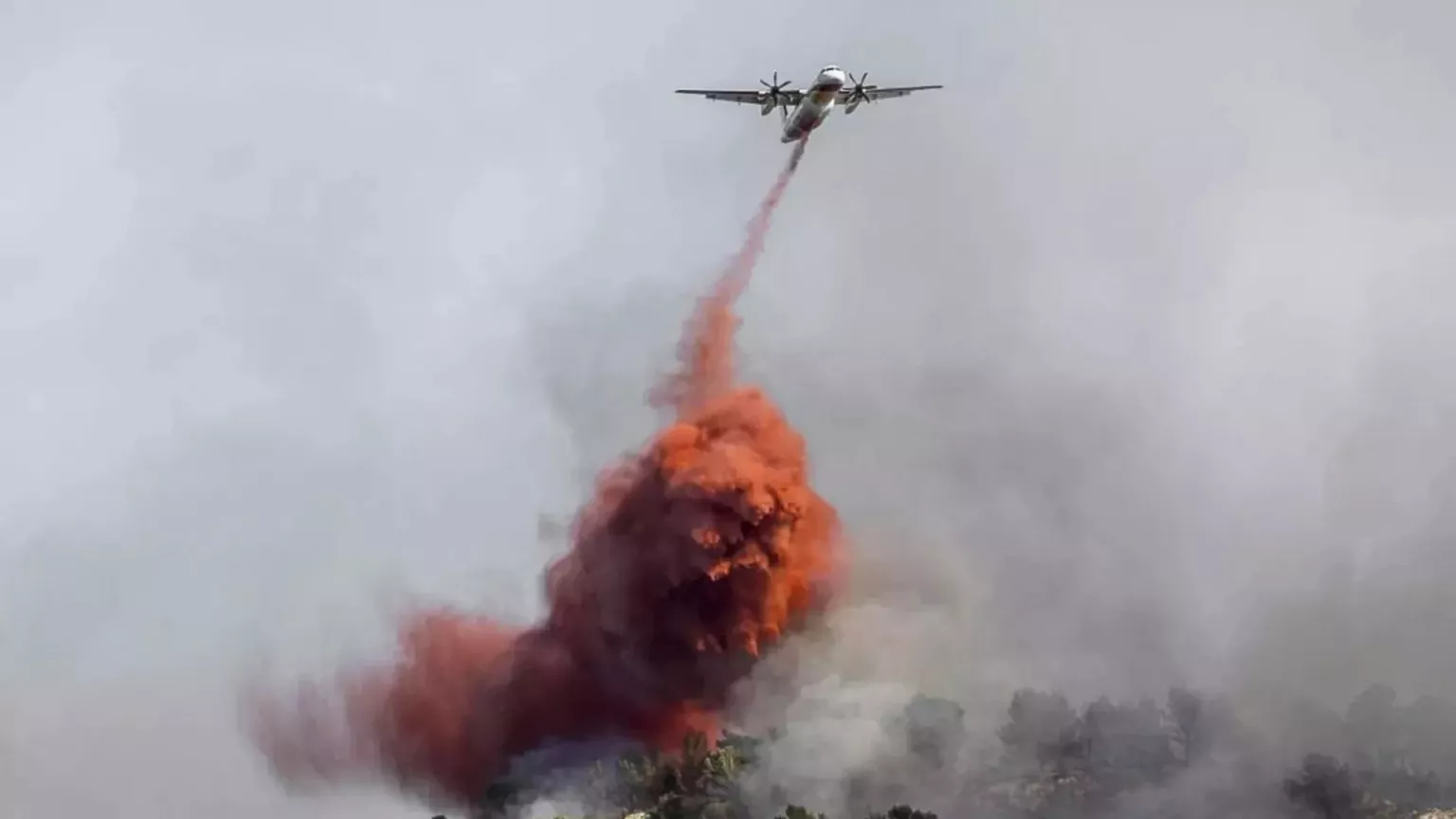
The flames reached across invisible treaties, but no agreement could extinguish the fear.
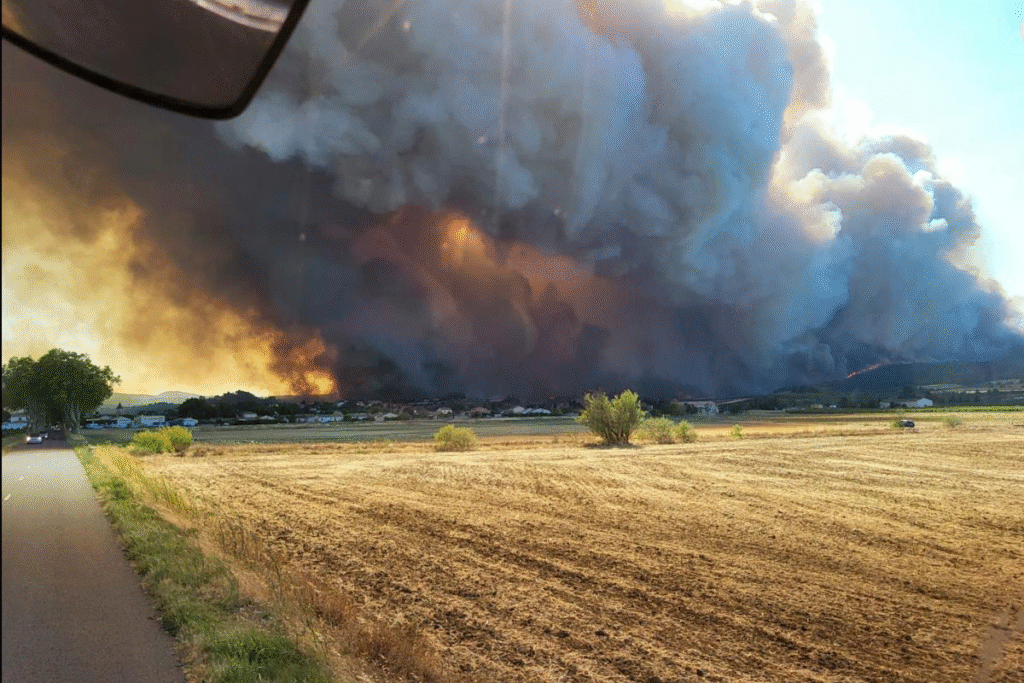
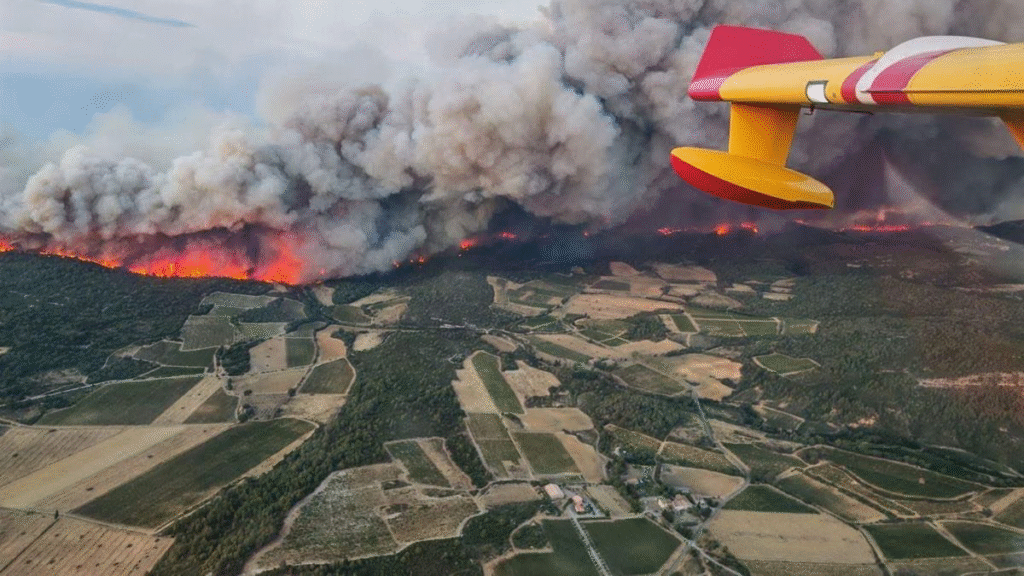
Perpignan, August 2025 — A relentless wildfire has scorched the southern border of France, tearing through the Pyrénées-Orientales and reigniting not only the underbrush but also long-standing doubts about Europe’s ability to manage climate-driven disasters across national lines. In under 48 hours, the blaze claimed at least one life, left another person missing, and consumed more than 800 hectares of land near the Franco-Spanish frontier.
The fire broke out near the towns of Saint-André and Argelès-sur-Mer, dangerously close to the Le Perthus crossing point. France’s regional prefecture confirmed that more than 300 firefighters, backed by aerial resources from both France and Spain, have been deployed in a race against the advancing flames threatening homes, infrastructure, and protected ecosystems.
Soaring temperatures under an unrelenting heatwave—currently affecting over 15 departments in France—have pushed alert levels to red, according to Météo-France. The European Environment Agency warned in its latest risk assessment that southern Europe is among the most vulnerable regions to extreme wildfires, intensified by climate change and prolonged drought conditions.
The unidentified victim, reportedly found charred in a forested zone, may have been a local resident or a forestry worker attempting to flee. More than 200 people have already been evacuated as a precaution, and several key regional roads have been closed to prevent further tragedy.
Paris swiftly activated the EU Civil Protection Mechanism, but coordination with Madrid has proven slower than expected. Diplomatic sources consulted by Phoenix24 reveal that while a Franco-Spanish environmental crisis cooperation pact was signed in 2021, its operational effectiveness remains patchy and untested. The current crisis, with flames crossing administrative borders without a unified response protocol, has drawn criticism from crisis management experts at the University of Toulouse and the European Climate Institute.
“This catastrophe illustrates that Europe’s political borders are not prepared to confront a borderless phenomenon like climate collapse,” stated French researcher Sophie Lavillard, who has worked with the UN Office for the Coordination of Humanitarian Affairs in environmental disaster zones.
Beyond the immediate human toll, the fire threatens to devastate protected biodiversity zones in the Pyrenees and could cause economic losses exceeding €50 million, according to early estimates from the South European Natural Disasters Observatory. Vineyards—economic lifelines for the region—are among the most severely impacted, potentially disrupting wine exports to Germany and Italy.
Hospitals in Perpignan have reported a surge in smoke-related respiratory issues, with at least 64 people treated for respiratory distress, according to the Centre Hospitalier Universitaire de Perpignan. The French Directorate-General for Public Health has classified the situation as “critical,” especially for children and the elderly.
The fire also reignites the debate around investment in climate surveillance and prevention. Despite repeated warnings from the World Meteorological Organization (WMO), both France and Spain have cut budgets for reforestation and satellite monitoring over the past five years, as noted in a joint report by Greenpeace Europe and the University of Leeds’ Climate Resilience Centre. Meanwhile, the European Copernicus system has flagged thermal activity in the region far above historical averages.
An investigation has been opened by the Perpignan prosecutor’s office into the fire’s origin, with authorities not ruling out human involvement—whether through negligence or arson. The French National Forestry Office (ONF) indicated that the affected area had seen repeated attempts at illegal land occupation, potentially adding a sociopolitical dimension to the unfolding crisis.
Yet amid the smoke, resilience emerges. Dozens of local volunteers—farmers, retirees, and students alike—have joined the firefighting effort, helping clear evacuation paths, distribute food, and support displaced families. Their response, while commendable, also underscores the lack of a decentralized civil crisis infrastructure.
While European governments fine-tune statements, the fire advances with the ruthless logic of carbon.
And if this week has proven anything in the French borderlands, it’s that political maps do not stop the heat—and the next European crisis may not begin in Brussels, but in the ashes of a burning forest.
This piece was developed by the Phoenix24 editorial team using reliable sources, public data, and rigorous analysis in alignment with the current global context.
Esta pieza fue desarrollada por el equipo editorial de Phoenix24 con base en fuentes confiables, datos públicos y análisis riguroso, en coherencia con el contexto global vigente.