

 Phoenix 24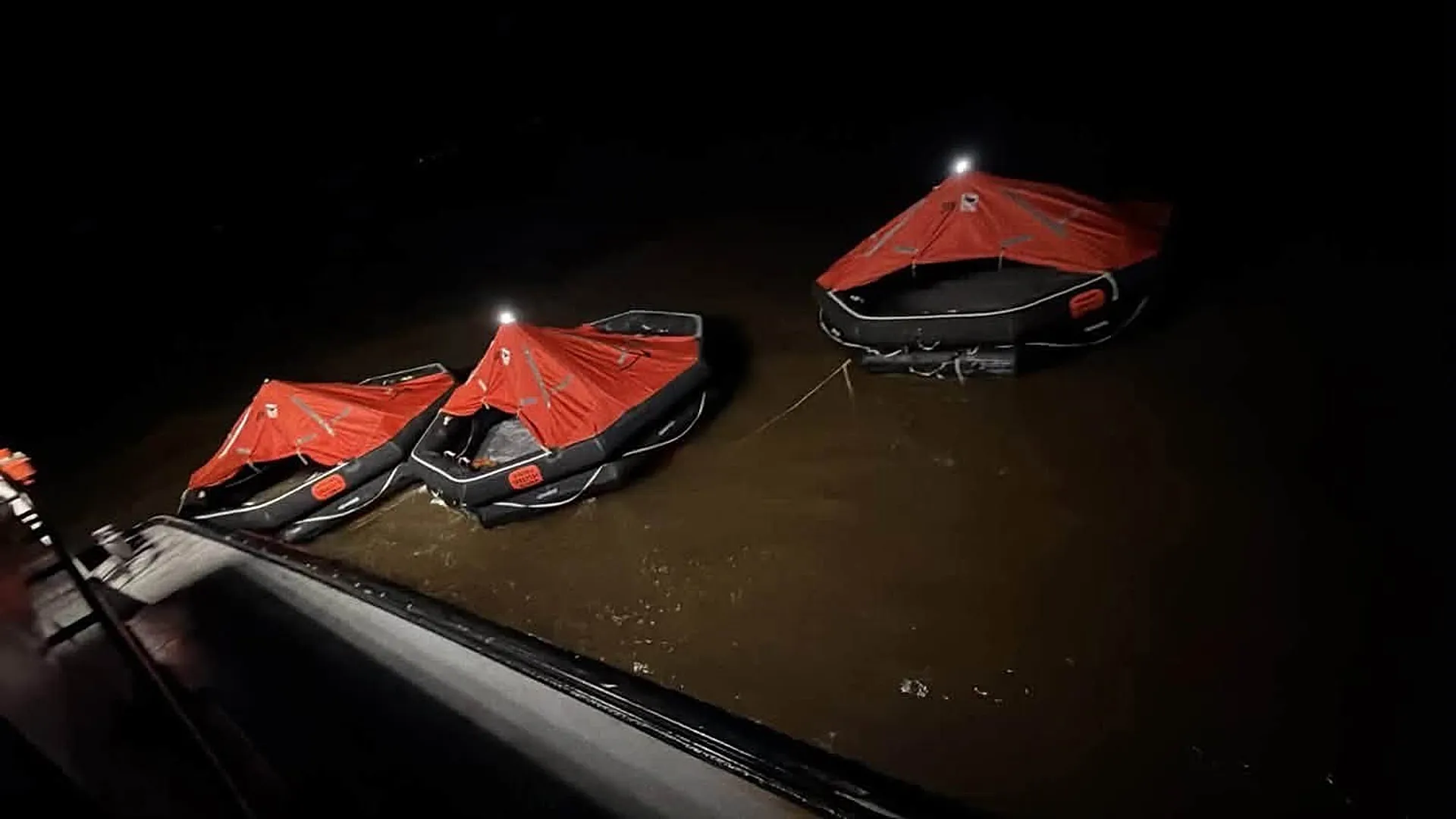
Rescuers race against time across Atlantic waters.
Georgetown | July 2026
A passenger ferry carrying 116 passengers and crew members capsized off Guyana’s Atlantic coast, triggering a large-scale search-and-rescue operation involving the country’s coast guard, military units and private vessels. The MV Barima was travelling from Georgetown to Port Kaituma when authorities received a distress call shortly after 11:00 p.m. on Saturday.
Euronews initially reported that at least 53 people had been rescued as daylight improved visibility in the affected area. A subsequent official update raised that number to 67 survivors, including 15 children, while emergency teams continued searching for the remaining occupants. Authorities had not confirmed any deaths at the time of the latest available information.
The vessel reportedly capsized near the Pomeroon River, an area characterized by extensive waterways connecting coastal settlements with communities in Guyana’s interior and northwestern regions. The precise cause of the emergency remained unknown, and officials had not yet established whether weather conditions, mechanical failure, cargo distribution or another factor contributed to the incident.
Public Works Minister Juan Edghill said the emergency call was received at approximately 11:01 p.m., activating an operation supported by government and privately operated boats. Rescue teams later located the ferry after distress flares were fired from the area, providing an essential visual signal during the nighttime response.
Guyana’s Defence Force deployed air and marine resources, while the coast guard coordinated efforts to locate survivors and transport them to safety. The arrival of daylight expanded the ability of aircraft and vessels to search surrounding waters, life rafts and sections of the overturned ferry.
Prime Minister Mark Phillips assumed a leading role in the government’s response and communicated updates about the number of people recovered. He expressed confidence that additional survivors could be located as visibility improved and rescue teams extended their search around the accident site.
Medical personnel were also dispatched aboard another government vessel to provide immediate attention to passengers brought out of the water. Maritime emergencies can produce injuries associated with impact, exposure, dehydration and prolonged immersion, making rapid medical evaluation essential even when survivors initially appear stable.
Officials said the MV Barima carried 250 life jackets, two rigid life rafts and six inflatable life rafts. That equipment may have increased the chances of survival by allowing passengers to remain above water while waiting for rescuers, although authorities had not yet explained how the evacuation unfolded or whether everyone had immediate access to flotation devices.
The MV Barima was built in 1939 and measures approximately 40 metres in length. Its age is expected to become an important element of the investigation, but the date of construction alone does not establish the cause of the accident. Maritime investigators will need to examine the vessel’s maintenance history, structural condition, operating certificates, loading records and actions taken by the crew.
The ferry regularly serves the route between Georgetown and Port Kaituma, transporting both passengers and cargo to communities across Guyana’s North West District. Such vessels provide essential connections in regions where waterways function as major transportation corridors and where road access may be limited or impractical.
For residents of remote settlements, ferry services carry more than travellers. They move food, medical supplies, commercial products and equipment while connecting families with hospitals, government offices, schools and economic centres. Any prolonged suspension of the route could therefore create consequences extending beyond the immediate emergency.
The sinking also places renewed attention on the safety of ageing vessels that continue operating because of their strategic importance to isolated communities. Earlier in 2026, Guyanese authorities announced plans for significant repairs to several transport vessels, including the MV Barima, as part of an effort to strengthen maritime connections and improve service reliability.
The existence of planned rehabilitation work does not demonstrate that a previously identified defect caused the capsizing. It does, however, make the vessel’s maintenance and inspection records particularly relevant to determining whether the emergency could have been anticipated or prevented.
Investigators are expected to reconstruct the ferry’s final hours, beginning with its departure from Georgetown and continuing through the distress call. They will examine passenger and crew manifests, cargo placement, communications, weather information and testimony from survivors.
Determining the exact number of people aboard will also remain a priority. Early reports referred to 116 passengers and crew members collectively, but maritime investigations frequently require authorities to compare official manifests with actual boarding information to ensure that every person has been identified.
The evolving rescue figures illustrate the difficulty of reporting during an active maritime emergency. Numbers can change rapidly as survivors reach shore, private boats communicate their recoveries and authorities consolidate information from several response teams.
The immediate priority remains accounting for every passenger and crew member. Questions concerning responsibility, vessel condition and regulatory oversight will follow once the rescue phase concludes and investigators can examine the evidence without interfering with emergency operations.
For the families awaiting information, each official update carries enormous significance. The difference between the number of people aboard and the number confirmed safe represents individuals whose status remains uncertain rather than a confirmed casualty count.
The MV Barima emergency has demonstrated the importance of distress communications, flotation equipment and coordinated action between public agencies and civilian vessels. It has also exposed the vulnerability of communities whose mobility and supply chains depend on maritime infrastructure operating across difficult and isolated environments.
As rescue teams continue searching Guyana’s waters, the central objective remains unchanged: locate the missing, protect the survivors and establish how a routine journey developed into a national emergency.
Phoenix24 | Every rescue restores hope beyond the horizon. Cada rescate devuelve esperanza más allá del horizonte.