

 Phoenix 24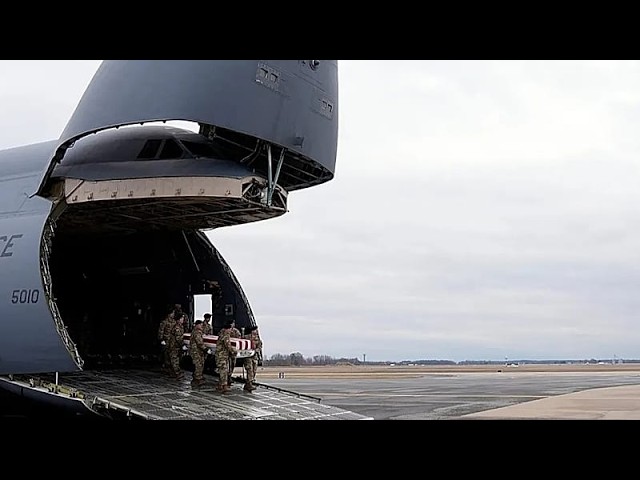
Direct military losses deepen an expanding regional confrontation.
Amman | July 2026
Two United States service members were killed and another remained missing after Iranian ballistic missile and drone attacks targeted American forces in Jordan, marking a significant escalation in the conflict between Washington and Tehran. Euronews reported that the casualties occurred on July 17 as US and allied forces attempted to repel the incoming strikes.
The United States Central Command said four additional service members were medically evacuated to Jordanian hospitals following the attack. They were subsequently discharged, while other personnel evaluated for minor injuries returned to their regular duties.
The identities of the soldiers were initially withheld until their relatives could be formally notified. The military described the two deaths as combat fatalities and confirmed that the search for the missing service member remained active.
These were the first American military deaths attributed to direct Iranian fire since the opening days of the war. The latest casualties raised the total number of US service members killed during the conflict to 16, while more than 430 have been wounded.
The attack occurred amid renewed exchanges between Iran and the United States following the weakening of a provisional ceasefire negotiated approximately one month earlier. Tehran suspended its commitments to that arrangement as military operations intensified across the region.
Iranian forces launched coordinated missile and drone attacks against American positions and infrastructure in Jordan and several Gulf countries. Air defense systems intercepted part of the assault, but some projectiles reached their intended areas and caused casualties and material damage.
Jordanian authorities reported intercepting Iranian missiles entering the kingdom’s airspace. The country has attempted to defend its territory while avoiding deeper involvement in a confrontation that increasingly places regional states between Washington and Tehran.
The American deaths illustrate the risks faced by countries hosting US military personnel. Jordan is one of Washington’s closest regional security partners and provides strategic facilities supporting operations against extremist organizations and other threats across the Middle East.
The United States maintains tens of thousands of military personnel throughout the region. Their presence includes air bases, naval forces, logistics units, missile defenses and intelligence capabilities positioned across Jordan, Iraq, Kuwait, Bahrain, Qatar, Saudi Arabia and surrounding waters.
Washington responded to the Jordan attack by targeting Iranian military facilities and units associated with the operation. Central Command said subsequent strikes hit surveillance centers, logistical infrastructure, underground weapons storage sites and maritime capabilities.
The American military stated that the operations were designed to reduce Iran’s capacity to launch further attacks against US troops and regional partners. The response extended a series of consecutive nights of bombing against Iranian targets.
Iranian authorities reported that American strikes during the previous three weeks had killed at least 50 people and wounded more than 500 inside the country. Among the reported targets were bridges, military sites, electrical infrastructure and desalination facilities.
Damage to water and power systems has intensified concern about the humanitarian consequences of the conflict. Iranian officials said the destruction of one desalination plant interrupted supplies for approximately 10,000 people, while another facility was damaged on an island inside the Strait of Hormuz.
The maritime passage has become the strategic center of the confrontation. A substantial share of internationally traded oil moves through the Strait of Hormuz, connecting producers in the Gulf with global markets.
Iran restricted maritime traffic after the United States and Israel launched attacks against the country on February 28. Tehran has maintained that it should exercise control over the passage and has attempted to impose conditions on vessels seeking to cross it.
The international community has traditionally regarded the strait as an essential navigation route. Any prolonged disruption can affect energy supplies, transportation costs and consumer prices far beyond the immediate conflict zone.
Restrictions and attacks around the passage have already reduced shipping activity and contributed to higher oil prices. The economic pressure gives Tehran leverage while exposing Gulf countries to consequences involving energy exports, water production and civilian aviation.
Kuwait suffered some of the most serious damage from the latest Iranian response. Missile and drone attacks struck an oil installation and a desalination facility, injuring several people and causing fires that interrupted parts of the country’s electricity-generation system.
Kuwaiti authorities temporarily restricted airspace and rescheduled flights as defense systems confronted additional incoming threats. The country depends heavily on desalination for drinking water, making attacks against those facilities particularly consequential.
Air-raid sirens also sounded in Bahrain and Saudi Arabia, while Iraq reported intercepting attack drones near Erbil. The widening geographical scope demonstrated how quickly direct confrontation between Washington and Tehran can affect neighboring states.
Iran’s leadership warned that continued American attacks would produce severe consequences. Tehran also declared parts of the provisional ceasefire ineffective after accusing Washington of expanding military pressure rather than negotiating a permanent settlement.
The United States has reinforced its naval and aerial presence while seeking to weaken Iran’s ability to threaten shipping and allied territory. Washington has also renewed restrictions around Iranian ports in an effort to limit oil exports and reduce the financial resources available to Tehran.
The confrontation now combines military, economic and infrastructure pressure. Both sides are attempting to impose costs without conceding control over the Strait of Hormuz, but each round of retaliation increases the possibility of wider regional escalation.
For the United States, the deaths in Jordan introduce a more immediate domestic dimension. American casualties can intensify political scrutiny over the objectives, duration and human cost of military operations.
For Jordan, the attack demonstrates the vulnerability created by geography and strategic partnership. Its government must defend national territory while managing the risks associated with hosting foreign forces during a rapidly expanding conflict.
The deaths of the two soldiers represent more than another statistic within the war. They show that missile and drone exchanges are increasingly reaching military personnel and civilian infrastructure across borders.
As retaliation continues, the distinction between controlled deterrence and uncontrolled regional warfare is becoming progressively more difficult to maintain.
Phoenix24 | Every escalation narrows the path back to peace. Cada escalada estrecha el camino de regreso a la paz.