

 Phoenix 24
Their rise turned friendship, image and controlled rebellion into a cultural language that still shapes global entertainment.
London, June 2026
Thirty years after the release of “Wannabe,” the Spice Girls remain one of the clearest symbols of the cultural confidence that surrounded Britain in the mid-1990s. Their arrival was often dismissed as a carefully manufactured commercial operation, yet the group’s impact extended far beyond record sales, merchandising and celebrity. They changed the way female pop groups were marketed, challenged the dominance of male bands and transformed the phrase “Girl Power” into a global expression of friendship, independence and collective identity.
The group consisted of Melanie Brown, Melanie Chisholm, Emma Bunton, Geri Halliwell and Victoria Adams, later Victoria Beckham. Each member was assigned a distinctive nickname by the press: Scary, Sporty, Baby, Ginger and Posh. Those identities simplified their personalities into recognizable cultural archetypes, allowing fans to choose the member with whom they most strongly identified.
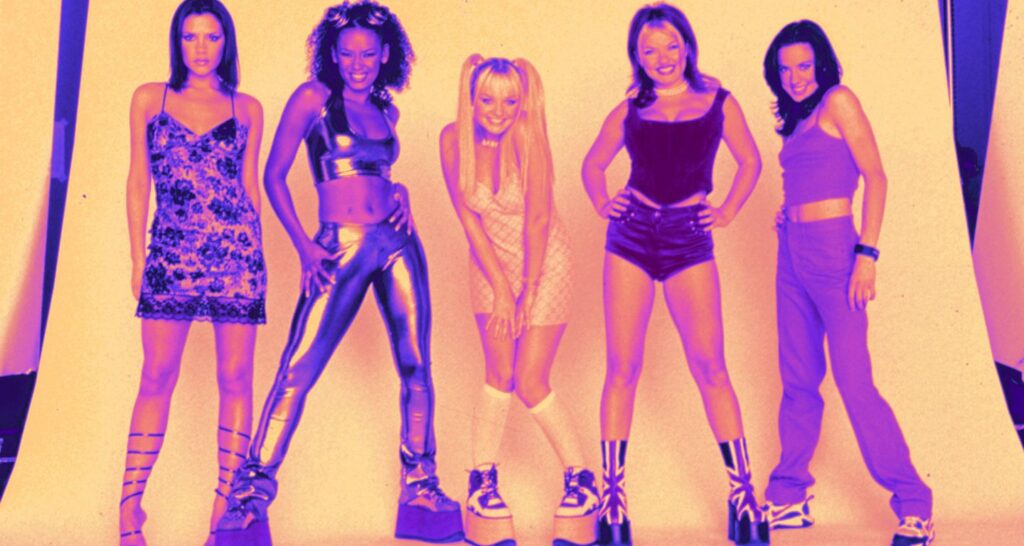
The formula was commercially powerful, but it was not entirely artificial. Their differences created an image of female friendship based on contrast rather than uniformity. The Spice Girls did not present themselves as five interchangeable performers following the same choreography and wearing identical costumes. Their appeal depended on the idea that individuality could coexist with loyalty to the group.
“Wannabe” arrived in Britain in July 1996 and quickly became an international phenomenon. Its energetic video, filmed inside the former Midland Grand Hotel in London, showed the group interrupting a formal gathering, running through corridors and refusing to behave according to the expectations surrounding them. The apparent disorder was central to the message. The five women did not ask for permission to enter the room, occupy the camera or redirect attention toward themselves.
The song reached the top of charts across dozens of countries and became one of the most successful debut singles in pop history. Its central message placed friendship above romantic attachment, turning the familiar language of the love song into a declaration of female solidarity. The lyrics were uncomplicated, but their repetition made the idea instantly recognizable to young audiences around the world.
The group’s rise coincided with Cool Britannia, the term used to describe Britain’s renewed cultural optimism during the 1990s. Britpop bands, fashion designers, visual artists, magazines and club culture contributed to an image of a younger, more confident country. The Spice Girls did not create that movement, but they became one of its most internationally visible expressions.
Their connection with the period became unmistakable at the 1997 Brit Awards, when Geri Halliwell performed in a short dress displaying the Union Jack. The garment became an enduring image of British popular culture, joining music, fashion and national symbolism in a single televised moment. It also demonstrated how effectively the group understood the visual economy of global celebrity.
Politicians recognized their influence and attempted to associate themselves with the optimism surrounding the group. The proximity between pop culture and New Labour contributed to the idea that Britain was entering a younger and more modern political era. Yet the Spice Girls were never fully contained by that institutional narrative. Their interviews were frequently chaotic, direct and difficult to control.
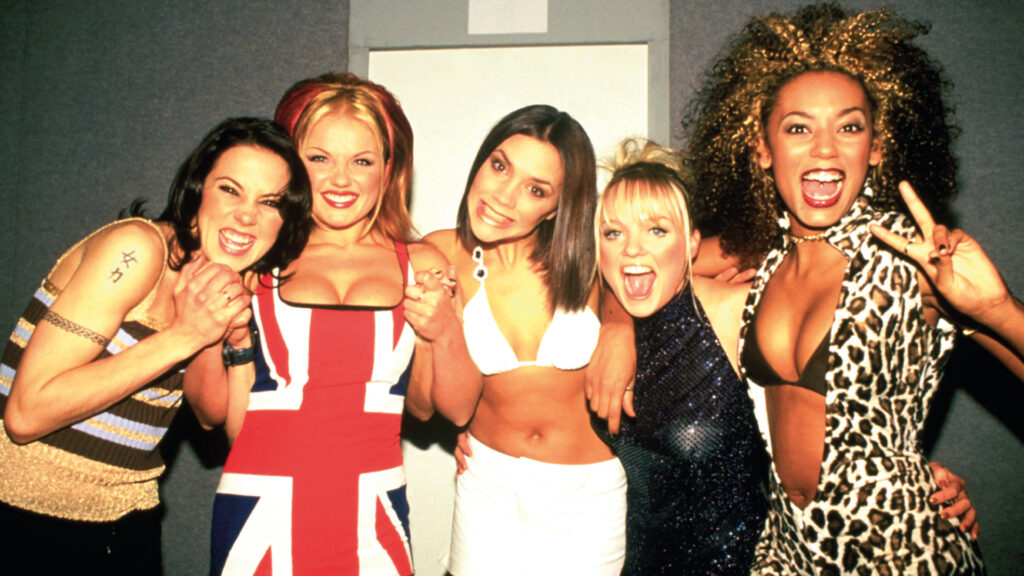
That unpredictability distinguished them from the polished pop acts expected to repeat carefully approved messages. The members interrupted one another, challenged interviewers and projected confidence that sometimes appeared excessive. Their behavior could be interpreted as spontaneous authenticity or as part of the performance, but either reading reinforced the group’s identity.
“Girl Power” became the slogan attached to this attitude. Critics argued that the phrase offered an accessible but limited version of feminism, one easily adapted to advertising and consumer products. The group encouraged girls to be confident and support one another without directly confronting the deeper structures of economic, political or social inequality.
That criticism remains valid, but it does not fully explain the slogan’s influence. For many young listeners, the Spice Girls provided an early vocabulary for asserting personal boundaries, valuing friendships and refusing passive roles. Their message did not need to function as a complete political theory to produce cultural consequences.
The group’s commercial reach was extraordinary. Albums, films, dolls, clothing, magazines, soft drinks and numerous promotional partnerships turned the Spice Girls into one of the most extensive pop brands of the decade. Their image appeared almost everywhere, making it difficult to separate the music from the products surrounding it.
This commercialization encouraged the assumption that their success had been entirely designed by managers and record executives. The group had indeed emerged from auditions organized to create a female alternative to the male bands dominating the market. Yet the members later separated from their original management and pursued greater control over their careers before signing with Virgin Records.

Their songs were also not simply handed to them as finished products. The members participated in writing much of their material and worked closely with producers who understood their personalities. The resulting music combined dance pop, rhythm and blues, ballads and elements of British club culture without demanding technical complexity from its audience.
The first album, Spice, became a global success, while Spiceworld expanded the group’s visual and commercial mythology. Their 1997 film presented an intentionally exaggerated version of their lives, blending comedy, celebrity cameos and self-parody. The film was widely criticized at the time but later acquired cult status because it captured the strange intensity of the phenomenon.
The group’s original dominance was brief. Halliwell left in 1998, and the remaining members released another album before pursuing individual careers. Their limited initial period together contributed to the mythology. The Spice Girls became associated with an explosion of energy rather than a gradual institutional career.
Later reunions demonstrated that the audience had not disappeared. All five performed during the closing ceremony of the 2012 London Olympic Games, creating one of the event’s most celebrated pop moments. A 2019 stadium tour without Beckham also attracted large crowds, confirming that their songs had moved beyond nostalgia into intergenerational recognition.
Their influence can be seen in later groups that combined distinct personalities, carefully developed fan relationships and messages of female confidence. The global success of acts from Little Mix to BLACKPINK reflects a music industry in which the girl group is no longer treated as a secondary alternative to male performers.
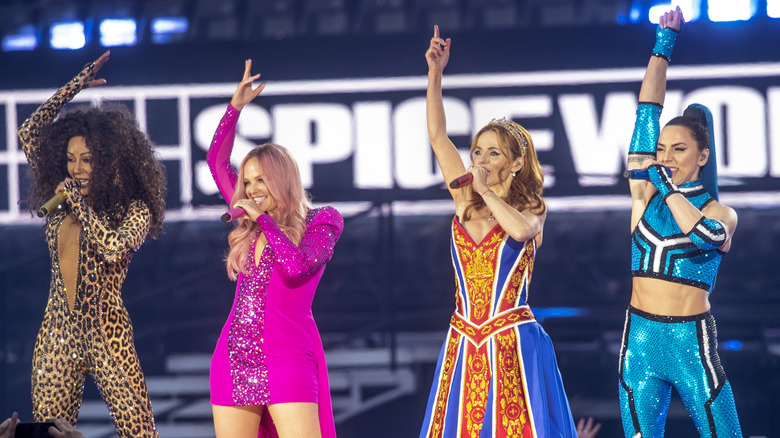
The Spice Girls also anticipated the contemporary relationship between music and personal branding. Each member could be marketed individually while strengthening the group as a whole. Their personalities became cultural products before social media made that strategy routine.
Thirty years later, the limitations of the phenomenon are easier to recognize. Their empowerment language was frequently absorbed by consumer culture, their image depended on simplified identities and the commercial machinery surrounding them was enormous. None of those contradictions eliminates their importance.
The Spice Girls succeeded because they were both a product and something more difficult to manufacture. They represented marketing discipline alongside uncontrolled energy, commercial ambition alongside genuine friendship and simplified feminism alongside a meaningful shift in how young women could occupy popular culture.
Cool Britannia faded, political optimism weakened and the music industry changed beyond recognition. The five personalities introduced through “Wannabe” nevertheless remain instantly identifiable. Their legacy survives not because the contradiction between authenticity and commerce was ever resolved, but because they turned that contradiction into the language of modern pop.
El poder del pop comienza cuando una canción se convierte en identidad. / The power of pop begins when a song becomes an identity.