

 Phoenix 24
No safe level challenges social habits.
GENEVA, SWITZERLAND — July 2026.
Alcohol remains deeply integrated into celebrations, professional gatherings, family rituals and everyday social life across many cultures. This normalization often makes its risks appear distant, limited to addiction, reckless driving or visibly excessive consumption. Recent scientific evidence presents a more complex and concerning picture, showing that alcohol affects physical and mental health even at levels commonly described as moderate. Public health specialists increasingly argue that the substance should be understood not as an ordinary social product, but as a psychoactive carcinogen with measurable population-level consequences.
The World Health Organization attributes approximately 2.6 million deaths each year to alcohol, equivalent to nearly one in every 20 deaths worldwide. Its effects extend far beyond liver disease, reaching cancer, cardiovascular complications, gastrointestinal disorders, unintentional injuries, violence and dependence. Specialists emphasize that alcohol can affect almost every organ system, particularly when consumption becomes frequent or prolonged. The central warning is that lower intake may reduce risk, but it does not eliminate risk entirely.

One of the most important shifts in public health messaging is the rejection of the idea that moderate drinking is automatically safe. Earlier cultural narratives often presented limited alcohol consumption as acceptable, harmless or even potentially beneficial in specific contexts. Newer reviews have challenged that assumption by associating alcohol with multiple diseases at consumption levels below one drink per day. The current medical consensus increasingly recognizes that there is no completely safe threshold for the body.
A major 2026 analysis by the Institute for Health Metrics and Evaluation reviewed 843 studies and linked alcohol intake to increased risk of at least ten cancers and other serious diseases. The study found that harm rises as consumption increases, but also identified risk at levels lower than those traditionally considered moderate. The affected systems include the liver, pancreas and several other areas of physical health. This evidence strengthens calls for warning labels, clearer public campaigns and policy approaches comparable to those used for tobacco.
Alcohol also increases the probability of injury because it changes coordination, reaction time, judgment and risk perception. A 2021 scientific review found that consuming around two standard drinks can double the risk of injury in several settings. Episodes of heavy drinking can increase that risk dramatically, in some cases up to 50 times depending on the amount consumed and the type of injury involved. These findings matter because injuries linked to alcohol often affect not only the drinker, but also passengers, pedestrians, families and communities.
The mental health consequences are equally important because alcohol can temporarily appear to improve mood while gradually worsening psychological stability. Many people drink to relax, socialize or reduce inhibition, but those effects are short-lived and can conceal deeper harm. Prolonged consumption has been linked to disrupted sleep, impaired memory, reduced concentration and worsening mood. These changes can create a cycle in which a person drinks to relieve distress that alcohol itself has helped intensify.
Alcohol is especially concerning for people experiencing anxiety, depression or emotional dysregulation. Research on individuals with alcohol-use disorder has found that active drinkers can present higher levels of depression, hopelessness, impulsivity and difficulty identifying emotions compared with abstinent patients. Specialists note that sobriety is often associated with improved psychological well-being and reduced risk of relapse or suicide. This does not mean every person who drinks will develop severe symptoms, but it does show that alcohol can aggravate vulnerabilities that already exist.
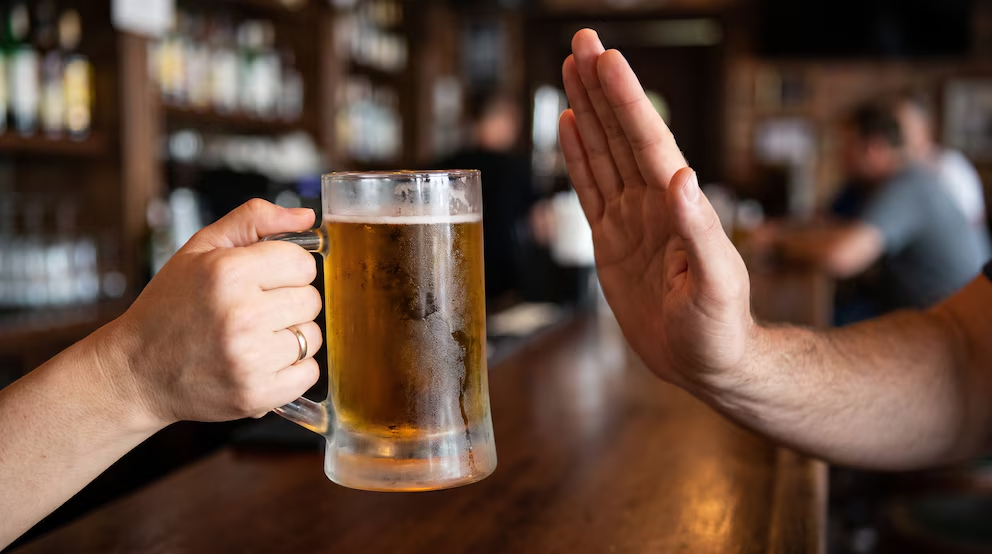
The social acceptance of alcohol complicates prevention because the substance is marketed, offered and celebrated in environments where risk is rarely discussed. A toast, a free bar or a casual after-work drink can feel culturally neutral even when repeated patterns accumulate biological and psychological consequences. Public health experts argue that consumers need transparent information rather than moral judgment or alarmist messaging. The goal is to make risk visible so people can make decisions based on evidence instead of tradition, advertising or peer pressure.

Reducing alcohol-related harm requires individual awareness, stronger public communication and health systems capable of identifying problematic patterns early. People who choose to drink can lower risk by reducing frequency, avoiding binge episodes, not mixing alcohol with driving or medication and seeking support when consumption becomes difficult to control. Governments can contribute through labeling policies, limits on marketing, screening programs and better access to mental health and addiction services. The central message is not simply that heavy drinking is dangerous, but that alcohol carries measurable risks even when consumption appears socially normal.
Phoenix24 — Global news with clarity and perspective.