

 Phoenix 24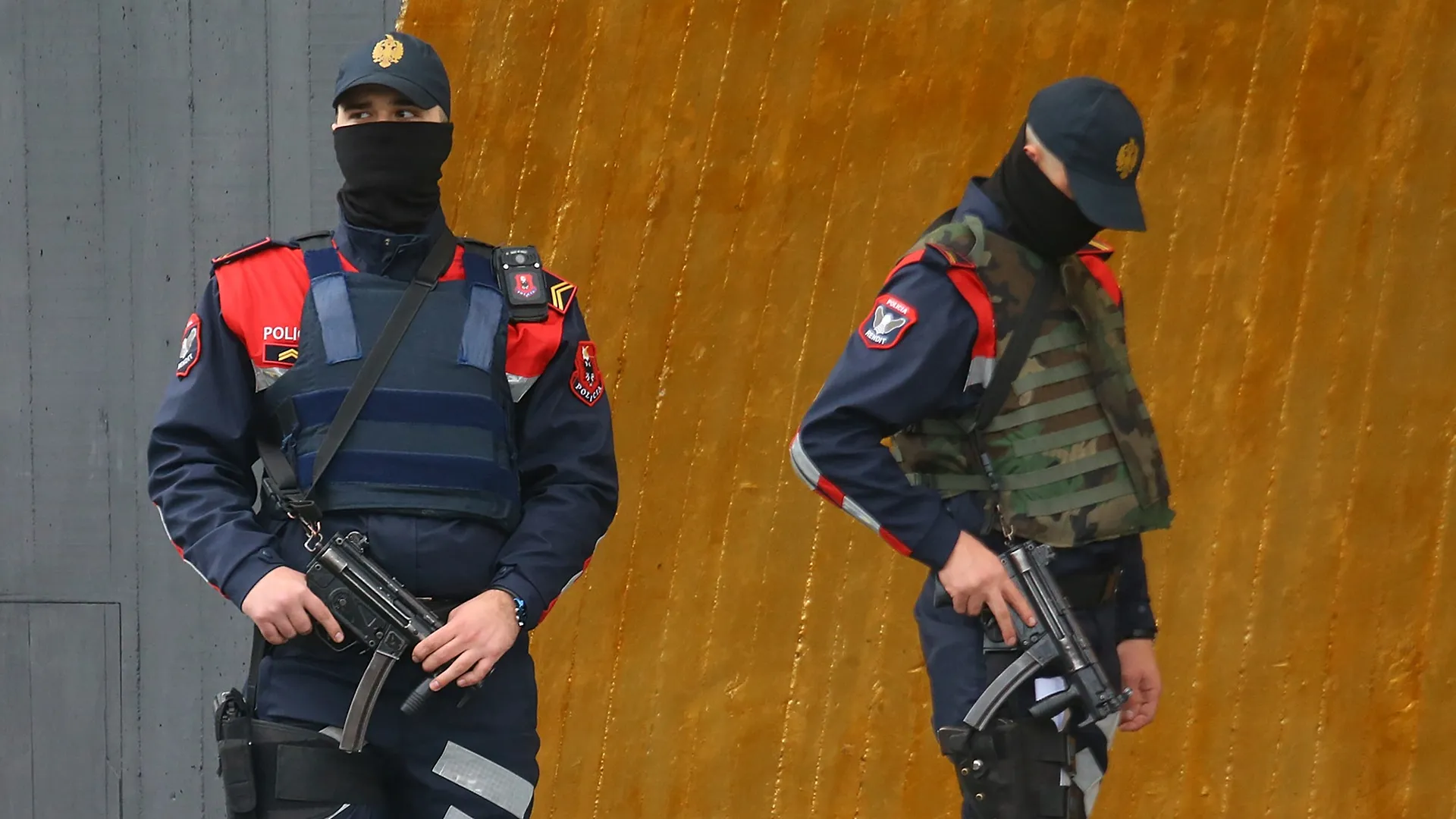
Retaliation now travels through smaller states.
Tirana, April 2026
Albania’s decision to raise its alert level over possible attacks by groups linked to Iran is not a local security anecdote. It is a warning that the geography of Middle Eastern confrontation is widening in less obvious directions. The Balkans are not part of the formal battlefield around Iran, yet they are increasingly exposed to its aftershocks through cyber pressure, proxy logic, intelligence signaling, and the political consequences of hosting actors Tehran considers hostile. What is happening in Tirana reveals something larger than a precautionary measure. It shows that smaller allied states are now being pulled more directly into conflicts they did not initiate, but whose strategic residue they are being forced to absorb.
That matters because Albania has not been a neutral site in Iran’s political imagination for years. Its rupture with Tehran after earlier cyberattacks already transformed the relationship from diplomatic tension into open hostility. Since then, Albania has carried a peculiar kind of exposure. It is small enough to be tested, aligned enough with the West to be symbolically useful, and politically visible because of its connection to Iranian opposition networks. In that sense, the country occupies a vulnerable middle ground. It is not a major power, yet it sits close enough to larger geopolitical fault lines to become an available target for warning, intimidation, or asymmetric retaliation.
The new alert should therefore be read in the context of a wider pattern. Iran’s confrontation with the United States and its allies is no longer confined to direct theaters of military pressure or to maritime chokepoints such as Hormuz. It increasingly moves through diffuse channels that allow threat to travel without formal escalation. Cyber intrusions, intimidation against U.S.-linked entities, pressure on diplomatic space, and the activation of loosely affiliated actors all belong to that logic. Albania becomes important precisely because it demonstrates how strategic pressure can be displaced onto secondary terrain where the response is politically awkward but still symbolically meaningful.
This is one reason the Balkans matter more than many Western capitals still admit. The region is often treated as a periphery of Europe, significant mainly when instability threatens EU accession, migration management, or local ethnic balances. But peripheries in geopolitics are often where larger confrontations become experimentally visible first. Albania’s alert suggests that the Balkans are being drawn into a wider map of deterrence and reprisal in which smaller states can be used to signal reach, vulnerability, and alliance costs. That kind of exposure is especially dangerous because it exploits exactly what such states often lack: depth, redundancy, and the luxury of strategic invisibility.
There is also a psychological dimension to this development. Once a country is publicly warned about possible attacks linked to a distant war, ordinary security begins to change character. The issue is no longer only whether an incident occurs. It is whether public life itself becomes conditioned by the expectation that alignment with the West now carries diffuse and uneven forms of risk. For a state like Albania, which has worked to position itself as a loyal Atlantic actor, that matters deeply. Strategic loyalty gains prestige in times of cohesion, but it also attracts exposure in times of dispersed retaliation. The burden of alliance becomes harder to narrate when threat arrives not through open war, but through the ambiguity of possible attack.
Bulgaria’s parallel diplomatic friction with Iran sharpens that same lesson. The wider southeastern European space is beginning to feel the pressure of a conflict that is formally elsewhere but increasingly present in its political weather. This should concern Europe for reasons beyond immediate security. If Middle Eastern escalation starts to create a climate of intermittent threat across the Balkans, then the region’s already fragile equilibrium becomes even more susceptible to manipulation, anxiety, and securitized politics. A warning may remain only a warning. Yet warnings of this kind still alter institutional behavior, diplomatic posture, and public trust.
What makes Albania especially revealing is that it sits at the intersection of several kinds of vulnerability at once. It is a NATO member, a Balkan state, a host to Iranian dissidents, and a country with lived experience of Iranian-linked cyber aggression. That combination turns it into a particularly useful case study of contemporary hybrid conflict. The pressure does not need to look spectacular to be effective. It only needs to force the state into heightened vigilance, remind allies that secondary theaters exist, and demonstrate that Tehran’s reach is not confined to the Gulf or Levant. In that sense, the alert is not only defensive. It is also diagnostic. It tells us where the next layer of strategic anxiety is beginning to accumulate.
The deeper pattern is difficult to ignore. Modern confrontation no longer respects the old separation between center and margin. Smaller states are increasingly used as surfaces on which larger powers project warning, grievance, or deterrent ambiguity. Albania’s alert is one more sign that contemporary geopolitical conflict spreads through networks of affiliation rather than through front lines alone. The Balkans are not outside this logic. They are becoming one of the places where it can be observed more clearly.
What now hangs over Albania is not simply the possibility of one attack. It is the reality that its national security environment has been redefined by a war beyond its borders. That is the true significance of this moment. The country is being asked to live inside a broader confrontation without the protections usually granted to those who shape it. And that, increasingly, is how hybrid geopolitics works. It does not always strike where the war begins. It often pressures where the system is thinner.
Phoenix24: clarity in the grey zone. / Phoenix24: claridad en la zona gris.