

 Phoenix 24
Some books travel through time not only by being read, but by disappearing and returning when memory is ready to receive them again.
Oxford, January 2026.
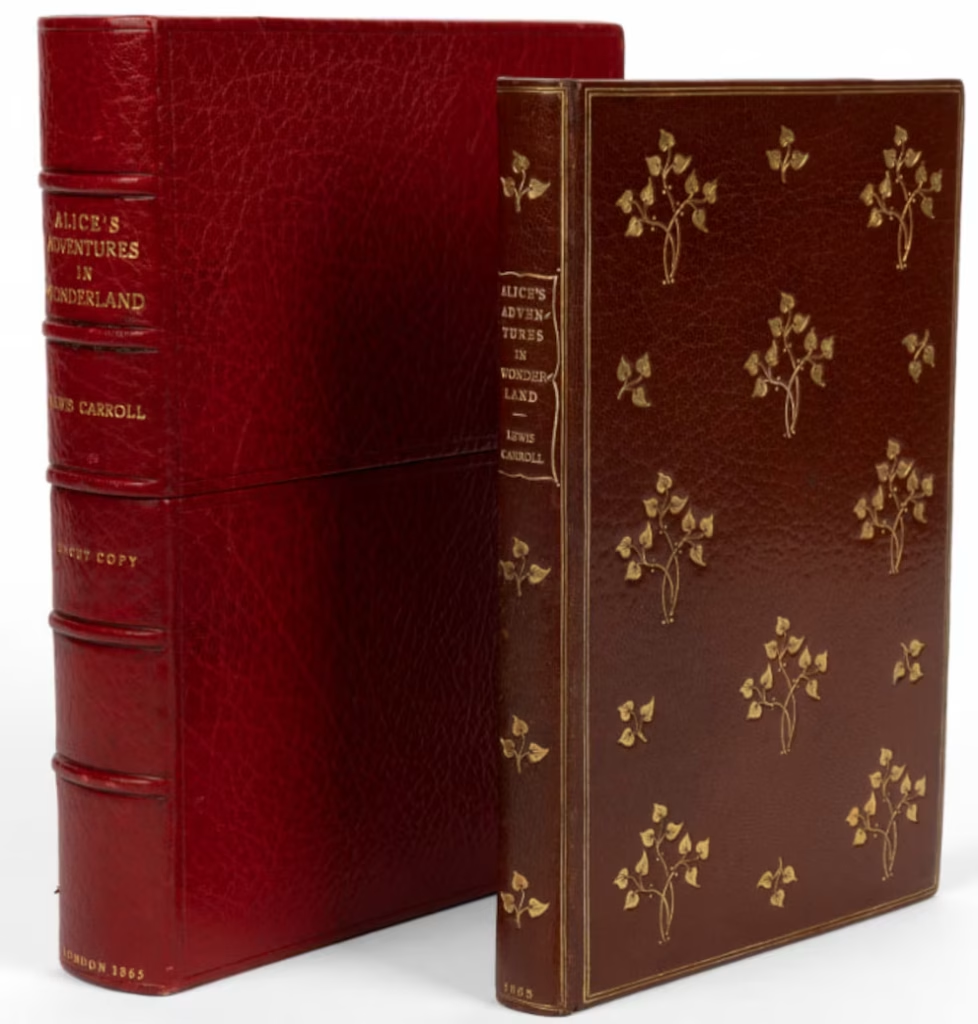
More than one hundred years after leaving its original intellectual environment, a rare and historically significant copy of Alice’s Adventures in Wonderland has returned to Oxford, the city where the story was first imagined. The volume, long considered lost to private collections, has been reintegrated into the institutional ecosystem that shaped its author, closing a cultural and symbolic circle that extends well beyond bibliographic value.
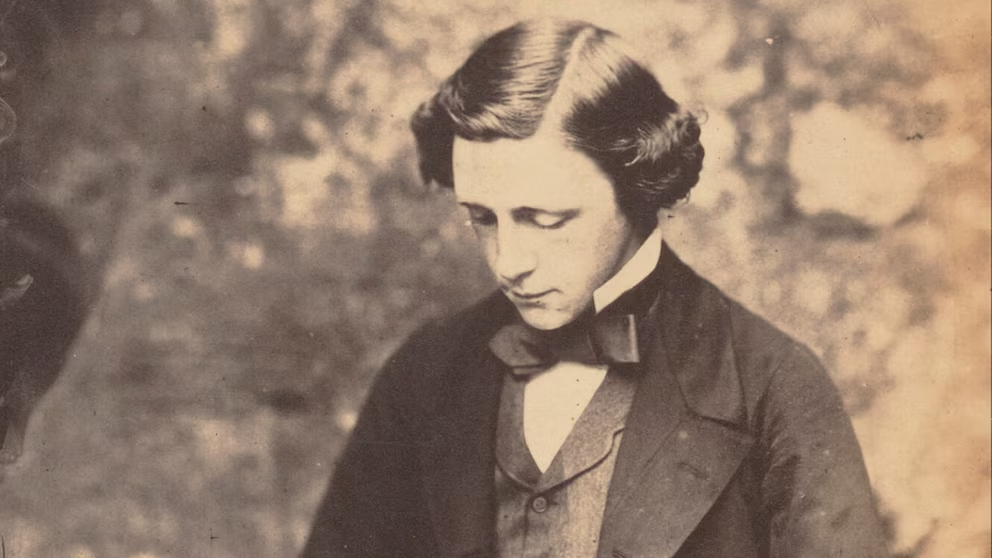
The book is directly linked to Lewis Carroll, the pen name of Charles Lutwidge Dodgson, who lived, taught, and wrote within the academic rhythms of Oxford during the nineteenth century. While Alice’s Adventures in Wonderland has long occupied a central place in global literary culture, the return of this specific copy carries particular weight. It is not merely an early edition, but a working volume connected to the creative process itself.
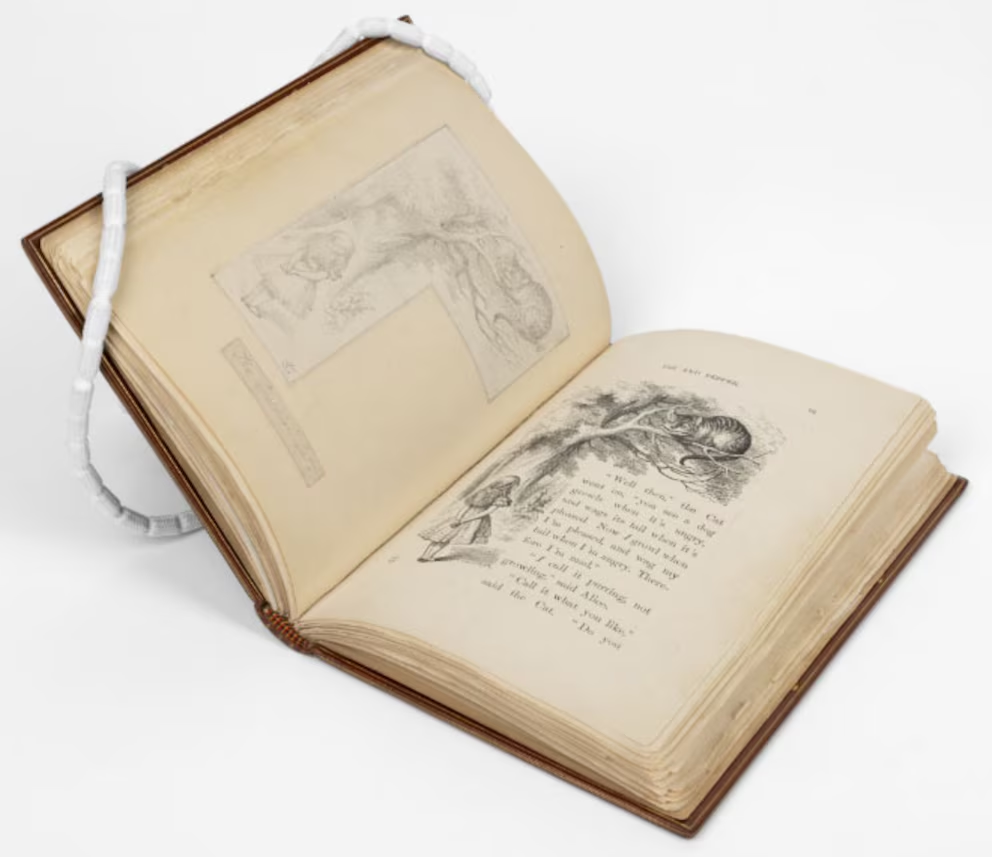
Scholars familiar with the manuscript describe it as a rare artifact that bridges text, image, and authorial intent. The copy contains annotations attributed to Carroll and includes original illustrative material linked to John Tenniel, whose visual interpretations became inseparable from the narrative world of Alice. Such markings are scarce, and their survival offers an unusually intimate view into the dialogue between author and illustrator during the formative stages of the book’s publication.
The decision to return the volume to Oxford was guided by more than curatorial convenience. Institutions associated with the university emphasized that Carroll’s creative life cannot be separated from the physical and intellectual spaces of Christ Church College, where he studied and later served as a lecturer. It was within this environment that the oral version of Alice’s story was first told, evolving gradually into the written work that would later be published and distributed internationally.
From a European cultural heritage perspective, the reintegration of the book reflects a broader institutional movement toward repatriating or recontextualizing significant artifacts within their places of origin. Cultural authorities have increasingly argued that meaning is not embedded solely in the object itself, but in its relationship to place, archive, and scholarly continuity. The return of this copy reinforces that position, positioning the book not as a static relic, but as a living component of intellectual history.
Beyond Europe, the news has resonated with literary communities in North America and Asia, where Alice’s Adventures in Wonderland has been studied, adapted, and reinterpreted across generations. Academic commentators in the United States have highlighted the importance of preserving author annotated materials in public institutions, noting that such artifacts enable comparative research into narrative construction and editorial decision making. Asian scholars, particularly those focused on translation studies and visual storytelling, have emphasized the value of original illustrations in tracing how Alice’s imagery migrated across cultures.
The history of early Alice editions adds further significance to this return. Shortly after the book’s first printing in the nineteenth century, many copies were withdrawn due to concerns over print quality. As a result, surviving early versions are exceptionally rare. Copies bearing evidence of authorial handling are rarer still. Within this context, the rediscovered volume occupies a distinct position, not as a pristine collectible, but as a document of creative labor.
Plans for the book’s preservation and limited public display have been framed around conservation rather than spectacle. Librarians and curators involved have stressed the importance of balancing accessibility with long term safeguarding. Short term exhibition is expected to be accompanied by controlled archival integration, allowing researchers to examine the material without exposing it to unnecessary deterioration.
The return also intersects with contemporary debates over cultural access in the digital age. While Alice is among the most reproduced and adapted texts in modern history, the physical presence of a historically situated copy challenges assumptions that digitization alone satisfies cultural memory. The tactile reality of marginal notes and hand drawn illustrations provides a form of engagement that digital surrogates cannot replicate.
Public reaction has been marked less by nostalgia than by a renewed awareness of how literary history is preserved. Readers and scholars alike have responded to the event as evidence that cultural artifacts can reemerge when institutional stewardship aligns with historical responsibility. In this sense, the book’s journey mirrors the logic of its own narrative, one in which displacement, return, and transformation coexist.
As the volume takes its place once again within Oxford’s collections, it reinforces a quiet but enduring truth about literature. Stories do not only survive because they are read. They survive because their material traces are protected, remembered, and, when necessary, brought home.
Resistencia narrativa global. / Global narrative resilience.