

 Phoenix 24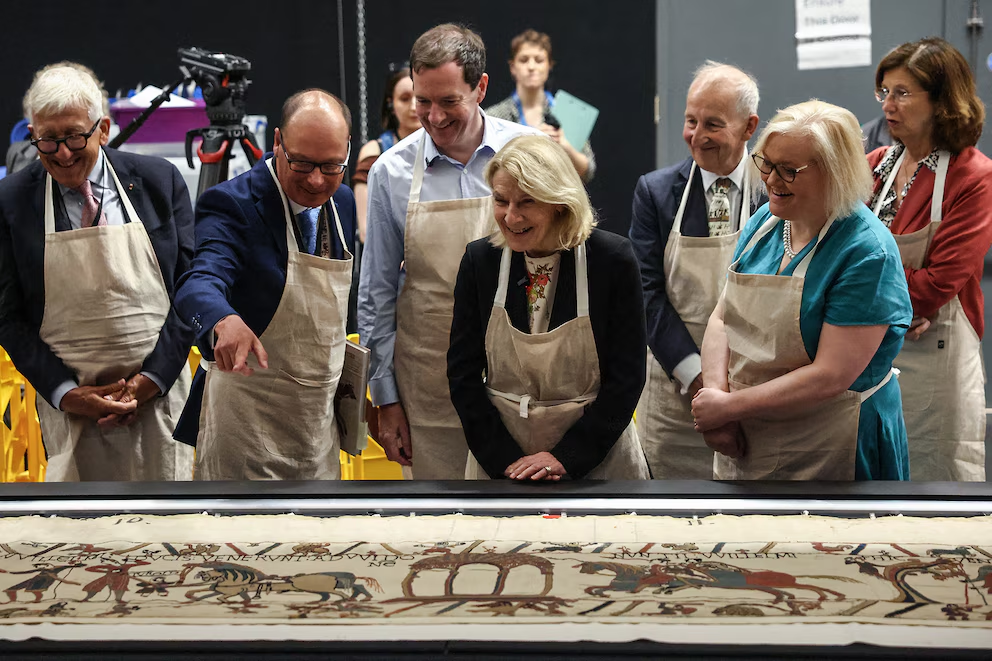
An 18-hour operation reveals nine centuries of memory.
London | July 2026
The Bayeux Tapestry has been fully unfolded at the British Museum after an intricate operation lasting 18 hours and involving nearly 100 French and British specialists. The medieval embroidery travelled from France under strict security and left the country for the first time in approximately nine centuries. Its installation followed 27 carefully coordinated stages designed to protect every section of the fragile work.
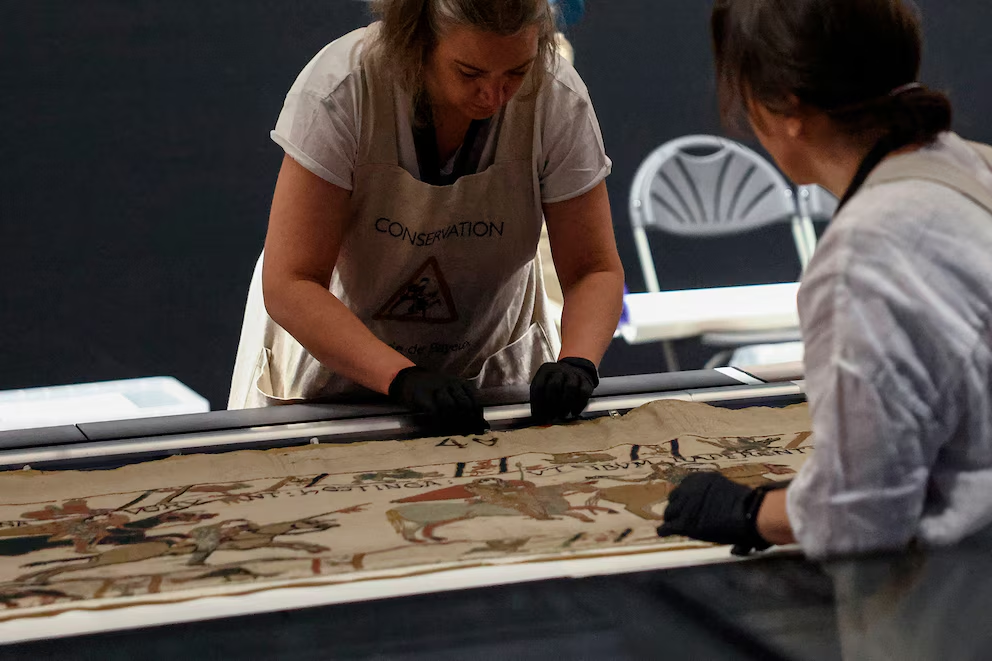
The operation took place behind closed doors in near silence. Conservators moved the textile through a precise sequence of instructions delivered in French, synchronizing every action to prevent tension, folding or sudden displacement. Participants compared the process to a choreographed performance because each movement depended on collective timing and complete physical control.
Measuring approximately 70 metres, the tapestry could not be handled as an ordinary museum object. It travelled from western France folded in an accordion-shaped support system and protected by a double transport case engineered to reduce vibration. Temperature and humidity were maintained within controlled limits throughout the journey to prevent changes in the linen and wool threads.
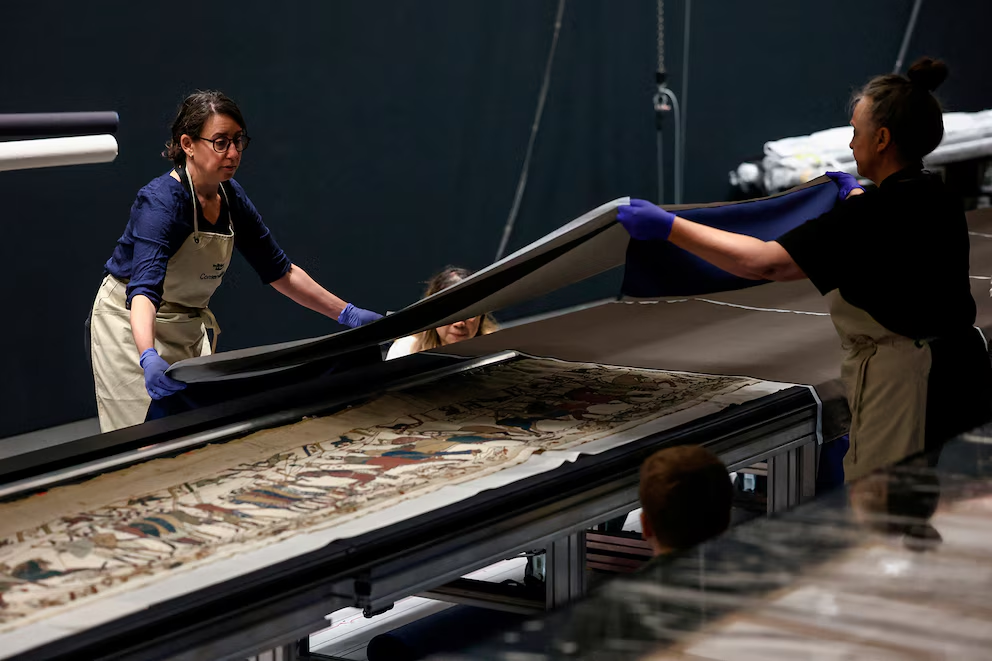
Once inside the gallery, specialists extended the folding support along the exhibition space. The tapestry was then transferred through a pulley structure and gradually aligned with mobile tables prepared for its final display. Every stage required constant observation because even a small distortion could place damaging pressure on material created almost a thousand years ago.
The British Museum commissioned a specially designed display case valued at roughly two million pounds. Built from 25 modules, each weighing approximately as much as a small family car, the enclosure forms a sealed and highly protected environment. It is resistant to impact, water and external noise while limiting reflections that could interfere with the public’s view.
Climate-control devices will regulate humidity once the remaining folds and surface irregularities have been carefully smoothed. Conservators are continuing to inspect the embroidery before the display tables are fully inserted into the case. Around 20 security cameras will monitor the work across its complete length.
The tapestry narrates the Norman conquest of England through 58 scenes culminating in the events surrounding the Battle of Hastings in 1066. Its images include rulers, soldiers, ships, horses, weapons, buildings and moments of political negotiation. The famous depiction traditionally associated with King Harold receiving an arrow in the eye remains one of its most recognizable episodes.
The battle itself occupies only the final portion of the visual narrative. Much of the work focuses on the alliances, journeys, promises and political tensions that preceded the invasion. Museum curators plan to help visitors understand that broader sequence rather than treating the embroidery as a single dramatic image from medieval warfare.
The work includes more than 600 human figures and over 700 animals embroidered with wool on linen. Scholars generally believe it was produced near Canterbury during the 1070s, despite its centuries-long association with the French city of Bayeux. Its combination of historical testimony, political messaging and extraordinary craftsmanship has made it one of the most important surviving objects from medieval Europe.
Its survival has often depended on circumstance. For centuries, it remained stored in a wooden chest within the sacristy of Bayeux Cathedral. During the French Revolution, it narrowly escaped being cut apart and used as protective covering for military transport vehicles.
The tapestry faced further danger during the Second World War. It was moved first to the basement of a hotel and later transferred to the Louvre under orders from Nazi authorities. Each displacement added another chapter to the history of an object that has survived political upheaval, war and changing concepts of cultural preservation.
French officials described the latest transfer as both a technical achievement and an important moment in relations between France and the United Kingdom. The operation required a year of preparation involving scientists, engineers, museum professionals and specialized transport teams. Their work was intended to address concerns that the journey itself might expose the embroidery to unacceptable risk.
Initial inspections indicated that the tapestry arrived without visible signs of damage. French conservators will remain in London during the first weeks of installation to continue evaluating its condition. Their presence reflects the importance of maintaining shared responsibility for an object whose physical custody and historical significance cross national boundaries.
The exhibition is scheduled to open in September and continue until July 2027. Strong advance demand has demonstrated the level of international interest generated by the unprecedented loan. Museum officials expect hundreds of thousands of visitors during the exhibition period.
The display will incorporate enlarged projections of selected details and a limited sound component intended to make the complex narrative more accessible. Visitors will be able to examine small figures and visual sequences that are difficult to appreciate when standing before the complete 70-metre work.
The arrival of the Bayeux Tapestry is more than a major exhibition event. It represents a rare convergence of medieval history, modern engineering, scientific conservation and international cultural cooperation. The 18-hour unfolding demonstrated that protecting the past can require a level of coordination as complex as creating a major work of art.
Phoenix24 | History preserved through human precision. Historia preservada mediante la precisión humana.