

 Phoenix 24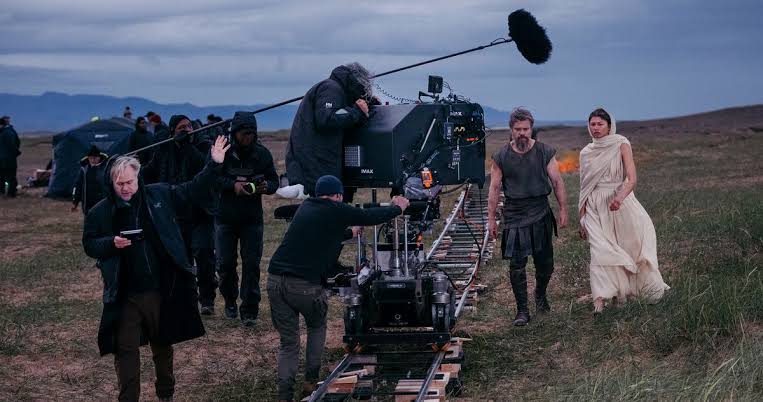
Ancient techniques and new inventions reshape cinematic realism.
Los Angeles | July 2026
Christopher Nolan and cinematographer Hoyte van Hoytema transformed the filming of The Odyssey into a technological and physical experiment, combining newly developed equipment with visual methods that would have been familiar to filmmakers working a century ago.
The production became the first commercial feature film photographed entirely with IMAX cameras, extending a format previously reserved mainly for selected action sequences into dialogue, intimate performances and the complete dramatic structure of a major motion picture.
Infobae reported that Nolan had wanted to create a full-length IMAX film since discovering the format in museums and science centres as a teenager. After using it progressively across films including The Dark Knight, Interstellar, Dunkirk and Oppenheimer, he concluded that Homer’s epic provided the scale required to complete that ambition.
The principal obstacle was sound. Traditional IMAX cameras generate mechanical noise that Van Hoytema compared with a lawn mower or diesel engine, making them difficult to use when actors are delivering dialogue at close range.
Following Oppenheimer, Nolan approached IMAX engineers and asked them to complete a new generation of cameras and develop an acoustic enclosure capable of reducing that noise. Three prototypes were presented approximately one year before production began.
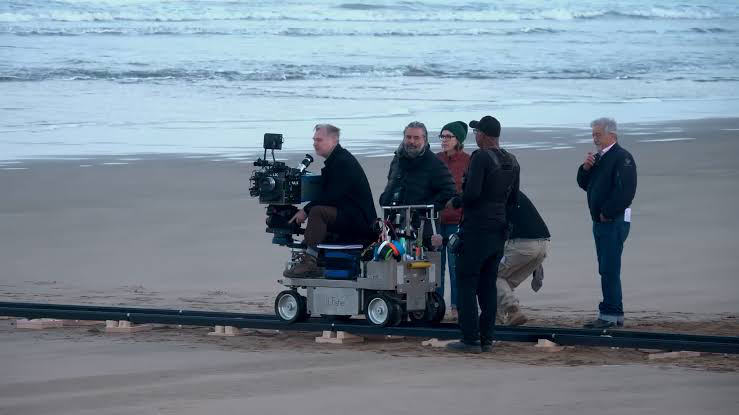
The final soundproof housing reduced the camera’s mechanical roar to a distant hum, but created another challenge. Once installed inside its protective structure, the system became an exceptionally large and heavy object, sometimes approaching the dimensions of a small vehicle.
Moving it above actors or through difficult terrain required chain hoists, reinforced supports, counterweights and specially designed mechanical systems. At certain remote locations, the camera was transported by helicopter while suspended from a cable.
Nolan estimated that some configurations weighed approximately 181 kilograms. Every movement therefore required engineering calculations, coordination and strict safety procedures rather than the spontaneous repositioning possible with smaller digital cameras.
Van Hoytema nevertheless operated the camera for around 90 percent of the film. His work depended on an experienced technical team capable of balancing the equipment while he followed actors across unstable ground, ships and coastal environments.
During sequences filmed on water, dolly grip Ryan Monro physically counterbalanced Van Hoytema when waves pushed the camera sideways. The cinematographer described the process as two people moving like a single organism around a complex machine.
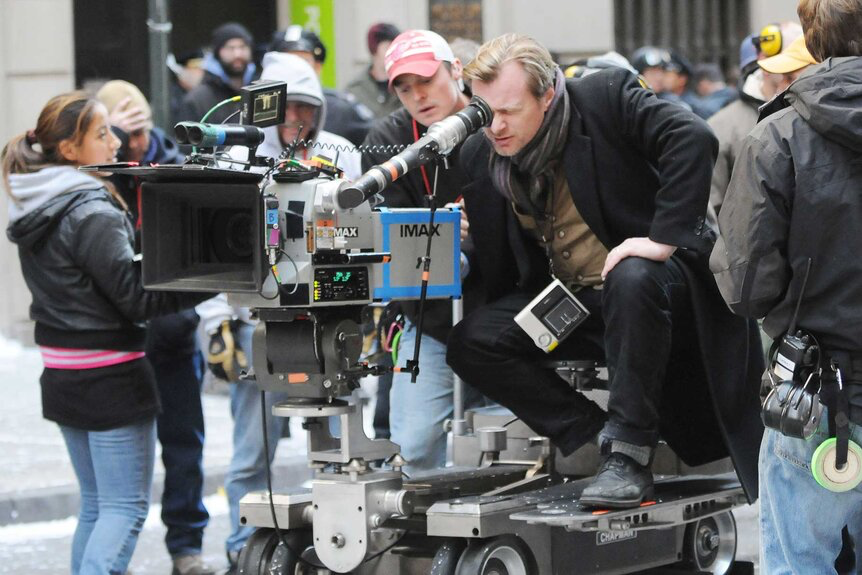
The cameras also carried only about three minutes of film at a time. This limitation could have interrupted performances, particularly during emotionally demanding dialogue scenes extending across several pages.
Nolan and his crew developed a system in which actors and technicians remained silent and concentrated while the magazine was changed. First assistant camera Keith Davis reduced the reloading process to less than two minutes.
The achievement represented a dramatic improvement from Nolan’s first experience with IMAX in 2007, when the production team had been warned that replacing a film magazine could require approximately 25 minutes.
The short recording windows gave the production a rhythm closer to live performance. Actors had to enter each take with precision, while the camera department worked under pressure to preserve both the physical film and the emotional continuity of the scene.
The production also rejected the assumption that technological innovation must be digital. Nolan and Van Hoytema relied extensively on practical scenery, real locations, physical objects and optical illusions created directly before the camera.
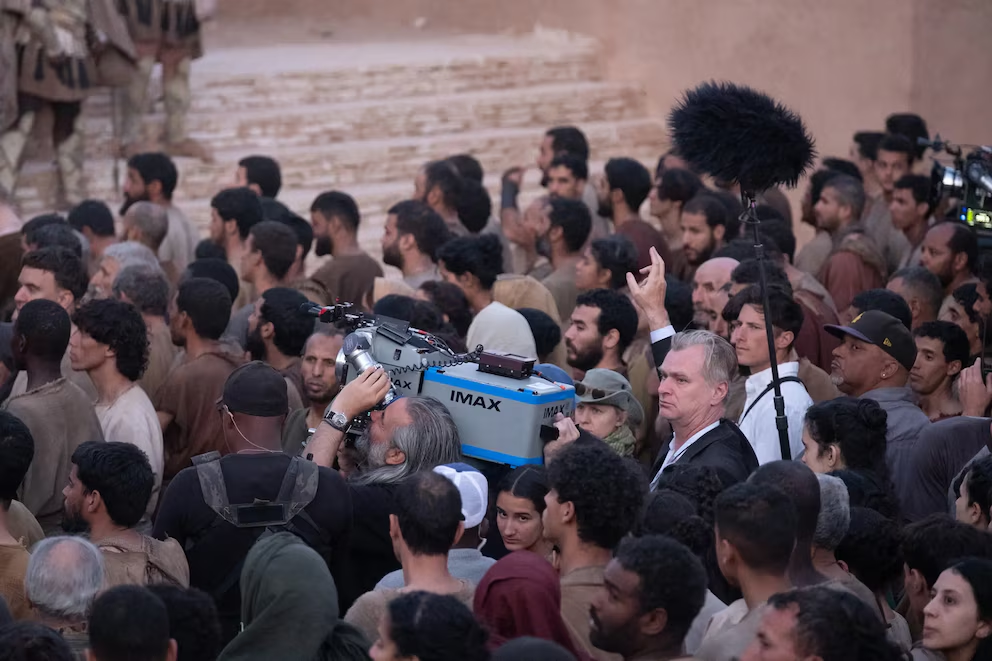
Ships were taken onto real oceans instead of being reproduced entirely inside studios. Actors worked in deserts, on coastlines and aboard vessels exposed to changing winds, tides and waves.
This approach increased logistical difficulty but allowed the environment to influence performance and photography. The sea could appear violent on one day and completely calm on another, producing visual conditions that could not be fully predicted during preproduction.
A maritime department monitored tides, while weather specialists advised the crew. Yet Nolan and Van Hoytema deliberately preserved a degree of uncertainty because they wanted to respond to the physical energy of each location rather than reproduce a rigid visual plan.
Nolan has gradually reduced his reliance on detailed storyboards. He uses them when department heads need to coordinate complex action or effects, but prefers to discover many compositions after arriving on the set.
For Van Hoytema, this method allows weather, actors, damaged scenery and unforeseen circumstances to become part of the visual language. Planning remains extensive, but it creates the conditions for experimentation rather than eliminating uncertainty.
The film employed techniques including painted backdrops, miniature structures, matte paintings and forced perspective. Smaller objects placed farther from the camera could appear monumental, while simple materials generated convincing reflections, movement and atmospheric depth.
Nolan recalled how fishing line, fragments of reflective material and a fan could imitate light moving across water. Such methods demonstrate how practical effects can deceive the eye without requiring the entire image to be constructed digitally.
The choice was also connected to image quality. The production’s photographic process remained analog from capture through projection whenever possible.
Introducing a digital effect requires scanning the original negative, manipulating the image and recording it again. Van Hoytema argued that each additional stage can reduce the exceptional resolution obtained from IMAX film.
Practical effects therefore served both aesthetic and technical objectives. Keeping an illusion inside the camera preserved the detail, texture and tonal continuity of the original negative.
Nolan has also argued that physical methods are not always more expensive than digital alternatives. The cost must be evaluated across design, shooting, postproduction and the number of visual-effects artists required to recreate a convincing environment.
For The Odyssey, the goal was not to eliminate digital technology completely. Visual-effects supervisor Andrew Jackson evaluated what had already been captured and determined where additional work remained necessary.
The production used every available method, but sought to begin with real photographic elements. A ship, fire, landscape or physical structure recorded on location gave the final image a material foundation that computer-generated work could support rather than replace.
One of the most significant inventions emerged from the challenge of illuminating large night scenes. Van Hoytema became dissatisfied with conventional cinematic moonlight, frequently created by enormous lighting frames positioned above a battlefield or exterior set.
He wanted the night sequences to appear as though they were illuminated by fire, allowing the IMAX camera to record something closer to what the human eye might perceive inside the story’s ancient world.
Real flames produced too little light and required extensive fire-safety personnel. Every additional flame increased logistical risk, particularly when hundreds or thousands of performers were present.
Van Hoytema and his team therefore developed artificial fire-lighting units known as “pyrohedrons,” a name inspired by their pyramid-like form. The devices used custom LED technology to reproduce the irregular flicker, color and movement of genuine flames.
A dedicated manufacturing operation produced approximately 1,000 panels, each measuring more than one metre. The units could be hidden throughout forests, settlements and battle environments without revealing a conventional lighting source.
Different settings simulated flames under calm or stormy conditions. Their glow could reportedly be seen from approximately 1.6 kilometres away, allowing the crew to illuminate expansive landscapes while maintaining the appearance of firelight.
Around 95 percent of the film’s night sequences were photographed primarily with these custom systems. The invention gave performers greater freedom to move while allowing the camera to explore spaces without being constrained by visibly artificial overhead lighting.
For Nolan, the objective was to construct a world that actors could physically inhabit. Once the ships, landscapes, light and environmental forces were present, performance and cinematography could respond to the same tangible conditions.
The resulting production united two apparently contradictory traditions. It used one of the most advanced motion-picture formats ever created while depending on painted scenery, forced perspective, mechanical engineering and optical deception.
The Odyssey thus became not only an adaptation of Homer’s journey, but also an exploration of cinema’s own history. Nolan and Van Hoytema did not pursue realism by removing illusion. They pursued it by making every illusion feel physically present before the camera.
Phoenix24 | Innovation becomes timeless when technology serves human imagination. La innovación se vuelve eterna cuando la tecnología sirve a la imaginación humana.