

 Phoenix 24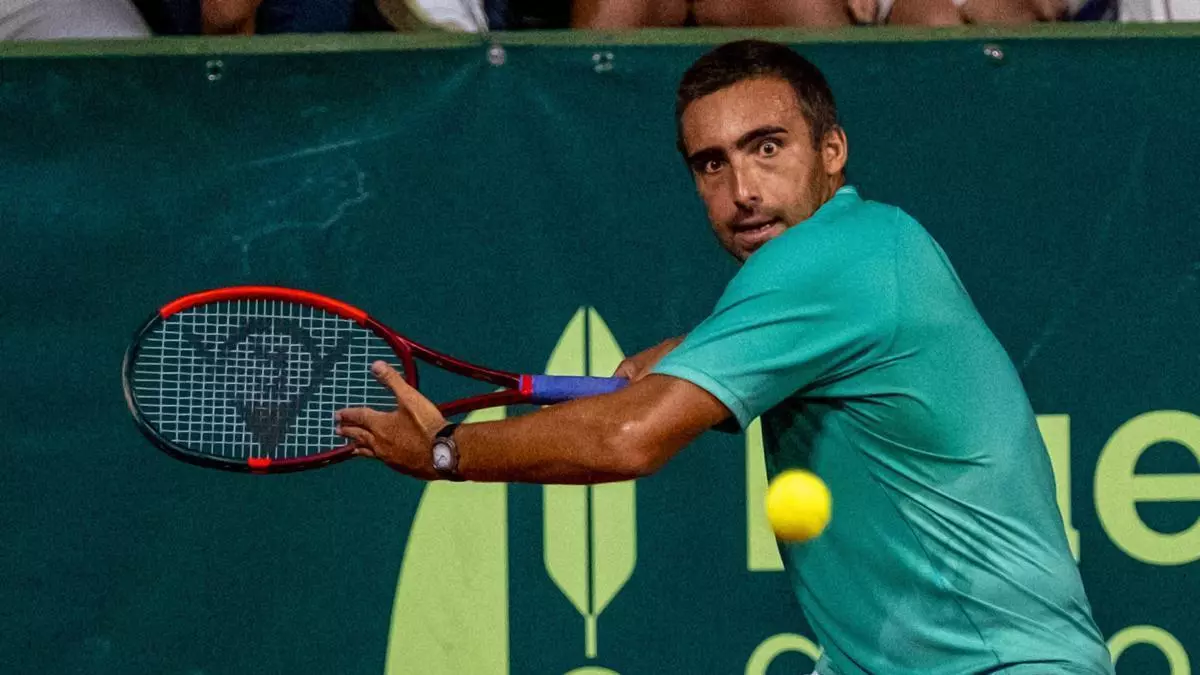
Spanish tennis welcomes another champion from its emerging generation.
Umag | July 2026
Dani Mérida secured the first ATP title of his career after defeating Bosnia’s Damir Džumhur 6-2, 5-7, 6-2 in the final of the Umag Open, completing a breakthrough week that confirms his rapid emergence within Spanish tennis.
The 21-year-old from Madrid needed approximately two hours to overcome the experienced Bosnian on the Croatian clay. Mérida controlled the opening set, survived a difficult second-set reversal and regained command in the decisive third set to claim the most important trophy of his professional career.
His victory carries particular significance because Umag has previously marked the arrival of several outstanding players. Carlos Alcaraz won his first ATP title at the same tournament in 2021, while other Spanish champions at the event include Carlos Moyá, Juan Carlos Ferrero and Tommy Robredo.
Mérida’s success does not automatically place him on the same trajectory as those former world-class players, but it establishes him as one of the most compelling young competitors in Spain’s developing generation.
He entered the tournament ranked 82nd in the world and is expected to rise to approximately 58th when the ATP standings are updated. The movement represents another major step in a season that began with Mérida positioned outside the world’s top 160.
The final initially appeared to be moving comfortably in his favor. Mérida played with depth, physical intensity and controlled aggression, repeatedly forcing Džumhur away from his preferred court position.
The Spaniard broke serve several times and claimed the opening set 6-2, displaying the heavy groundstrokes and defensive discipline that had carried him through the earlier rounds without losing a set.
Džumhur responded in the second set by disrupting Mérida’s rhythm and extending the rallies. The Bosnian, whose experience includes years competing at the highest levels of the tour, increased the pressure as the younger player moved closer to the title.
Mérida experienced visible tension while attempting to finish the match. Džumhur took advantage, secured the decisive break and won the second set 7-5, forcing the championship into a final set.
The setback created the most important psychological test of the tournament. Mérida could have allowed the missed opportunity to dominate his thinking, particularly after losing the second set from a position of strength.
Instead, he returned with renewed aggression. The Spaniard produced three crucial service breaks during the final set and recovered the authority that had defined his opening performance.
His ability to reset emotionally proved as significant as his technical execution. First titles frequently place young players under a different level of pressure because the final points represent more than an individual match: they mark entry into the official record of ATP champions.
Mérida closed the third set 6-2 and celebrated a victory that had appeared increasingly possible throughout the week. Before the final, he defeated Argentina’s Román Andrés Burruchaga 6-4, 6-2 in the semifinals after overcoming Frenchman Titouan Droguet 6-1, 6-3 in the quarterfinals.
The title arrived in only the seventh ATP tournament of his career. That limited experience makes his progression especially notable, although his development has been built through several seasons of competition at the ITF and Challenger levels.
Mérida won his first Challenger title in Pozoblanco in 2025 and added another trophy in Tenerife during February 2026. Those victories provided the ranking points and competitive confidence required to enter stronger tournaments and challenge established ATP players.
His transition accelerated in Bucharest, where he advanced from qualifying to reach his first ATP final. Mérida defeated experienced opponents during that run before losing a demanding three-set championship match to Argentina’s Mariano Navone.
That defeat provided evidence that he could compete for tour-level titles but also left an unfinished objective. Umag offered a second opportunity only months later, and this time the Spaniard converted it.
The Croatian success reflects a game built less around effortless brilliance than sustained pressure, physical commitment and competitive resilience. Mérida has developed powerful strokes from the baseline, but his most valuable quality may be his willingness to remain engaged through difficult passages of a match.
His forehand occasionally evokes the high, forceful trajectory associated with Rafael Nadal, one of his principal sporting references. Yet Mérida is gradually constructing an identity based on his own movement, timing and tactical preferences.
The result also strengthens the depth of Spanish men’s tennis beyond Alcaraz. Young players such as Martín Landaluce, Rafael Jódar and Mérida are attempting to establish themselves within a national tradition that has produced champions across generations and surfaces.
Comparisons with Alcaraz will be inevitable because both players won their first ATP title in Umag. They are nevertheless developing under very different circumstances. Alcaraz’s ascent was historically rapid, while Mérida’s progress has followed a more gradual route through lower-level tournaments and qualification draws.
That distinction does not diminish the achievement. Professional tennis depends on players capable of converting incremental improvement into results when opportunity appears. Mérida has moved from outside the top 160 to the edge of the top 50 within a matter of months because he repeatedly succeeded at increasingly demanding levels.
The new ranking position will improve his access to major tournaments and reduce his dependence on qualifying rounds. It may also bring direct entry into stronger ATP events, where maintaining consistency will become more difficult but equally valuable.
Winning a first title does not guarantee a permanent place among the elite. Mérida must now manage greater expectations, defend ranking points and demonstrate that his success can extend beyond one surface or tournament.
For the moment, those challenges can wait. In Umag, he transformed a promising season into a landmark career achievement.
Dani Mérida arrived in Croatia as an emerging Spanish player. He leaves as an ATP champion.
Phoenix24 | Global sport, independent perspective. Deporte global, perspectiva independiente.