

 Phoenix 24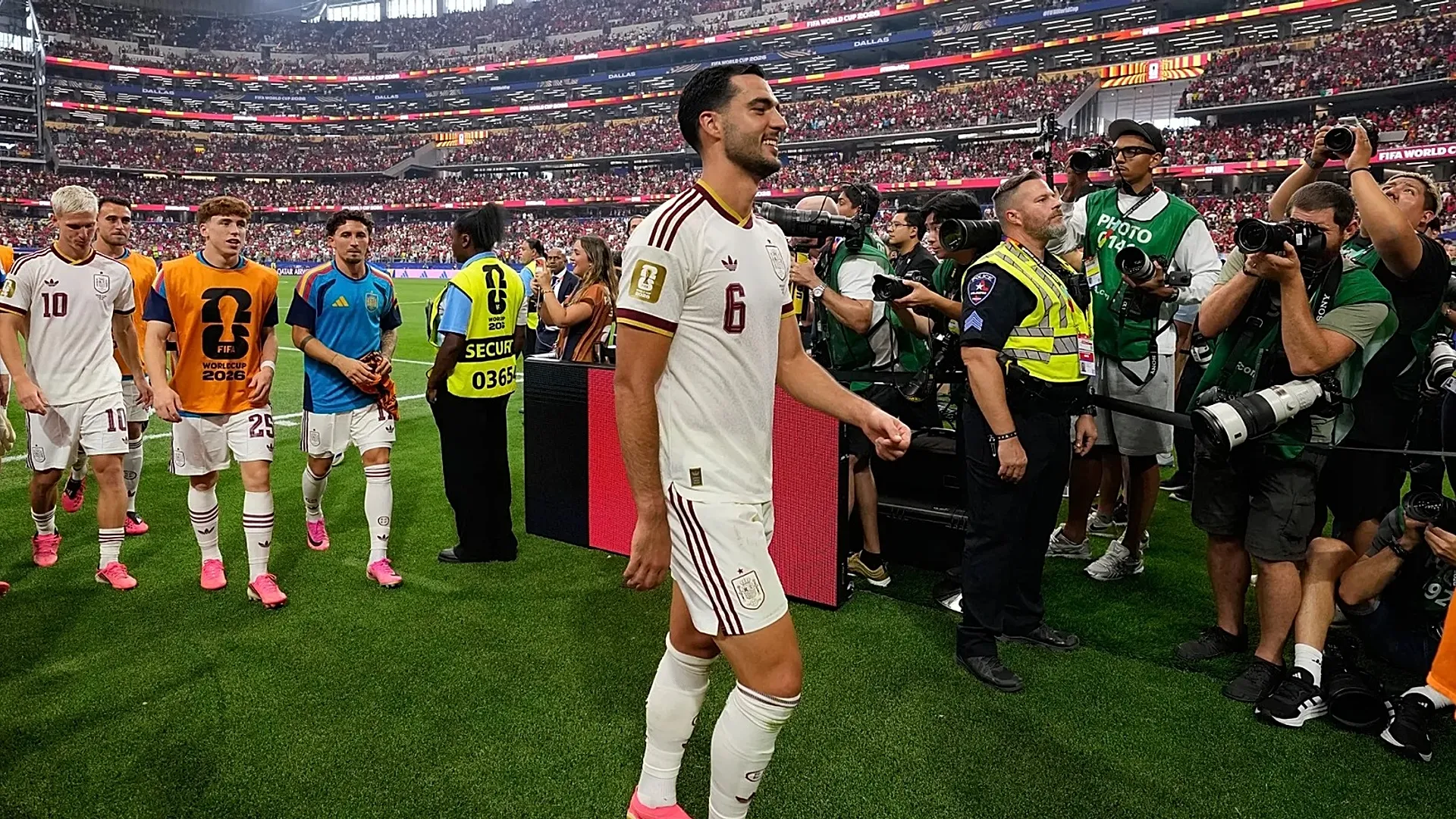
Sixteen years later, history appears to rhyme again.
Madrid | July 2026
Spain’s path through the 2026 World Cup has revived memories of the campaign that delivered the country’s first global title in South Africa 16 years ago. The players, opponents and host cities have changed, but a sequence of striking coincidences has created the impression that La Roja is following a route already written into Spanish football history.
Euronews identified the parallels while Spain was preparing for the quarterfinals, when the comparison still belonged partly to superstition. The national team has since advanced to the final against Argentina, giving those coincidences even greater symbolic weight. What began as an entertaining collection of similarities now accompanies Spain into the final match of the tournament.
The first echo appeared before Spain played. The 2010 World Cup opened with South Africa facing Mexico at Soccer City in Johannesburg. The same two countries inaugurated the 2026 edition at the Azteca Stadium, reversing the geographical setting while preserving the opening fixture.
Shakira also provided part of the musical background to both tournaments. Her voice became inseparable from South Africa 2010 through Waka Waka, while another of her songs accompanied the 2026 competition. For Spanish supporters, the connection reinforced the sensation that two eras separated by a generation were beginning from a strangely familiar place.
Spain entered both tournaments as European champion. The 2010 squad arrived after defeating Germany in the 2008 continental final through Fernando Torres. The current generation qualified with the confidence created by its 2024 European title, secured against England through Mikel Oyarzabal’s decisive goal.
The national team was also ranked second in the world before each tournament. That position placed Spain among the leading candidates without making it the official number one, reproducing the balance between expectation and unfinished ambition that surrounded Vicente del Bosque’s squad in 2010.
The group-stage draw produced another direct connection. Spain competed in Group H in South Africa alongside Switzerland, Honduras and Chile. Sixteen years later, it returned to the same letter with Cape Verde, Saudi Arabia and Uruguay.
The opening performances also generated discomfort rather than immediate celebration. Spain began its 2010 campaign with a 1-0 defeat against Switzerland, creating doubts around a team that had arrived as one of the favourites. In 2026, a goalless draw against Cape Verde produced a different result but a similar feeling of frustration.
Both group stages ended with Spain facing a national team coached by Marcelo Bielsa. In 2010, the Argentine manager led Chile. In 2026, he returned to Spain’s path as Uruguay’s coach, again appearing in the final group match before the knockout rounds.
The most powerful repetition emerged in the round of 16. Spain faced Portugal in 2010 and won 1-0 through a second-half goal from David Villa. The same opponent awaited in 2026, and Spain again advanced with a 1-0 victory, this time after Mikel Merino scored during stoppage time.
That result immediately recalled the narrow victories that defined Spain’s first championship. Del Bosque’s team defeated Portugal, Paraguay, Germany and the Netherlands by identical 1-0 scores during the four knockout matches of 2010. The margins were minimal, but the tactical control behind them created one of the most influential international sides of the modern era.
The 2026 team does not reproduce the old tiki-taka system exactly. Luis de la Fuente’s Spain plays with greater verticality, wider attacking movement and younger footballers capable of accelerating matches individually. Yet the current group shares the earlier generation’s belief that possession can become both a creative instrument and a defensive structure.
The wider landscape of Spanish club football has added further coincidences. José Mourinho returned to Real Madrid during the opening phase of the 2026 World Cup, recalling his arrival at the club in the year Spain conquered South Africa. Barcelona also entered both tournaments as the reigning Spanish champion.
Even the representation of Barcelona players within the national squad became part of the comparison. Del Bosque selected eight members of the club for the 2010 championship team, and the current squad has been associated with the same numerical presence. Such details do not determine results, but they strengthen the mythology surrounding a tournament.
Spain subsequently moved beyond the point covered by the original Euronews account. It defeated Belgium 2-1 in the quarterfinals and France 2-0 in the semifinal, securing a place in the championship match against Argentina. The route stopped reproducing the exact 1-0 sequence, but the larger historical parallel continued.
The comparison remains imperfect. The 2010 side depended on established figures including Xavi Hernández, Andrés Iniesta, Iker Casillas, Sergio Ramos, Carles Puyol and David Villa. The current team combines experienced leaders with a younger generation represented by players such as Lamine Yamal and Pau Cubarsí.
Different opponents also demand different tactical answers. Argentina enters the final as the defending champion and possesses the emotional resilience of a team accustomed to surviving decisive matches. Spain cannot rely on historical symbolism to control Lionel Messi, Julián Álvarez or an aggressive Argentine midfield.
Football repeatedly demonstrates that coincidences explain little once the ball begins moving. A shared group letter, familiar scoreline or returning coach cannot produce a goal, prevent an injury or decide a penalty shootout. The value of these parallels lies in the confidence and collective memory they activate.
For supporters, South Africa 2010 remains more than a completed tournament. It represents the moment when decades of disappointment were replaced by a national team capable of converting technical identity into global supremacy. Every similarity in 2026 therefore reconnects the present squad with that transformative experience.
The current players are not attempting to imitate their predecessors. They are building a separate identity under different competitive conditions, within an expanded tournament and against a new generation of rivals. Yet history has provided them with a familiar emotional map.
Spain arrived in 2010 as European champion, survived early uncertainty, eliminated Portugal 1-0 and advanced through increasingly demanding knockout matches. Sixteen years later, it has repeated those essential steps and reached another World Cup final.
The coincidences cannot guarantee a second star. They can only remind Spain that the destination it seeks has already been reached once through patience, discipline and belief.
Phoenix24 | History never repeats perfectly, but sometimes it remembers. La historia nunca se repite perfectamente, pero a veces recuerda.