

 Phoenix 24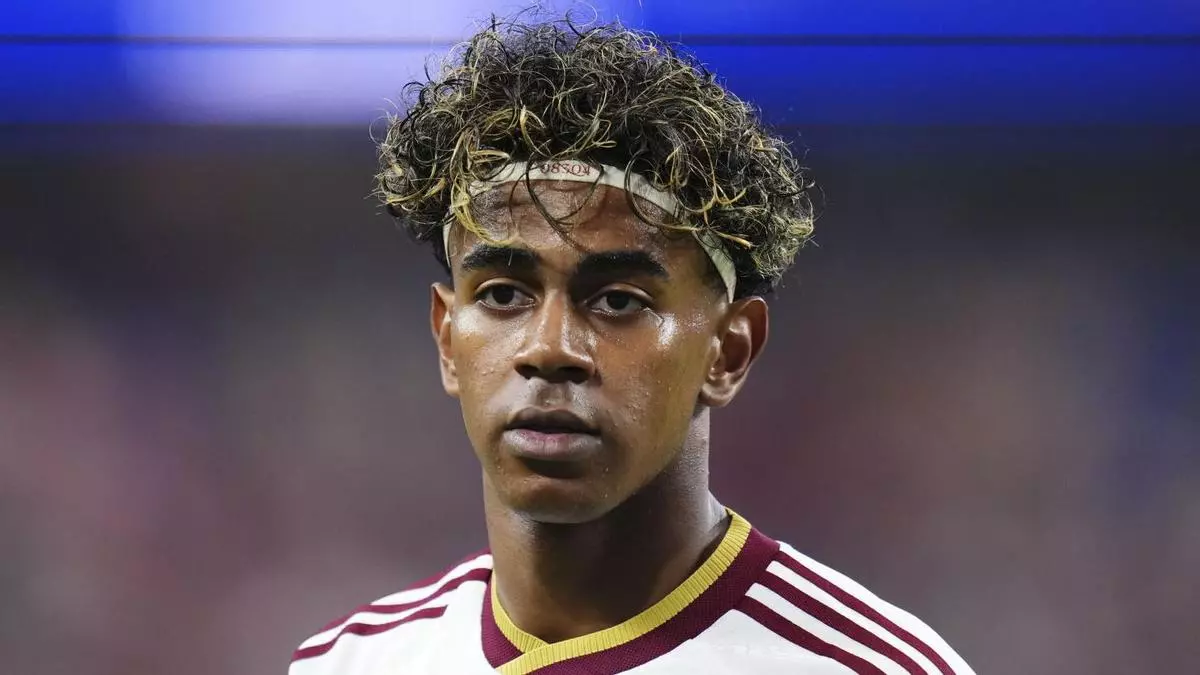
Spain’s young star embraces pressure before facing Messi.
New York | July 2026
Lamine Yamal has delivered a concise message of confidence before Spain faces Argentina in the 2026 World Cup final, embracing the magnitude of a match that could transform him from global football prodigy into world champion at only 19 years old. SPORT reported that the Barcelona winger used his social platforms to express the determination surrounding the Spanish squad as it prepared for the most important match of his young career.
His message followed Spain’s 2-0 semifinal victory over France and captured the direct, self-assured communication style that has accompanied his rapid rise. Yamal wrote “Nuevayol, vamos por ti,” using the Spanish pronunciation popularized in urban music to declare that Spain was coming for New York and the World Cup trophy.
The phrase connected football ambition with the cultural references of a generation that communicates through music, fashion and social platforms as naturally as through post-match interviews. It was not a detailed tactical statement or an emotional speech. Its power came from its brevity: Spain had reached the final, but qualification alone was not enough.
Yamal enters the match carrying enormous expectations despite arriving at the tournament after recovering from a muscular injury. His campaign has included decisive contributions, individual awards and constant attention from opposing defenses, which frequently assign more than one player to contain him.
The winger has not dominated every match, but his presence changes how opponents organize themselves. Defenders must protect the space behind the fullback, midfielders move toward his side and central players become available when several rivals concentrate on stopping his dribbling.
Spain coach Luis de la Fuente has resisted comparisons intended to present Yamal as a replacement for Lionel Messi. He has argued that the young player must develop his own identity rather than carry the burden of becoming another version of an incomparable footballer.

The final nevertheless makes those comparisons unavoidable. Messi represents the most accomplished generation of Barcelona’s modern history, while Yamal emerged from the same academy and now wears the creative responsibility once associated with the Argentine at club level.
Their connection became even more extraordinary after photographs from 2007 returned to global attention. During a charitable calendar project involving Barcelona and UNICEF, a young Messi was photographed bathing a five-month-old Yamal while his mother stood nearby.
At the time, Messi was beginning his transformation into one of football’s greatest players. Yamal was simply a baby selected through a community initiative. Nineteen years later, they will stand on opposite sides of a World Cup final.
The image has become a symbol of succession, chance and the unpredictable architecture of sporting history. Yet neither player is approaching the match as a ceremonial transfer of power. Messi wants to defend Argentina’s championship, while Yamal has already made clear that admiration disappears when victory is at stake.
Before the teams reached the final, the Spanish winger acknowledged Messi’s influence but delivered an unambiguous competitive position: if he reached the championship match, he wanted to win it. That principle now defines the confrontation.
Argentina will attempt to prevent Yamal from receiving the ball in isolated situations. The defending champions may use coordinated pressure from the left side of their defensive structure, denying him the space required to accelerate toward the penalty area.
Spain must respond by moving the ball quickly and exploiting the attention directed toward its winger. Yamal does not need to complete repeated dribbles to influence the match. Drawing defenders away from central areas can create opportunities for Dani Olmo, Mikel Oyarzabal, Fabián Ruiz or advancing fullbacks.
His individual challenge will involve balancing patience with aggression. A final can tempt a young star to force decisive actions on every possession, particularly when the global narrative presents the match as a personal duel against Messi.
Spain’s greatest strength, however, has been its collective structure. Rodri controls the rhythm, the midfield circulates possession and the attacking players exchange positions without depending entirely on one figure. Yamal becomes most dangerous when he operates inside that system rather than attempting to carry it alone.
His physical condition had caused some concern after he received treatment for discomfort in his thigh. Spanish officials later indicated that he was available, reducing fears that the team might enter the final without one of its most unpredictable attackers.
Yamal’s composure has become almost as remarkable as his technical ability. He made his Barcelona debut at 15, became a European champion at 16 and now enters a World Cup final at 19. Each stage has increased the attention surrounding him, yet he continues to communicate with the relaxed confidence of someone who considers extraordinary situations part of his normal environment.
That confidence can be interpreted differently by audiences. Supporters see personality, ambition and refusal to be intimidated. Critics sometimes perceive excessive self-assurance in a player whose career is still beginning.
Elite competition rarely rewards hesitation. The same conviction that produces provocative messages also allows an attacker to demand the ball after losing possession, challenge defenders repeatedly and attempt decisive actions under pressure.
The final offers Yamal an opportunity to influence history without needing to resolve every debate surrounding his future. Winning would place him among the youngest world champions and connect Spain’s current generation with the team that lifted the country’s first trophy in 2010.
Defeat would not diminish the scale of his emergence, but international football provides few guarantees that another final will arrive. Even the most talented players can spend entire careers pursuing the opportunity now available to him.
For Spain, the match represents the possibility of combining its established positional philosophy with the freedom of a new generation. Yamal embodies that evolution: technically educated within Barcelona’s system, but shaped by street football, multicultural identity and the communication codes of the digital era.
For Argentina, stopping him will be part of preserving a championship built around experience, resilience and Messi’s enduring influence. The final does not simply place youth against age; it confronts two teams attempting to control the same historical moment through different forms of authority.
Yamal’s message to New York therefore carries more than youthful enthusiasm. It expresses the belief that Spain has not travelled to admire the occasion, celebrate reaching the final or participate in Messi’s possible farewell.
The young winger is arriving to compete for the only outcome that would complete the journey.
Phoenix24 | The future does not wait for permission to arrive. El futuro no espera permiso para llegar.