

 Phoenix 24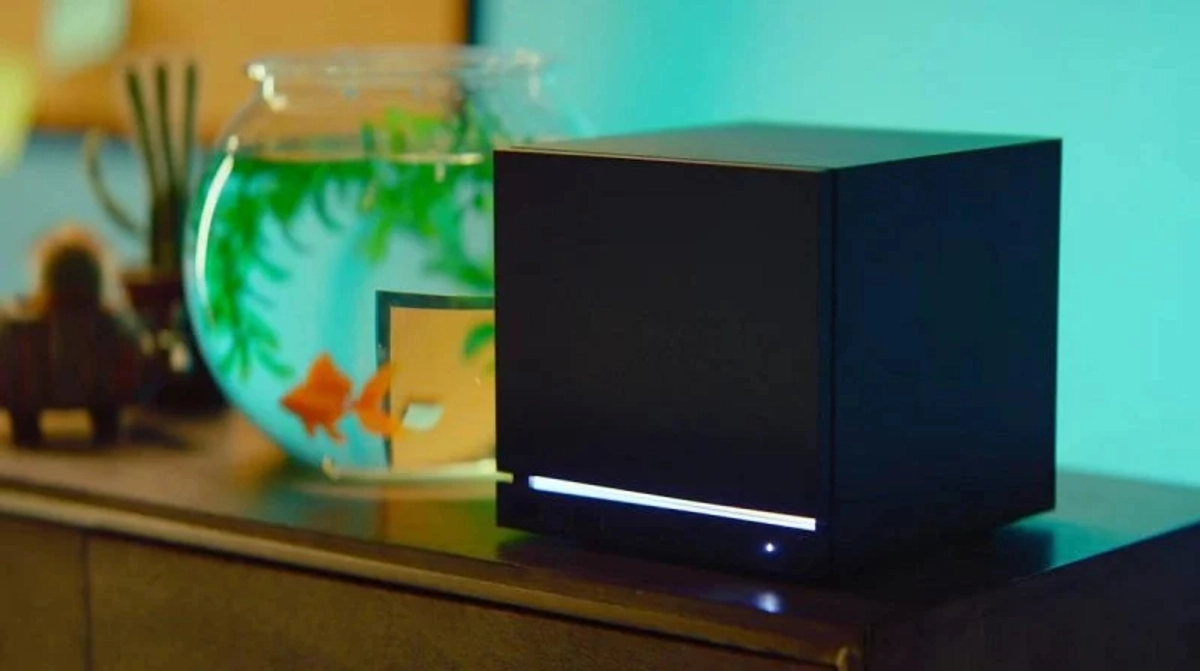
Power, price and loading times spark criticism.
TOKYO, JAPAN — July 2026. Shuhei Yoshida, the former president of PlayStation’s worldwide development studios, delivered a mixed verdict after testing Valve’s new Steam Machine. Although he praised its compact construction, quiet operation and accessible interface, the Japanese executive questioned whether its gaming performance meets current expectations. His strongest reaction came after seeing several titles recommend a default resolution of 1080p, prompting him to ask whether he was returning to the PlayStation 4 era. The comment quickly reignited debate over Valve’s attempt to bring the Steam ecosystem back into the living room.
The Steam Machine is a compact gaming computer powered by SteamOS and designed to offer a console-like experience through a television. Its hardware includes a semi-custom AMD Zen 4 processor, an RDNA 3 graphics unit, 16 GB of DDR5 memory and NVMe solid-state storage. Valve has promoted the system as capable of delivering 4K gaming at 60 frames per second through technologies such as AMD FidelityFX Super Resolution. Yoshida’s experience, however, suggested that real-world performance may vary considerably depending on the game, configuration and level of optimization.
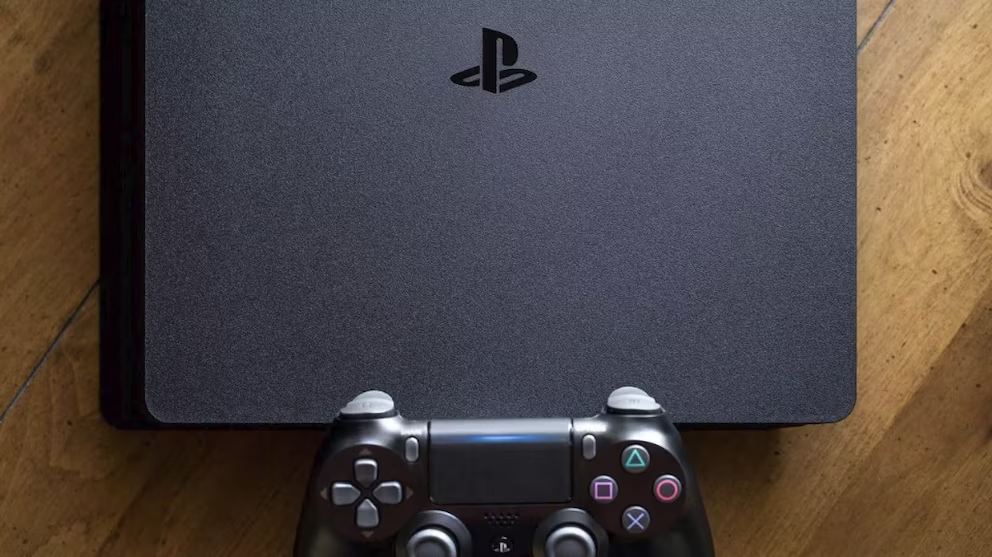
The former PlayStation executive described the machine’s three-dimensional gaming performance as underwhelming and criticized the time required to launch some titles. He found the delays especially surprising because the device uses modern NVMe storage, which is normally associated with significantly faster loading than previous console generations. In his assessment, the system occasionally struggled to provide the immediacy expected from contemporary gaming hardware. Those limitations placed the device at a disadvantage against PlayStation 5, Xbox Series X and similarly priced gaming computers.
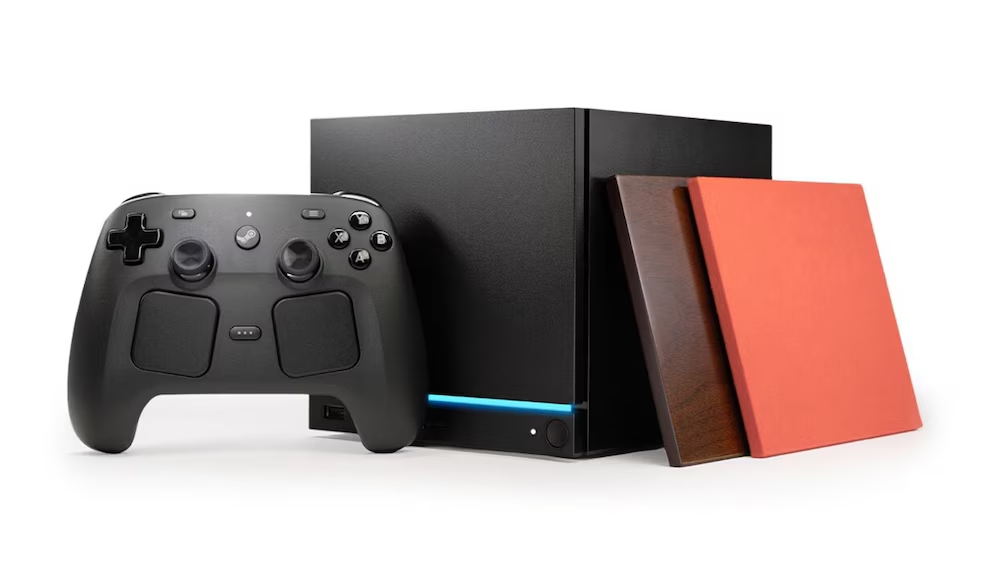
Yoshida nevertheless identified several qualities that could appeal to dedicated Steam users. He appreciated the ability to access an existing PC game library directly from a television without configuring a conventional desktop computer. The operating system’s interface was described as intuitive, while the option to switch on the machine through the Steam Controller was considered one of its strongest features. Its small size, low noise levels, interchangeable front panels and randomized startup animations also contributed to a more polished living-room experience.
The Steam Controller received a similarly divided evaluation. Yoshida praised its power button and touch-sensitive control surface but questioned the excessive sensitivity of certain inputs and the physical looseness of the analog sticks. These details may appear minor, but they become significant when Valve is attempting to compete with established console manufacturers whose controllers have been refined across several generations. The fact that the controller is not included with the basic Steam Machine package adds another expense for consumers seeking the complete experience.
Price emerged as one of the most serious obstacles identified in his assessment. The entry model costs more than €1,000 in some European markets, while configurations with greater storage can rise considerably higher. At that level, consumers can purchase a traditional console for significantly less or assemble a more powerful gaming computer for a similar amount. Yoshida concluded that the Steam Machine is difficult to recommend to a general audience, even though he personally intends to keep using it for research and access to his Steam library.
Valve is attempting to reproduce the success achieved with the Steam Deck, which demonstrated that SteamOS could provide a streamlined gaming experience outside a conventional PC. The Steam Machine extends that strategy into the home entertainment market, while the Steam Frame virtual-reality headset and second-generation Steam Controller complete the company’s new hardware ecosystem. Unlike the Steam Deck, however, the desktop device enters a segment where price, graphical performance and convenience are already defined by powerful consoles and customizable computers. Its challenge will be demonstrating that simplicity and library access can compensate for its higher cost.
Early technical concerns have added further uncertainty around the launch. A small number of users reported a hardware failure identified by a red light pattern associated with the graphics processor, leading online communities to describe it as the “Red Line of Death.” The reported cases remain isolated and do not establish the existence of a widespread defect, but they have attracted attention because the graphics component is soldered to the motherboard and cannot be replaced easily. Valve’s technical support and response to affected customers will influence perceptions of reliability during the product’s first months.
Yoshida’s verdict was not a complete rejection of the Steam Machine, but it exposed the contradiction at the center of Valve’s proposal. The device offers a convenient and elegant way to bring thousands of PC games into the living room, yet its cost and uneven performance make that convenience difficult to justify for many consumers. Valve has created an intriguing bridge between console and computer gaming, but the first generation may appeal more strongly to enthusiasts than to the mass market.
Innovation must deliver performance as convincingly as it promises convenience.