

 Phoenix 24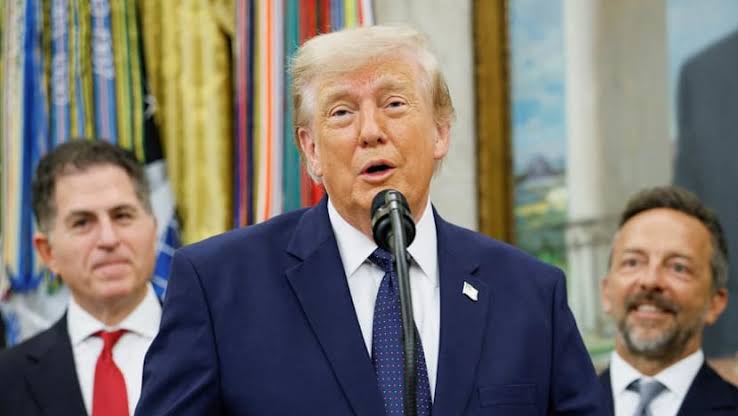
Political intervention collides with football’s rules and credibility.
WASHINGTON, UNITED STATES — July 2026. President Donald Trump confirmed that he personally asked FIFA president Gianni Infantino to review the red card shown to United States striker Folarin Balogun during the national team’s 2-0 victory over Bosnia and Herzegovina. Speaking at the White House, Trump argued that the incident “was not a foul” and described the automatic suspension resulting from the dismissal as unfair. He maintained that his intervention consisted only of requesting a review rather than pressuring football’s global governing body.
Balogun was sent off after a VAR review determined that he had stepped on the ankle of Bosnian defender Tarik Muharemović during the Round of 32 match. Under normal disciplinary procedures, the direct red card would have prevented the American forward from participating in the Round of 16 encounter against Belgium. Trump publicly questioned the decision and criticized Brazilian referee Raphael Claus, whose original ruling was strengthened following the technological review.

FIFA’s Disciplinary Committee subsequently suspended Balogun’s automatic one-match ban under Article 27 of its disciplinary regulations. The punishment was placed on probation for one year, leaving the striker eligible to face Belgium while exposing him to the original sanction if he commits another comparable violation during that period. FIFA president Gianni Infantino confirmed that he spoke with Trump but insisted that the ruling was issued by the organization’s independent judicial bodies.
The decision immediately generated opposition from Belgium, whose football federation questioned both Balogun’s eligibility and the transparency of the process. Belgian officials said they initially requested FIFA’s complete ruling and an explanation but received neither before the organization treated their communication as a formal appeal. FIFA later rejected the challenge as inadmissible, arguing that Belgium lacked legal standing because it had not participated in the original disciplinary proceedings.
Belgian coach Rudi Garcia compared the situation to an April Fools’ Day joke and expressed disbelief that a player dismissed in the previous match could be authorized to compete without serving the customary suspension. Foreign Minister Maxime Prévot warned that any decision influenced by a telephone call from a political leader would undermine the fundamental rules of sporting competition. Belgium maintained its objections and reserved the possibility of pursuing additional action if Balogun appeared in the elimination match.

UEFA also condemned FIFA’s handling of the case, describing the measure as unprecedented, incomprehensible and unjustifiable. European football authorities argued that the decision created doubts about consistency, institutional independence and equal treatment during the World Cup. The controversy intensified because the United States is one of the tournament’s host nations and Balogun entered the match against Belgium as the team’s leading scorer with three goals.
Trump defended his involvement as an attempt to correct what he considered a clear sporting injustice. His public confirmation transformed the disciplinary dispute into a broader political controversy surrounding FIFA’s relationship with national governments and the boundaries between institutional advocacy and external influence. Infantino emphasized that political leaders and other prominent figures regularly contact FIFA, while maintaining that the governing body’s judicial committees retain authority over disciplinary decisions.
The Balogun case now represents one of the most contentious episodes of the 2026 World Cup. Beyond the player’s availability, the dispute has raised questions about whether similar interventions will be considered in future disciplinary cases and whether rival federations can receive complete procedural information before decisive matches. The controversy is expected to continue regardless of the sporting result because Belgium, UEFA and other critics have framed the issue as a test of FIFA’s credibility and competitive neutrality.
When politics enters the field, every decision faces a deeper review.