

 Phoenix 24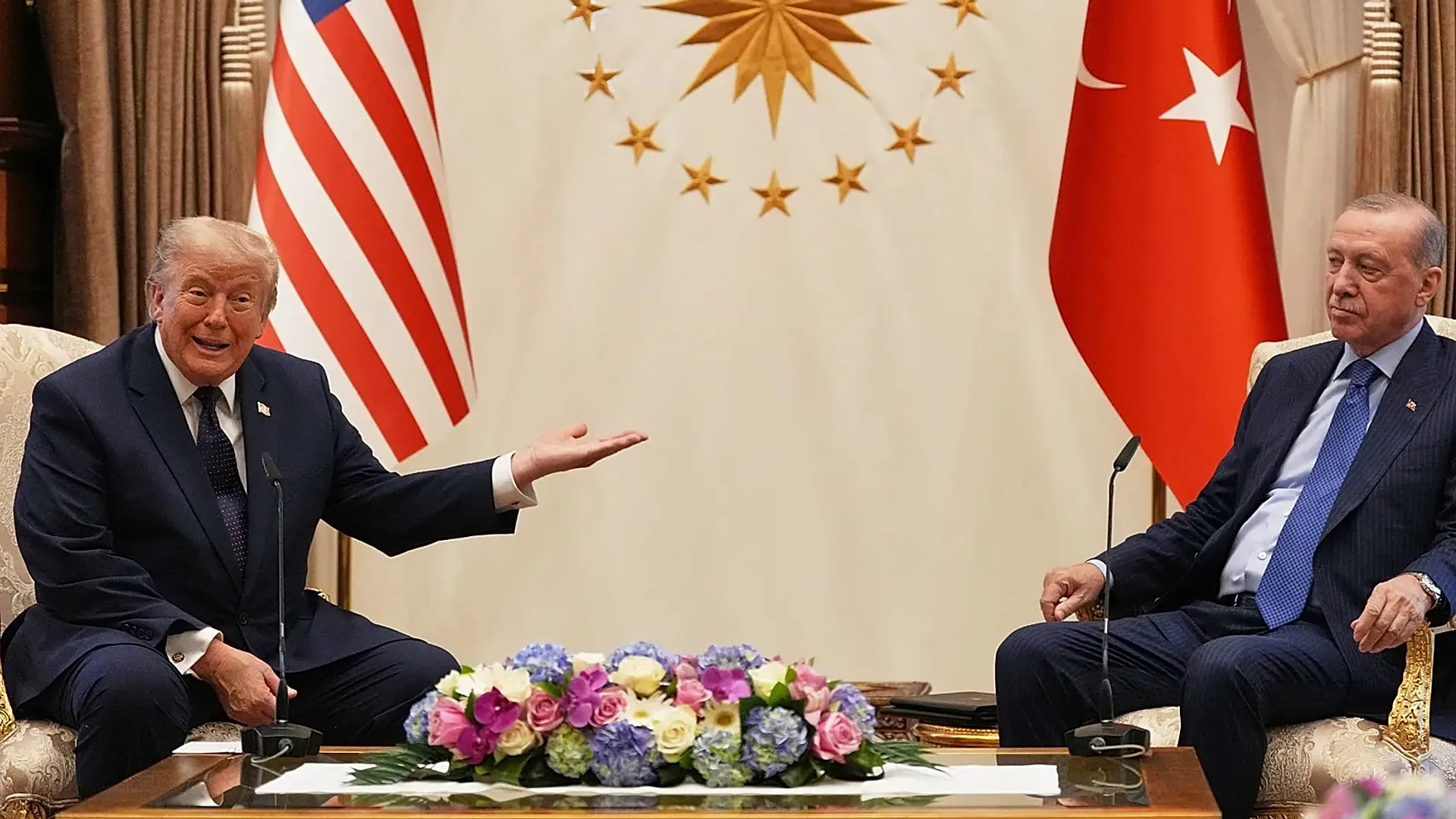
Arctic sovereignty again tests alliance unity.
ANKARA, TURKEY — July 2026. United States President Donald Trump renewed his demand that Greenland should be placed under American control shortly after arriving in Ankara for NATO’s annual summit. Speaking to reporters, Trump argued that the semiautonomous Arctic territory is strategically important to Washington and accused Denmark of failing to invest sufficiently in its security and development. He also claimed that Chinese and Russian vessels increasingly surround Greenland, presenting American control as a national-security necessity. The declaration revived a dispute that diplomats had spent months attempting to contain within the transatlantic alliance.
Trump said Greenland does not provide significant benefits to Denmark and maintained that Copenhagen has not committed enough financial resources to protecting the territory. His remarks returned attention to the Arctic’s growing military importance as melting ice opens new navigation routes and intensifies competition over energy resources, minerals and strategic infrastructure. Greenland’s geographic position between North America and Europe also gives it exceptional value for missile warning, maritime surveillance and the monitoring of Russian activity. The United States already maintains a military presence at Pituffik Space Base under longstanding agreements with Denmark, but Trump continues to argue that operational access is insufficient without political control.
The president acknowledged that his earlier statements regarding Greenland had damaged relations with NATO allies. In January, he declined to exclude the possible use of military force to obtain control of the territory, generating alarm in Denmark, Greenland and other European capitals. Danish and Greenlandic authorities have repeatedly insisted that the island is not for sale and that its future can be determined only by its own population. Greenland possesses extensive self-government while remaining part of the Kingdom of Denmark, making any attempt to change its status a question of sovereignty, international law and self-determination.
The renewed demand disrupted NATO leaders’ efforts to present a message of unity at the two-day summit. Hours before Trump’s arrival, European and Canadian allies had announced plans to invest approximately €50 billion in defense initiatives under a strategy described as “NATO 3.0.” The commitments were intended to demonstrate that alliance members were responding to Washington’s demand for greater military spending and responsibility. Instead, Trump’s comments reopened divisions between founding NATO members and raised questions about how the organization would respond if one ally challenged the territorial integrity of another.
Trump also used his arrival in Ankara to criticize European countries and Canada for not supporting the United States during its military confrontation with Iran. He said he was deeply disappointed with NATO and accused allies of abandoning Washington when American forces joined Israel in operations against Tehran earlier in the year. The president suggested that he might not have attended the summit had it not been hosted by Turkish President Recep Tayyip Erdoğan, whom he described as a strong leader and personal friend. His statements placed the Greenland dispute within a broader expression of dissatisfaction with the current distribution of responsibilities inside the alliance.
Erdoğan welcomed Trump at the presidential complex with a military honor guard, cannon salutes and an official ceremony. The two leaders were expected to discuss defense cooperation, regional security and Turkey’s possible return to the United States’ F-35 fighter aircraft program. Ankara was removed from the program after purchasing Russia’s S-400 air-defense system, a decision that American officials said created unacceptable security risks. Trump indicated that readmitting Turkey was under consideration, adding another sensitive issue to a summit already marked by disagreements over Greenland, Iran and NATO’s future.
The Greenland controversy carries implications extending far beyond the island itself. Denmark is one of the United States’ closest historical allies, while Greenland’s population has consistently resisted the idea that its political status should be negotiated between foreign governments without local consent. Any American attempt to obtain control would face legal, diplomatic and political barriers, even if Washington framed the initiative as necessary to counter Russia and China. The dispute could also accelerate Greenland’s internal debate over full independence from Denmark while complicating its future relationship with the United States.
Trump’s renewed declaration demonstrated that the issue remains an active objective rather than a proposal abandoned after international opposition. It also exposed a contradiction at the heart of NATO: the alliance seeks to defend the sovereignty of its members while its most powerful country openly questions Danish authority over Greenland. As leaders attempt to reinforce collective defense in Europe and the Arctic, the controversy threatens to divert attention from common security priorities. The future of Greenland remains a decision for its people, but the geopolitical struggle surrounding the island is becoming increasingly difficult to contain.
The Arctic is becoming a new frontier of global power.