

 Phoenix 24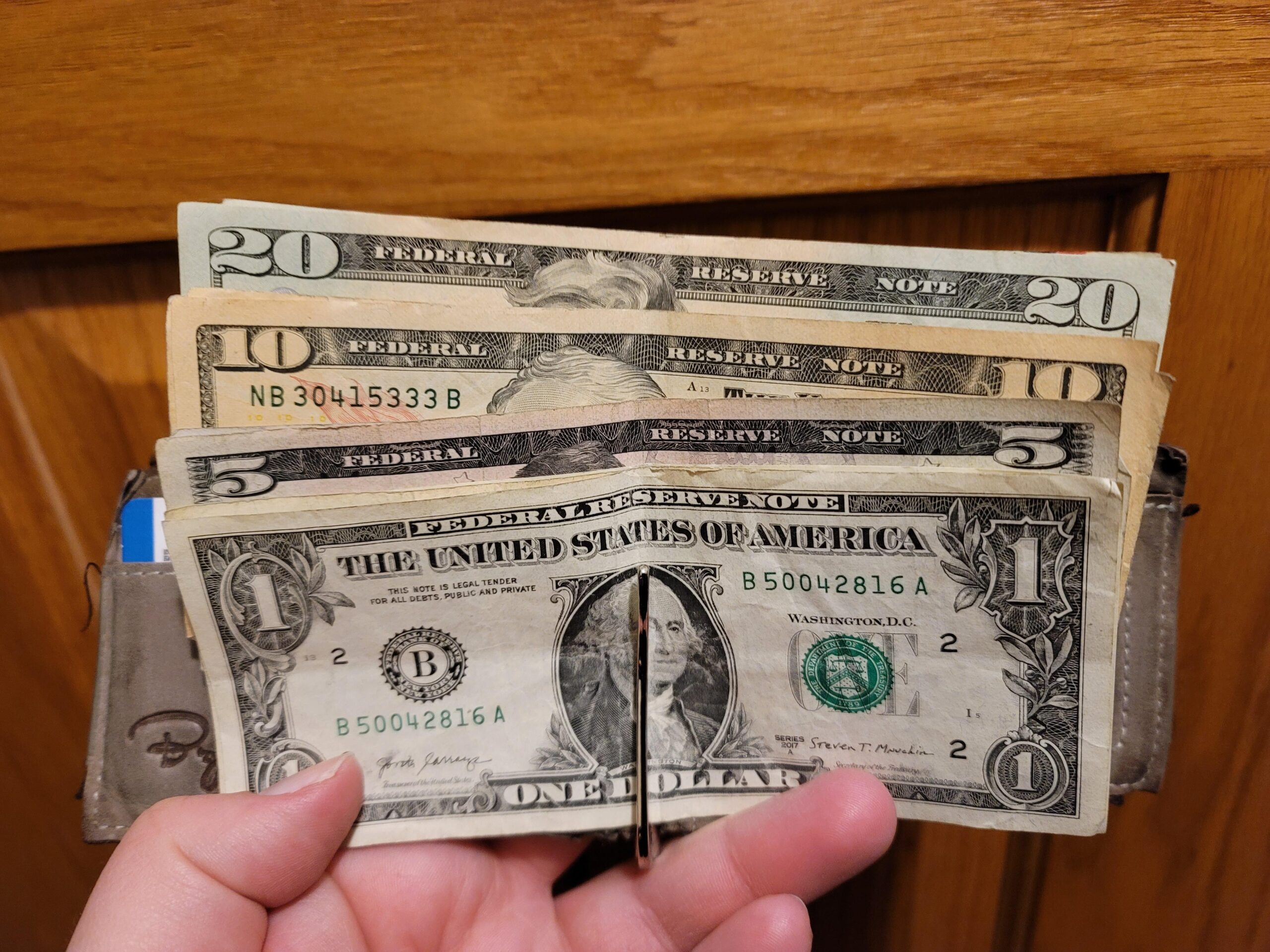
A simple financial ritual can create clarity, efficiency and control.
Buenos Aires, June 2026
Some people place every banknote in their wallet according to value, beginning with the smallest denomination and ending with the largest. The habit may appear insignificant, but it can reveal how individuals create practical order, reduce uncertainty and manage everyday decisions. Psychologists caution that one isolated behavior cannot define a personality or establish a diagnosis. In most cases, arranging money is simply an efficient routine reinforced through repetition.
Organizing banknotes makes cash easier to identify and use. A person can quickly locate the amount needed for a purchase, calculate available funds and avoid handing over the wrong denomination. The arrangement reduces the number of small decisions required during a transaction. Once repeated regularly, it can become an automatic habit performed with little conscious thought.
The direction of the sequence may also have a practical explanation. Placing smaller notes first makes them immediately available for minor expenses, while larger denominations remain protected at the back of the wallet. Other people prefer the opposite order because they want the most valuable notes visible first. Neither method has a universally accepted psychological meaning, and cultural practices, wallet design and professional experience may influence the choice.
People who value structure may find this kind of organization especially satisfying. Predictable arrangements reduce the effort required to search, compare and decide. A wallet in which every note has an assigned position creates a small environment that remains understandable and controlled. That sensation can be comforting when other aspects of daily life feel hurried or uncertain.
Psychology recognizes that manageable organizational tasks can support emotional regulation. Cleaning a desk, arranging documents or preparing clothes for the following day may create a temporary sense of stability. Ordering banknotes can perform a similar function because the task is concrete, limited and easy to complete. The individual immediately sees the result and knows that one small part of the environment is under control.
This does not mean that everyone who organizes cash is anxious or emotionally distressed. Many people adopt the practice because they learned it from parents, employment or repeated experience. Cashiers, accountants, bank employees and retail workers frequently arrange currency to prevent mistakes and accelerate transactions. A professional procedure can later become a personal habit carried into ordinary life.
Attention to detail may also contribute. Individuals who notice small inconsistencies are more likely to align banknotes, place them in the same direction or separate them by value. This preference can coexist with careful planning, punctuality and methodical financial management. However, observing one organized wallet is not enough to conclude that a person is highly conscientious in every area of life.
Some people maintain strict order in one context while tolerating disorder elsewhere. A perfectly arranged wallet may exist beside an untidy desk or an unpredictable schedule. Human behavior is situational, and individuals often create organization only where it provides immediate practical value. The habit therefore reveals more about the management of cash than about the person’s complete psychological profile.
The practice may encourage greater awareness of available money. Unlike digital payments, physical currency provides visible and tangible evidence of spending. When notes are arranged by denomination, the person can assess the contents of the wallet without counting every bill individually. This visibility may support budgeting and reduce accidental overspending.
Behavioral economics has shown that people do not always treat equal monetary values identically. Larger banknotes can feel more difficult to spend than the equivalent amount divided into smaller notes. Breaking a large bill may create the impression that a protected reserve has been opened, while smaller denominations are more easily assigned to routine purchases. This phenomenon is often described as the denomination effect.
Arranging notes can make that difference more noticeable. A person may consciously preserve the larger bills while using smaller ones for everyday expenses. The wallet becomes a simple form of mental accounting in which different denominations acquire different purposes. Although this strategy does not guarantee responsible financial behavior, it can function as a practical self-control mechanism.
The habit can also reduce the discomfort associated with payment. Searching through disorganized cash while other customers wait may create pressure and increase the chance of error. A predictable sequence allows the transaction to proceed more smoothly. The resulting relief reinforces the behavior and makes it more likely to be repeated.
Repetition is essential to understanding such routines. Habits form when an action is performed consistently in response to the same context. Opening a wallet becomes the cue, arranging or selecting the notes becomes the action and completing the payment efficiently becomes the reward. Over time, the sequence requires less conscious attention.
Popular explanations sometimes connect highly organized behavior with obsessive-compulsive disorder, but that conclusion is usually inappropriate. Obsessive-compulsive disorder involves intrusive and unwanted thoughts, significant anxiety and repetitive actions performed to reduce distress. A preference for neatly arranged banknotes, without suffering or functional impairment, does not meet those criteria. Orderliness and a clinical compulsion are not the same.
Concern becomes more relevant when the person feels unable to tolerate any deviation from the arrangement. Warning signs may include intense distress when another person moves the notes, repeated checking that consumes substantial time or fear that something harmful will happen unless the ritual is completed precisely. Even then, the behavior must be evaluated within a broader pattern by a qualified professional. No diagnosis should be based on the wallet habit alone.
Personality claims should be treated with similar caution. An orderly arrangement may be consistent with conscientiousness, planning or preference for routine, but it cannot confirm those traits independently. Personality is reflected through stable patterns of thought, emotion and behavior across many situations. One action can provide a clue, not a complete assessment.
There may also be an aesthetic component. Banknotes have different colors, sizes, images and states of wear, and some people enjoy creating visual symmetry. They may align the edges, orient every portrait in the same direction or separate damaged notes from newer ones. The satisfaction resembles arranging books by height or organizing clothing by color.
The declining use of cash gives the habit another cultural dimension. Digital wallets and contactless payments have removed much of the physical organization once associated with money. Spending is now recorded automatically by applications and banking platforms rather than represented by notes disappearing from a wallet. People who continue handling cash may preserve organizational rituals that were once more common.
Physical money can also create a stronger sense of limitation. The contents of a wallet are finite and visible, while digital balances may feel more abstract during everyday purchases. Organizing banknotes reinforces the awareness that each payment changes the remaining supply. For some individuals, that physical feedback supports more deliberate consumption.
Ultimately, arranging banknotes from smallest to largest usually represents a combination of practicality, learned routine and preference for predictable order. It may help a person pay more efficiently, monitor cash and create a small feeling of control. It does not automatically reveal anxiety, perfectionism or a mental disorder. The meaning depends on the motivation, flexibility and emotional consequences surrounding the behavior.
Los hábitos pequeños también organizan la vida. / Small habits also organize life.