

 Phoenix 24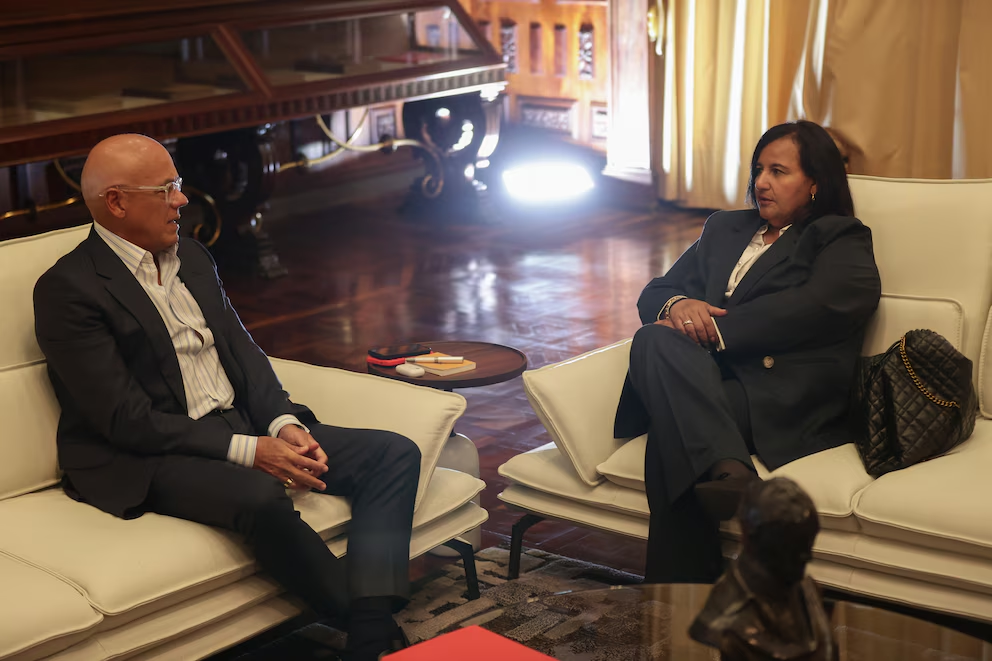
The process begins with institutions, guarantees and political trust.
CARACAS, Venezuela | June 2026
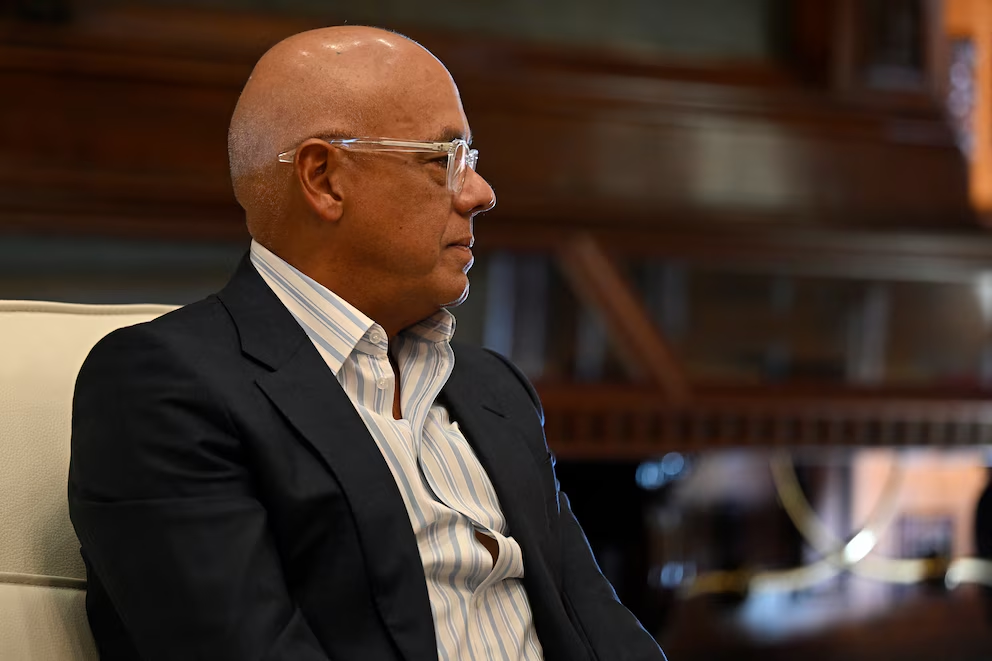
The United States has endorsed a new political dialogue in Venezuela aimed at rebuilding the electoral system, restoring institutional credibility and creating conditions for a democratic transition. Washington’s support followed a meeting in Caracas between National Assembly President Jorge Rodríguez and Dinorah Figuera, head of the parliament elected in 2015. The State Department described the encounter as an initial step toward a broader process centered on political participation, freedom of expression and stronger institutions. The initiative places electoral reform at the heart of a renewed attempt to move Venezuela away from prolonged political confrontation.
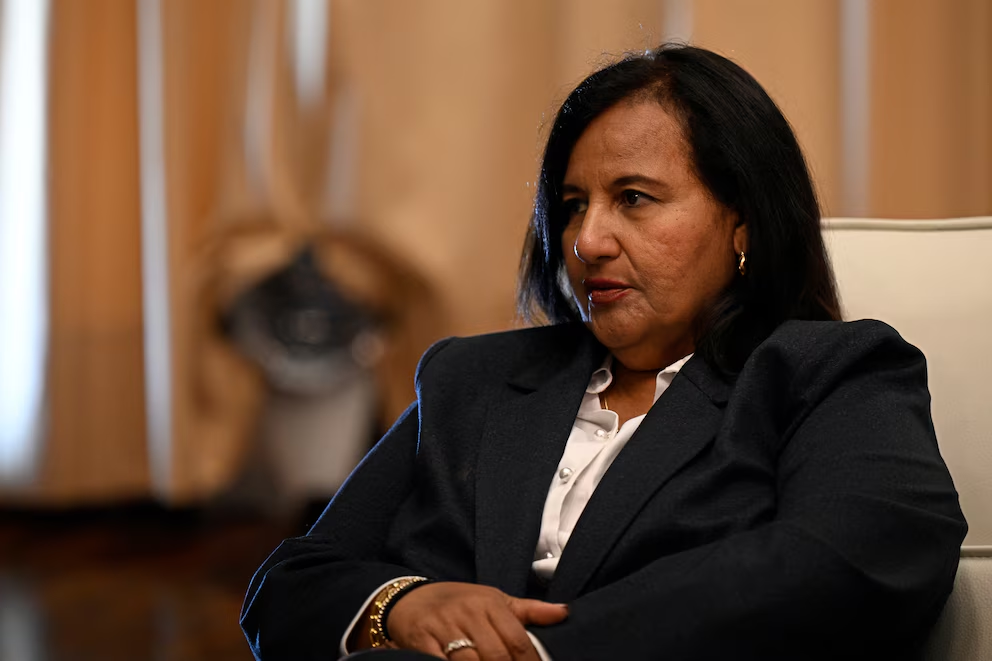
The meeting took place at the Federal Legislative Palace and brought together representatives from sharply opposing political sectors. Figuera’s participation was especially significant because Washington continues to recognize the 2015 parliament as the last Venezuelan institution produced by elections it considers democratically legitimate. Her return to the country after eight years abroad also gave the talks symbolic weight. The encounter suggested that direct communication remains possible despite years of institutional conflict, disputed elections and broken negotiations.
The State Department argued that inclusive dialogue must serve as the foundation of any credible democratic transition. Its public position emphasized the need to rebuild institutions, reinforce the National Electoral Council and establish durable guarantees for political competition. Washington also highlighted freedom of expression and open civic participation as essential conditions for a legitimate process. The central message was that technical electoral reform cannot succeed without broader political rights and institutional confidence.
Figuera said she accepted an invitation connected to the preparation of an agenda focused on political rights and public freedoms. She framed the talks as an effort to resolve differences through institutional mechanisms rather than confrontation. One of her principal objectives is the creation of an electoral authority capable of generating trust among voters and political organizations. That requirement reflects the long-standing criticism that Venezuela’s electoral institutions have lacked sufficient independence and credibility.
The National Electoral Council has become one of the most sensitive elements in the country’s political crisis. Opposition groups, international observers and foreign governments have repeatedly questioned its composition, procedures and capacity to guarantee equal competition. The new dialogue therefore treats the electoral authority not as a secondary administrative issue, but as the institutional center of any future transition. Without confidence in the referee, political actors are unlikely to accept electoral results or participate under shared rules.
Earlier in June, United States Secretary of State Marco Rubio had called for a new electoral committee capable of organizing elections with guarantees for all political forces. That position now appears aligned with the agenda discussed in Caracas. Washington is seeking practical and verifiable reforms rather than a purely rhetorical declaration of democratic intent. The emphasis on technical work suggests that future negotiations may focus on institutional design, electoral registration, oversight mechanisms and protections for political participation.
The talks are expected to continue in Caracas during the coming weeks. According to the United States, the objective is to establish a formal road map that can guide institutional reform and gradually expand political participation. The process remains at an early stage, and neither side has announced binding agreements or a timetable for elections. Its credibility will depend on whether the discussions produce measurable commitments rather than another cycle of negotiations without implementation.
The absence of a joint declaration after the first meeting underlined the fragility of the initiative. Jorge Rodríguez and Dinorah Figuera represent political structures with fundamentally different interpretations of Venezuela’s recent history and constitutional order. Reaching agreement will require more than personal contact because the dispute involves control of institutions, recognition of authorities and the conditions under which power could eventually change hands. Even limited progress will depend on whether both sides accept rules that impose real constraints on their own political interests.
For Washington, the dialogue offers an opportunity to support transition without relying exclusively on sanctions or diplomatic isolation. United States policy toward Venezuela has shifted repeatedly between pressure, negotiation and selective engagement. Backing institutional talks allows the State Department to present a political route based on electoral guarantees and negotiated reform. It also gives Washington a framework for evaluating whether Venezuelan authorities are prepared to make concessions that can be independently verified.
For the Venezuelan opposition, participation carries both opportunity and risk. A credible electoral reconstruction could reopen legal space for political competition and provide a path toward internationally recognized elections. However, entering negotiations without firm guarantees could expose opposition leaders to criticism from groups that view dialogue as a mechanism used to delay change. Figuera will therefore need to demonstrate that engagement can produce concrete institutional gains rather than symbolic meetings.
The government side also faces a strategic calculation. Accepting a more credible electoral system could reduce international pressure and improve Venezuela’s access to diplomatic and economic normalization. At the same time, stronger institutions would limit the ruling establishment’s control over political competition. The talks will test whether authorities are willing to exchange some degree of institutional control for broader legitimacy and international recognition.
The wider Venezuelan population remains the decisive constituency in the process. Years of political instability, economic deterioration and mass migration have weakened confidence in both institutions and negotiations. Any transition plan must therefore produce guarantees that citizens can understand and trust, including transparent rules, open participation and meaningful protection for dissent. A political agreement that remains confined to elite negotiations will struggle to generate lasting legitimacy.
The initiative is still too fragile to be described as a transition in progress. It is better understood as an attempt to establish the institutional conditions that could eventually make a transition possible. Rebuilding electoral credibility will require technical reform, political compromise and sustained international support. The first meeting has opened a door, but the strength of the process will be measured by what follows.
Contra la propaganda, memoria. / Against propaganda, memory.