

 Phoenix 24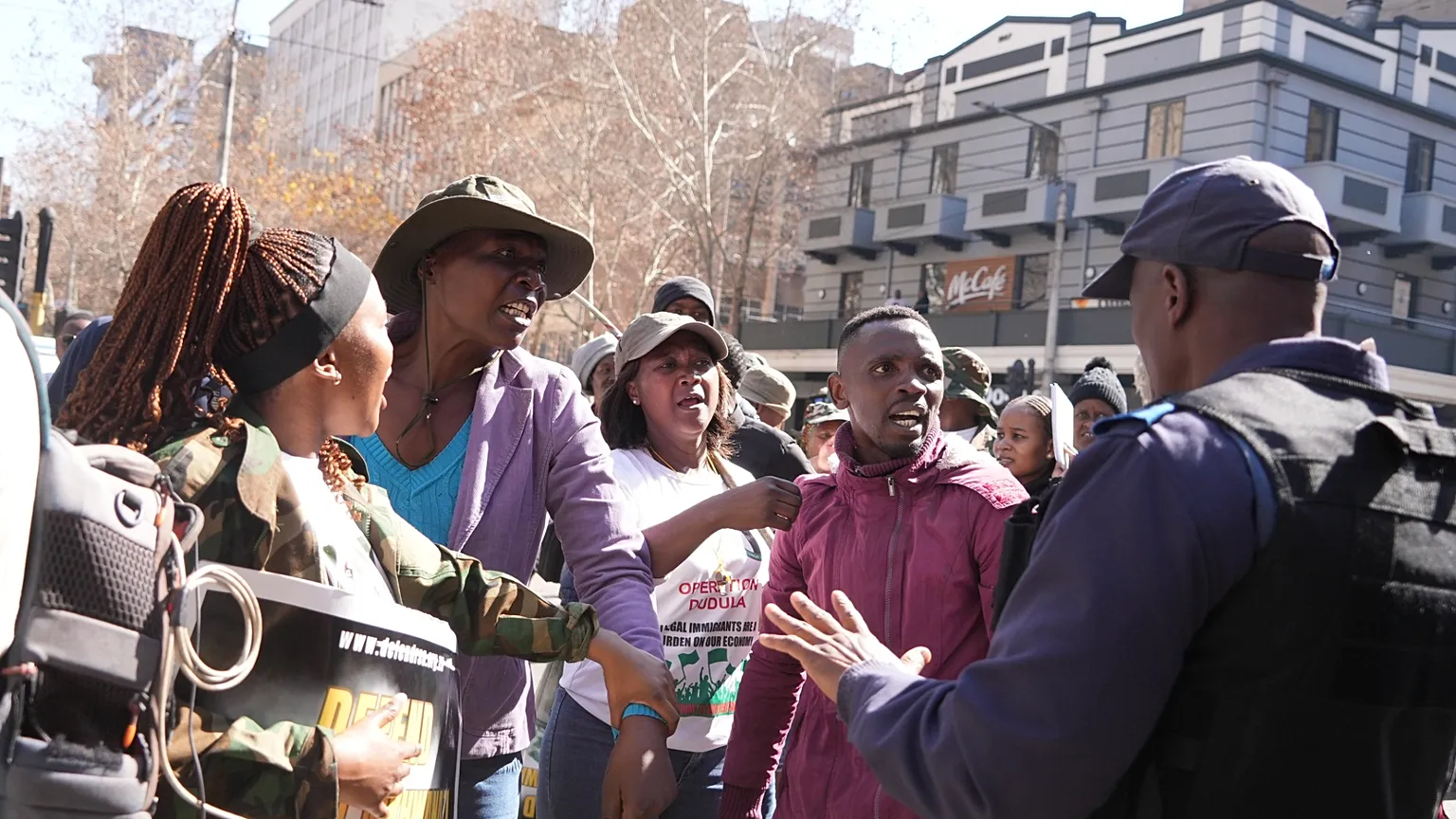
Social pressure is now testing state authority.
Pretoria, June 2026. President Cyril Ramaphosa has promised decisive action as South Africa confronts a new surge of anti-immigration tension, public protests and warnings of possible vigilante action against undocumented foreigners. The crisis has placed the government under pressure from two directions at once: citizens demanding stricter border enforcement and foreign communities warning of intimidation, threats and xenophobic violence.
The immediate trigger is the rise of anti-immigration groups that have set June 30 as a deadline for undocumented migrants to leave South Africa. Their message has amplified a volatile national debate over unemployment, public services, crime, social frustration and the role of foreign workers in Africa’s most industrialized economy. Ramaphosa acknowledged that many South Africans are raising difficult but legitimate concerns, yet he also warned that no private group has the authority to enforce immigration law.
That distinction is now central to the political test facing Pretoria. South Africa has long been a magnet for migrants from Zimbabwe, Mozambique, Lesotho, Nigeria, Ghana, Malawi and Ethiopia, among others, creating one of the continent’s most complex migration landscapes. But economic stagnation, high unemployment and pressure on health and education systems have turned migration into a combustible political issue, especially in communities where poverty and institutional distrust already shape daily life.
The danger is not theoretical. South Africa has a documented history of xenophobic violence, including the 2008 attacks that left more than 60 people dead. Recent complaints from Ghana, Nigeria, Kenya and Mozambique suggest that foreign nationals are again becoming targets of threats and violence, while Mozambique has reported the killing of five of its citizens in attacks described as xenophobic. Ghana has also repatriated hundreds of its nationals amid rising fears.
Ramaphosa’s government is attempting to balance enforcement with containment. Since the formation of South Africa’s coalition government in 2024, migration control has moved higher on the national agenda, with authorities reporting more than 100,000 deportations over the last two years and hundreds of thousands of undocumented entry attempts blocked in the last year. Yet these figures have not neutralized public anger, partly because the deeper crisis is not only about borders, but about unemployment, service delivery and the legitimacy of the state.
The president’s warning against vigilante action is therefore more than a legal statement. It is an attempt to prevent immigration from becoming a parallel arena of street power, where organized groups claim the authority to decide who belongs and who must leave. If the government fails to respond credibly, anti-immigration networks could gain further influence by presenting themselves as substitutes for an ineffective state.
South Africa now faces a structural dilemma that reaches beyond migration policy. The country must enforce the law without validating xenophobic pressure, address public frustration without scapegoating foreigners, and rebuild state capacity in communities where institutional weakness has allowed resentment to harden into political mobilization. Ramaphosa’s promise to act may calm the immediate storm, but the deeper test will be whether Pretoria can separate legitimate governance failures from dangerous social targeting before the June 30 deadline becomes a national flashpoint.
Beyond the news, the pattern. / Más allá de la noticia, el patrón.