

 Phoenix 24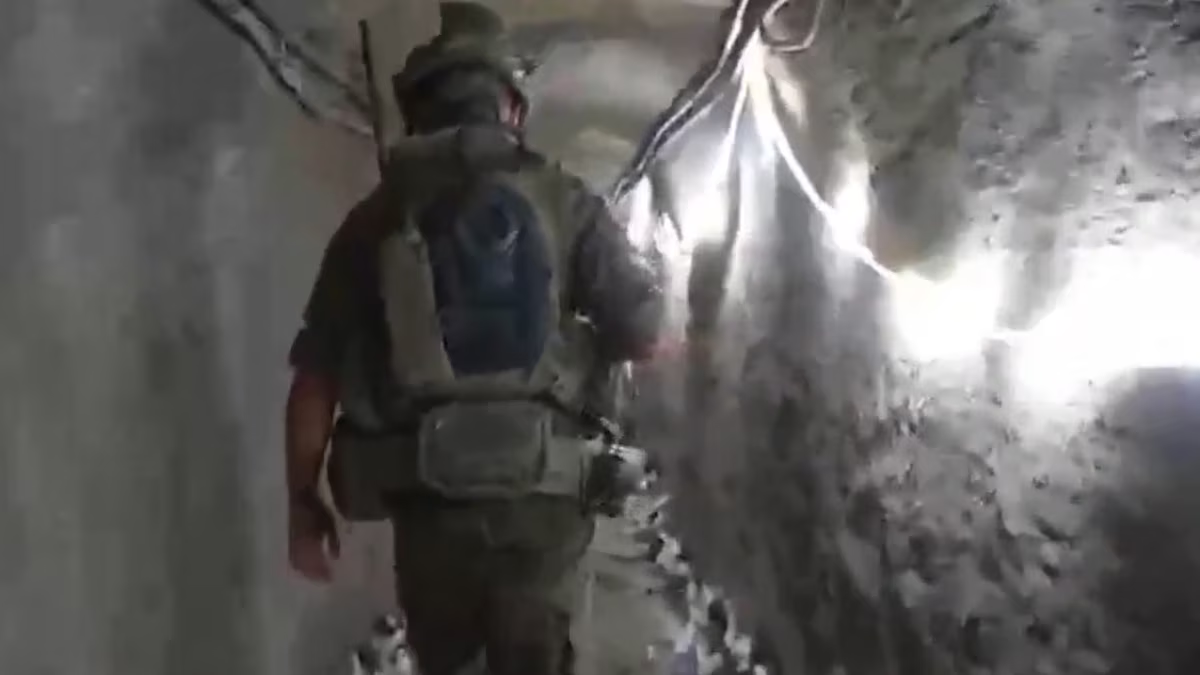
Beneath the ground, the war expands.
Beirut, April 2026. Israel has announced the destruction of a major Hezbollah tunnel complex in southern Lebanon, describing it as one of the largest underground networks discovered in the current conflict. Israeli military sources say the system was built over more than a decade with Iranian support and designed for infiltration, storage and coordinated attacks against northern Israel. What was hidden infrastructure is now being reframed as a strategic battlefield in itself.
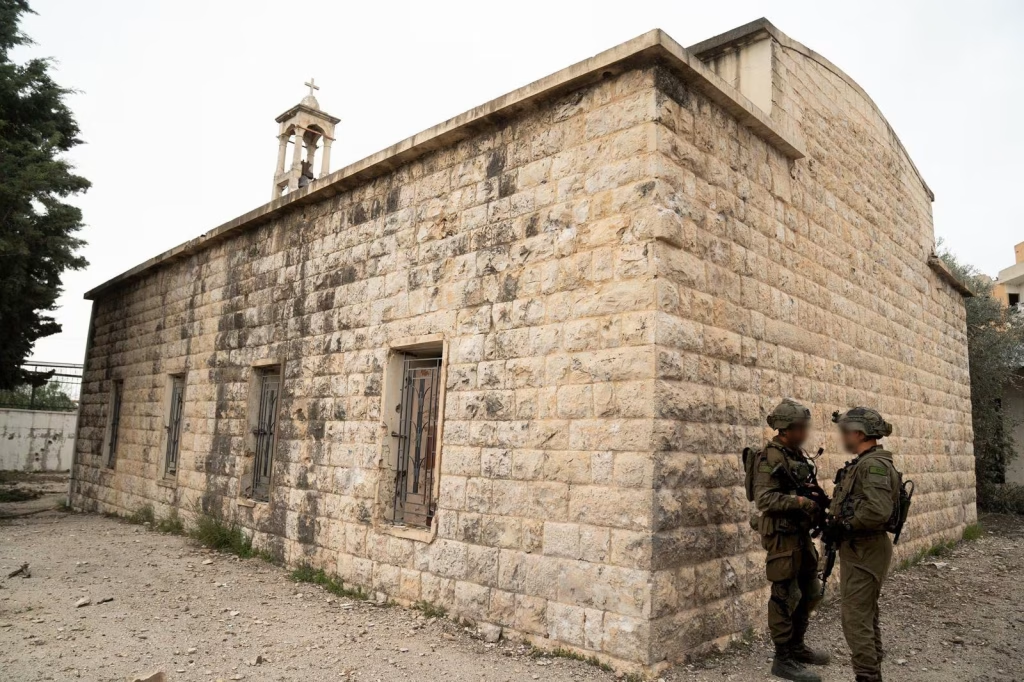
The tunnel network, located near Kantara, reportedly included interconnected passages stretching several kilometers, with areas prepared for weapons storage, communications and troop deployment. Israeli forces described it as capable of hosting large numbers of fighters, including Radwan units assigned to cross-border operations. Its proximity to Israeli communities reinforced its perceived role as an offensive platform rather than a defensive shelter.
This strike forms part of a broader Israeli campaign to dismantle Hezbollah’s military infrastructure across southern Lebanon. In recent months, Israel has intensified operations against launch sites, command centers and logistical networks tied to the group. The destruction of tunnels has become a central objective, reflecting a shift from surface confrontation to subterranean warfare.
The strategic significance goes beyond a single operation. Hezbollah’s tunnel systems represent a long-term doctrine built around asymmetry, concealment and proximity to Israeli territory. For Israel, eliminating these networks is not only about reducing immediate threats, but about dismantling the operational architecture that enables surprise attacks and territorial penetration. Underground warfare is no longer secondary; it is becoming a defining layer of the conflict.
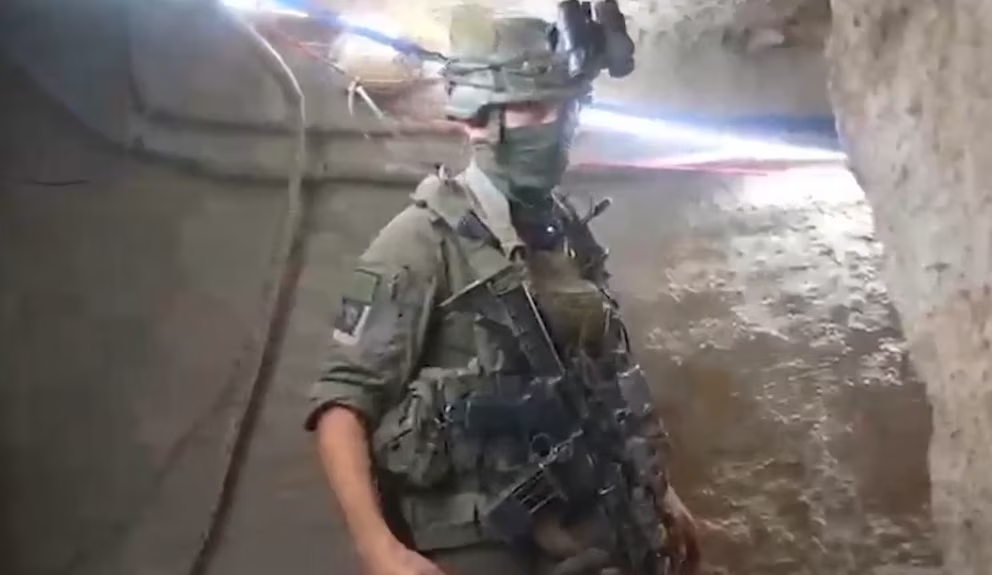
The deeper implication is structural. The Israel-Hezbollah confrontation is evolving into a multi-domain conflict where geography is no longer limited to visible terrain. Airspace, digital systems and underground corridors now form a continuous battlespace shaped by external actors, particularly Iran. What was once a border conflict is now an integrated theater of regional power projection.
Israel did not only destroy tunnels. It exposed the hidden dimension of a war that increasingly operates below visibility, where infrastructure becomes strategy and secrecy becomes force.
Lo visible y lo oculto, en contexto. / The visible and the hidden, in context.