

 Phoenix 24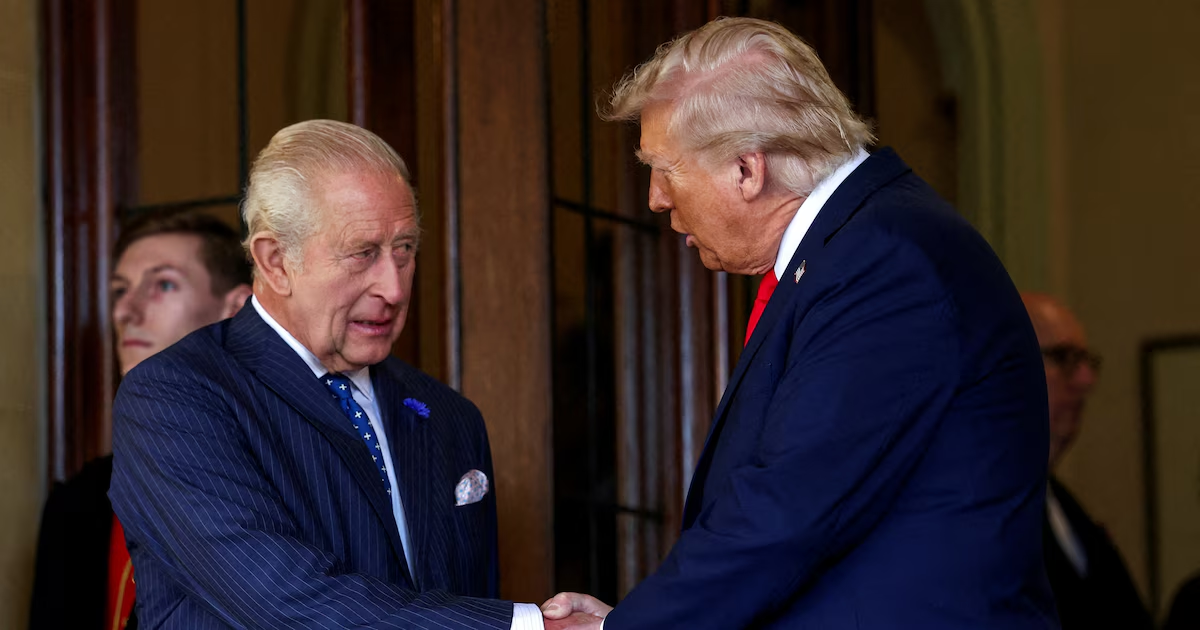
Ceremony speaks when politics becomes too sharp.
Washington, April 2026.
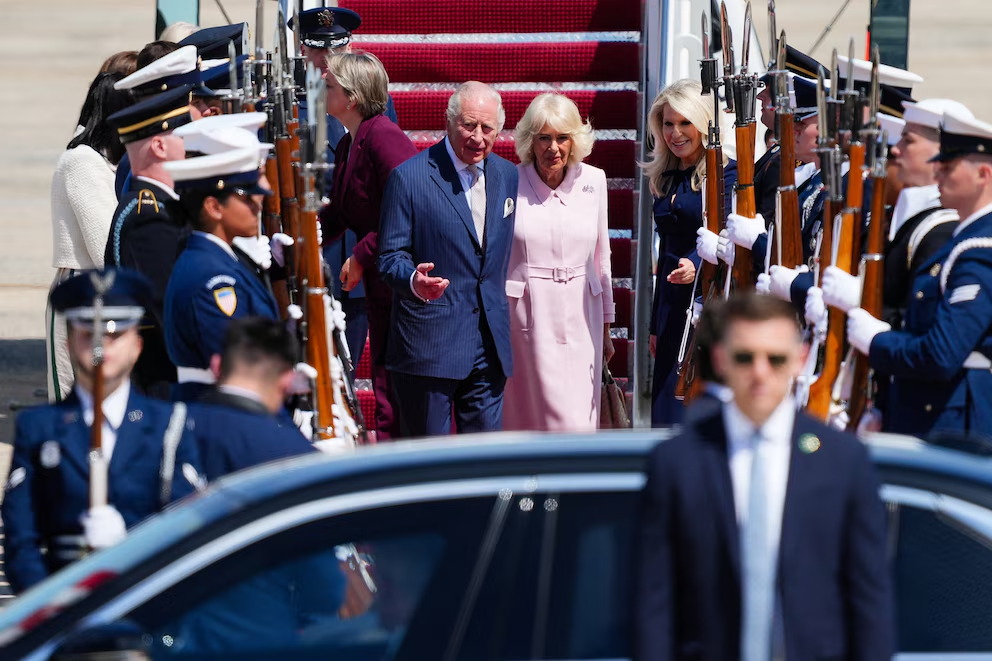
King Charles III arrived in Washington with Queen Camilla for a four-day state visit shaped by ceremony, symbolism and an unusually tense diplomatic backdrop. The monarch was received by Donald Trump and First Lady Melania Trump at the White House after landing at Joint Base Andrews, beginning one of the most politically charged trips of his reign. The visit is formally tied to the 250th anniversary of American independence, but its deeper purpose is harder to miss. Britain is using royal diplomacy to soften a relationship strained by war, disagreement and strategic mistrust.
The tension centers on the conflict with Iran. Washington has pressed London to support the U.S.-Israeli military campaign and to assist more directly in efforts to reopen or secure the Strait of Hormuz. Prime Minister Keir Starmer has resisted that pressure, refusing to treat the war as Britain’s responsibility and declining to place British military assets under Washington’s preferred timetable. Trump interpreted that stance as disloyalty from a historic ally. London framed it as strategic restraint.
That disagreement has placed the so-called special relationship under rare stress. For decades, the phrase served as diplomatic shorthand for military alignment, intelligence cooperation and shared global influence. Yet the Iran war has exposed a more complicated reality: allies may share history without sharing escalation logic. Britain wants proximity to Washington, but not automatic ownership of every American conflict.
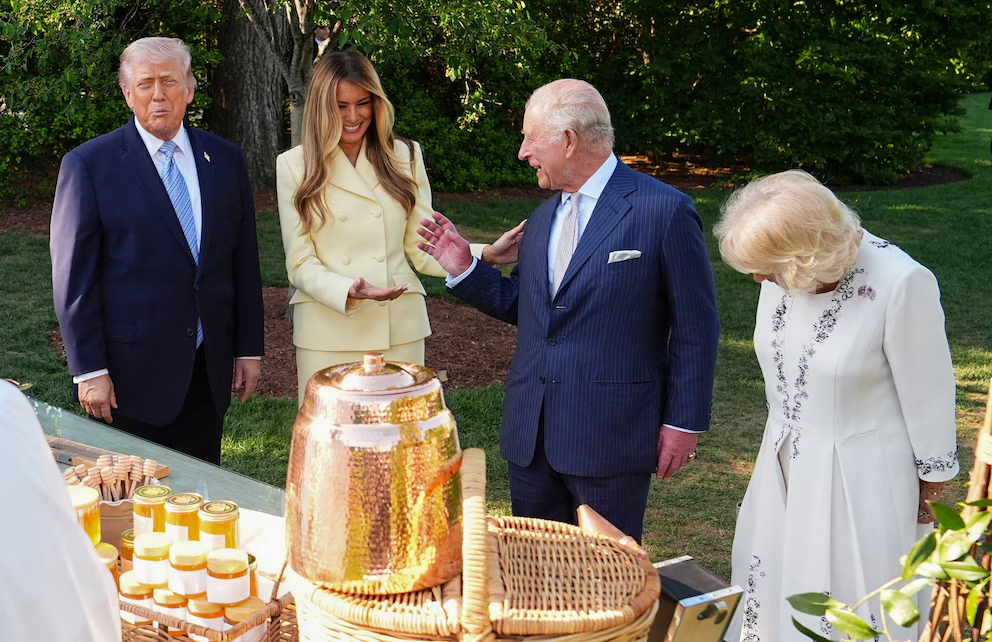
Charles enters this environment not as a policymaker, but as a symbolic instrument of statecraft. His constitutional role requires political neutrality, yet monarchy still carries diplomatic utility precisely because it can operate above party language. A king cannot resolve a military disagreement over Iran, but he can create space for civility when political channels harden. That is the purpose of the visit: to lower the emotional temperature without publicly rewriting policy.
Trump’s admiration for the British monarchy gives London an opening. The president has long treated royal encounters as markers of prestige, continuity and personal recognition. For Starmer’s government, that matters. If direct political persuasion fails, ceremonial diplomacy can preserve access, reshape tone and reduce the risk of public rupture between two governments that still depend on each other in intelligence, defense and finance.
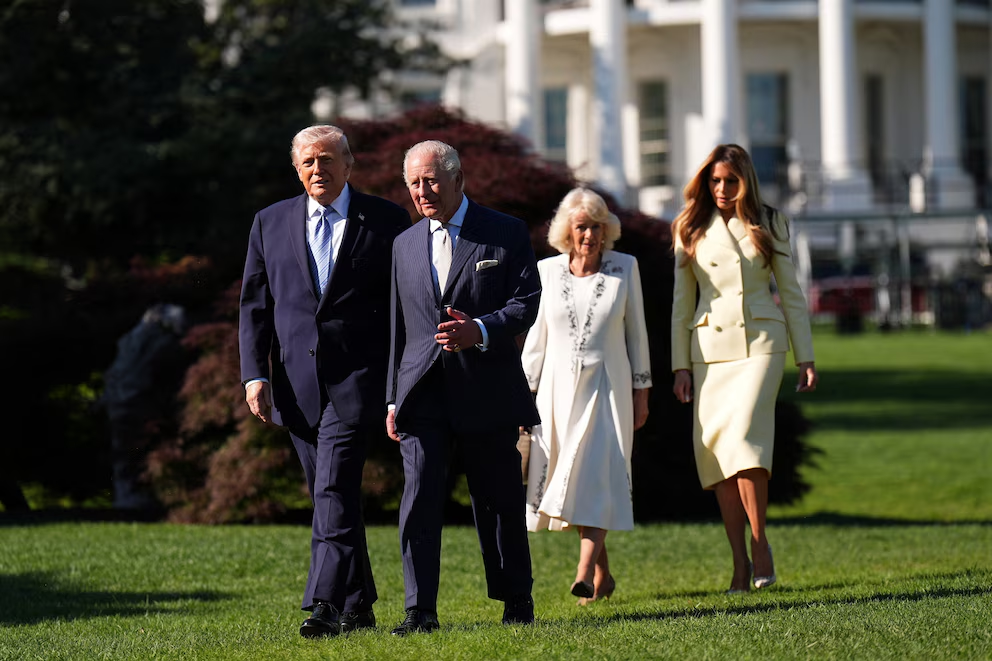
The visit also unfolds under heightened security anxiety after a shooting disrupted Washington just before the royal arrival. That incident added another layer of pressure to an itinerary already loaded with symbolic weight. Royal trips are choreographed to project stability, but this one enters a capital marked by violence, political division and wartime urgency. Every image of protocol now carries a second message: institutions are trying to appear composed while the world around them fractures.
The itinerary reinforces that ambition. A White House reception, congressional address, state dinner, memorial gestures and public engagements all serve to remind both countries of their shared historical architecture. The message is not subtle. Britain and the United States may disagree over Iran, but they remain bound by memory, defense systems, financial networks and cultural intimacy. The monarchy is being deployed to make that bond visible again.
Still, the symbolism has limits. Charles cannot erase Trump’s frustration with Starmer, nor can ceremonial warmth eliminate the strategic gap over the Middle East. If Washington expects unconditional support, and London insists on selective alignment, the friction will remain beneath the surface. The visit may repair tone, but it cannot by itself resolve doctrine.
That distinction is crucial. Modern alliances no longer operate only through loyalty, but through negotiation of risk. The Iran crisis has forced Britain to ask how far partnership with Washington should extend when escalation carries global consequences. It has also forced the United States to confront a world where even close allies may refuse automatic participation in military campaigns. The royal visit does not end that debate. It stages it under chandeliers.
For Charles, the trip becomes a test of monarchy’s relevance in geopolitical crisis. In an age of drones, blockades, energy shocks and strategic fragmentation, the old language of crowns and ceremonies may seem archaic. Yet precisely because politics has become so abrasive, symbolic diplomacy retains value. It offers a way to communicate continuity when governments cannot fully agree.
The arrival of King Charles in Washington is therefore not merely a royal visit. It is a diplomatic intervention without the vocabulary of intervention. It shows a Britain trying to preserve influence without surrendering autonomy, and an America willing to receive ceremony even while demanding alignment. Between protocol and pressure, the Atlantic relationship is being carefully held together.
Power sometimes needs symbols to survive its own disputes.
El poder a veces necesita símbolos para sobrevivir a sus propias disputas.