

 Phoenix 24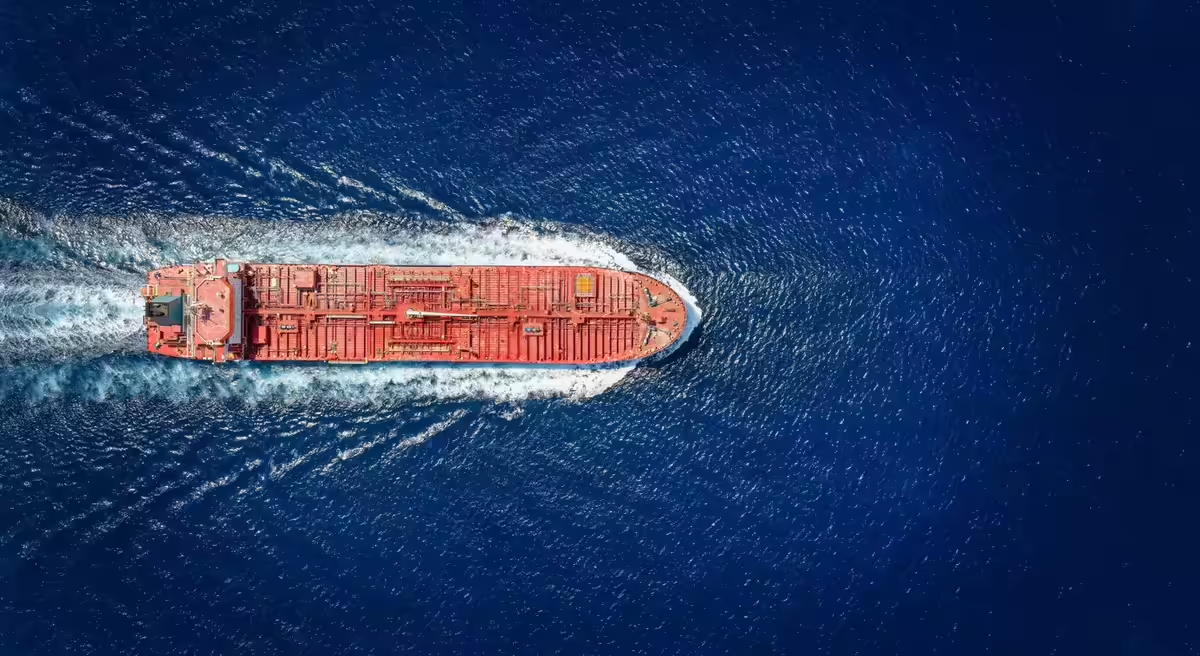
Oil is again the language of war.
Tehran, April 2026. The war in Iran is no longer confined to missiles, blockades and diplomacy; it is now moving through energy prices, shipping routes and household costs across the world. The latest market outlook warns that energy prices could register their sharpest rise since 2022, driven by the conflict and the disruption of the Strait of Hormuz. What began as a regional confrontation is becoming a global inflationary engine.
The shock is already visible in crude markets. Brent prices have moved above 110 dollars per barrel, while U.S. benchmark crude has also crossed triple digits amid uncertainty over supply and maritime security. The World Bank now expects energy prices to rise sharply this year, reversing the downward trend seen in commodity markets during the previous cycle. The message is clear: geopolitical risk has become a direct surcharge on global growth.
Hormuz remains the center of the crisis. Roughly one fifth of the world’s seaborne crude trade depends on that corridor, and the conflict has nearly paralyzed traffic through one of the most strategic chokepoints on the planet. Even if the most severe disruptions begin to ease, the effects of attacks on infrastructure and transport bottlenecks are expected to keep prices elevated. Markets are not only pricing scarcity; they are pricing fear.
The damage is spreading beyond oil. Natural gas, liquefied natural gas and fertilizers are also exposed to the same chain reaction, increasing pressure on food systems, industrial production and public budgets. For Europe, the cost is especially sensitive because higher fossil fuel imports arrive while governments are already managing weak growth, inflation fatigue and social discontent. Energy security has become a fiscal problem, not only a strategic one.
The deeper risk is stagflation. If energy remains expensive while growth slows, central banks face a narrower policy corridor and governments face rising pressure to protect vulnerable households without distorting markets. The war in Iran is therefore testing more than supply chains; it is testing whether the global economy learned anything from 2022. Once again, a distant conflict is becoming a domestic bill.
Contra la propaganda, memoria. / Against propaganda, memory.