

 Phoenix 24
When fear collides with regulatory zero tolerance.
Prague, April 2026
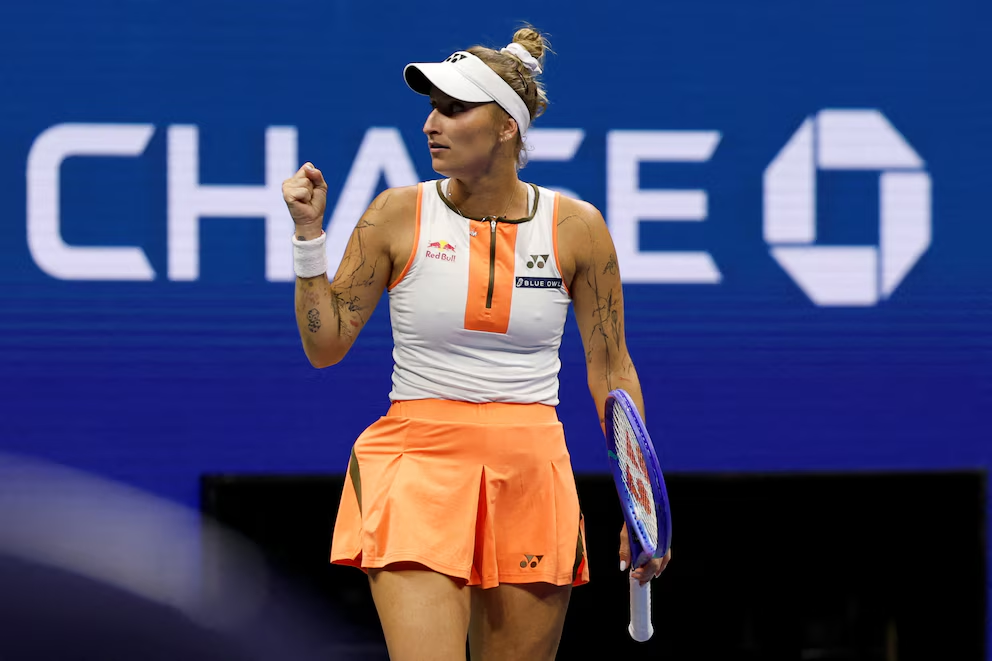
Markéta Vondroušová, the 2023 Wimbledon champion, is facing one of the most serious threats of her career after being charged over refusing a doping control, an offense that can carry a suspension of up to four years under the sport’s anti-doping rules. The case centers on an incident at her home, where she has said that fear, exhaustion, and acute stress shaped her reaction to the testing process. For now, the dispute is not publicly defined by a positive result, but by refusal and the legal meaning of justification inside a system designed to tolerate very little ambiguity.

That distinction matters because anti-doping regimes depend on immediacy, surprise, and strict compliance. If athletes are granted broad personal discretion to reject testing, the credibility of the system weakens quickly. But if the rules are applied without sufficient sensitivity to context, especially in situations involving fear, mental distress, or perceived personal insecurity, the same system can appear rigid to the point of institutional blindness. This is where the case moves beyond tennis procedure and into the politics of legitimacy.
The symbolic weight is heightened by Vondroušová’s status. She is not a peripheral figure in the sport, but a recent Grand Slam champion whose name carries both visibility and institutional value. Her defense has centered on the claim that she felt psychologically overwhelmed rather than evasive, which introduces a tension that modern sport has not fully resolved. Governing bodies increasingly speak the language of mental health, but their enforcement structures still operate according to logics built for suspicion, control, and deterrence.
That tension is now impossible to ignore. Elite sport wants to present itself as both humane and uncompromising, protective and punitive, aware of athlete vulnerability yet intolerant of procedural deviation. In practice, those commitments can collide. A refusal to test may look, from one side, like a serious integrity breach. From another, it may appear as the product of panic, fatigue, or emotional breakdown. The legal process will determine which interpretation prevails, but the reputational pressure is already active.

The wider issue is not only whether Vondroušová will be sanctioned. It is whether anti-doping systems can distinguish between concealment and collapse without eroding the authority on which they depend. If they become too flexible, they invite manipulation. If they remain too inflexible, they risk punishing fear as if it were fraud. That is the narrow and uncomfortable line this case now forces tennis to confront.
What is unfolding in Prague is therefore larger than one athlete’s disciplinary exposure. It is a stress test for the moral architecture of contemporary sport. The question is no longer simply whether rules were broken, but whether institutions built to detect cheating can still process human fragility without converting it automatically into guilt.
Behind every data point, there is an intention. Behind every silence, a structure.
Detrás de cada dato, hay una intención. Detrás de cada silencio, una estructura.