

 Phoenix 24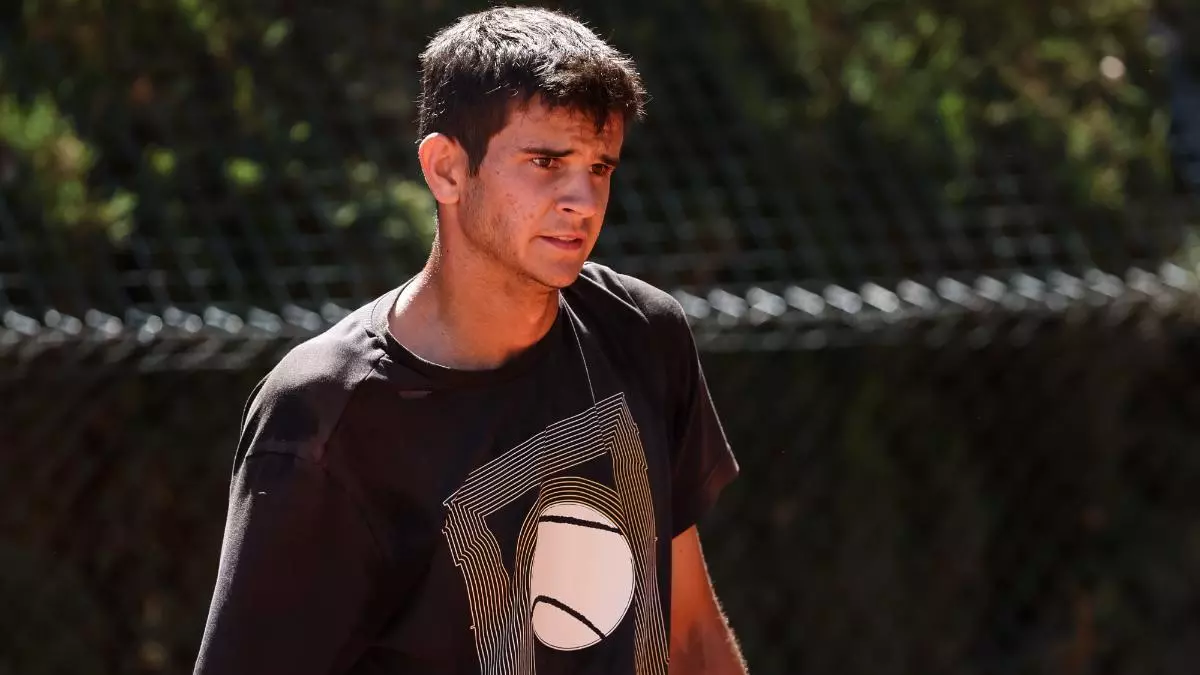
In tennis, talent often arrives with a witness.
Barcelona, April 2026. Rafa Jódar is beginning to draw attention not only because of his progression on court, but because of the emotional structure surrounding his rise. At the Barcelona Open, the focus is not limited to strokes, rankings, or projections. It also extends to the bond with his father, a relationship that appears to shape the atmosphere in which his development is taking place. What gives the story force is that it frames tennis not only as competition, but as transmission of discipline, expectation, and identity.
That kind of connection matters in a sport as psychologically exposed as tennis. A young player can refine technique with coaches and build physical preparation through training, yet the deeper emotional framework often begins elsewhere. In Jódar’s case, his father does not seem to function merely as background support, but as part of the meaning of his ascent. In elite sport, those bonds can become stabilizing forces, especially when public visibility arrives before full maturity has had time to settle.
There is also a broader pattern here. Tennis has long produced narratives in which family presence becomes inseparable from athletic formation. Sometimes that relationship turns heavy, even suffocating. Other times it becomes a source of coherence, a private axis that helps a player navigate the volatility of early promise. In Jódar’s case, the emphasis on a special connection suggests that his development is being read through trust and closeness rather than through the harsher language of pressure and control. That distinction can shape how a young athlete is perceived long before results fully define him.
Barcelona is also a symbolic setting for this kind of emergence. It is a space where Spanish tennis memory carries unusual weight, and where any rising player is inevitably measured against a culture of discipline, clay court identity, and inherited expectation. For a young name like Jódar, appearing there already means entering a much larger narrative field. Doing so while accompanied by a clearly visible paternal bond gives the story another layer, making his path feel less like isolated talent and more like a shared movement into public view.
The risk, of course, is that sentiment can sometimes overtake sporting substance. Young players do not need mythology too early. They need room to lose, adjust, and grow without being trapped inside symbolic overreading. But when handled with restraint, these human details can reveal something important. They remind audiences that behind every emerging athlete there is usually an invisible architecture of support, sacrifice, and repetition that never appears on the scoreboard.
That is what gives this story its depth. Rafa Jódar is not being framed only as a prospect, but as a son moving through a formative moment with someone whose presence appears deeply woven into his tennis life. That does not guarantee success, nor should it be romanticized too quickly. But it does add seriousness to his emergence. In a sport where solitude is often part of the profession, the image of a player rising with a meaningful paternal bond still carries unusual weight.
If Jódar’s career continues upward, the technical conversation will eventually dominate. Results, surfaces, tactical range, and resilience under pressure will take over the analysis. Yet at the beginning of a journey, stories like this matter because they reveal the emotional ecosystem from which a competitor is being formed. Sometimes the first real clue is not found in a statistic. Sometimes it is found in who is standing nearby when the climb begins.
Detrás de cada dato, hay una intención. Detrás de cada silencio, una estructura.
Behind every data point, there is an intention. Behind every silence, a structure.