

 Phoenix 24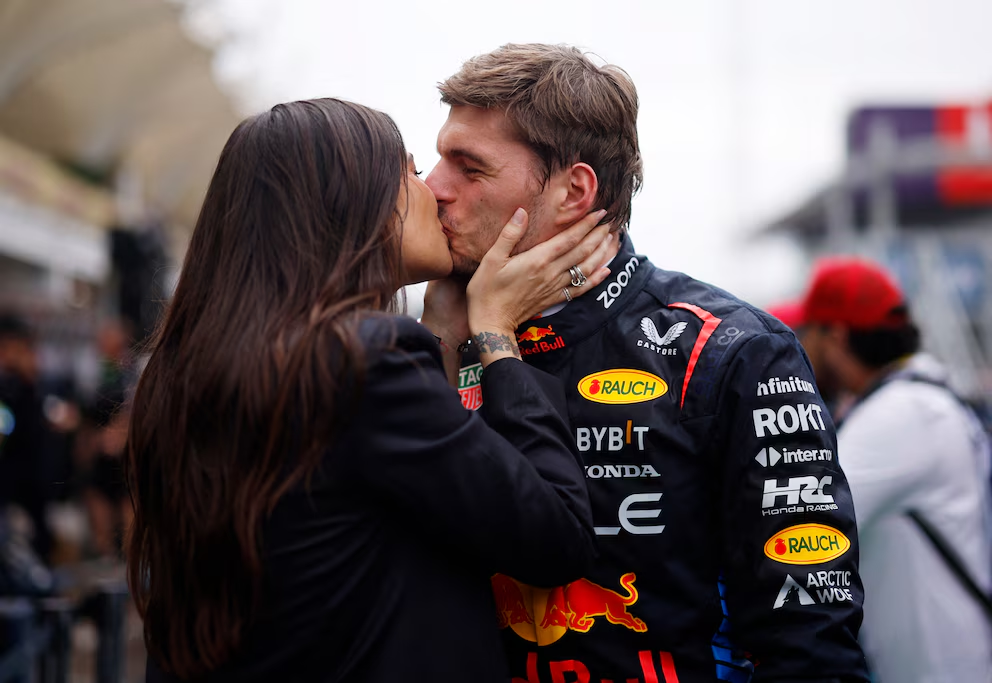
When elite competition begins to distrust its own pauses.
Amsterdam, April 2026
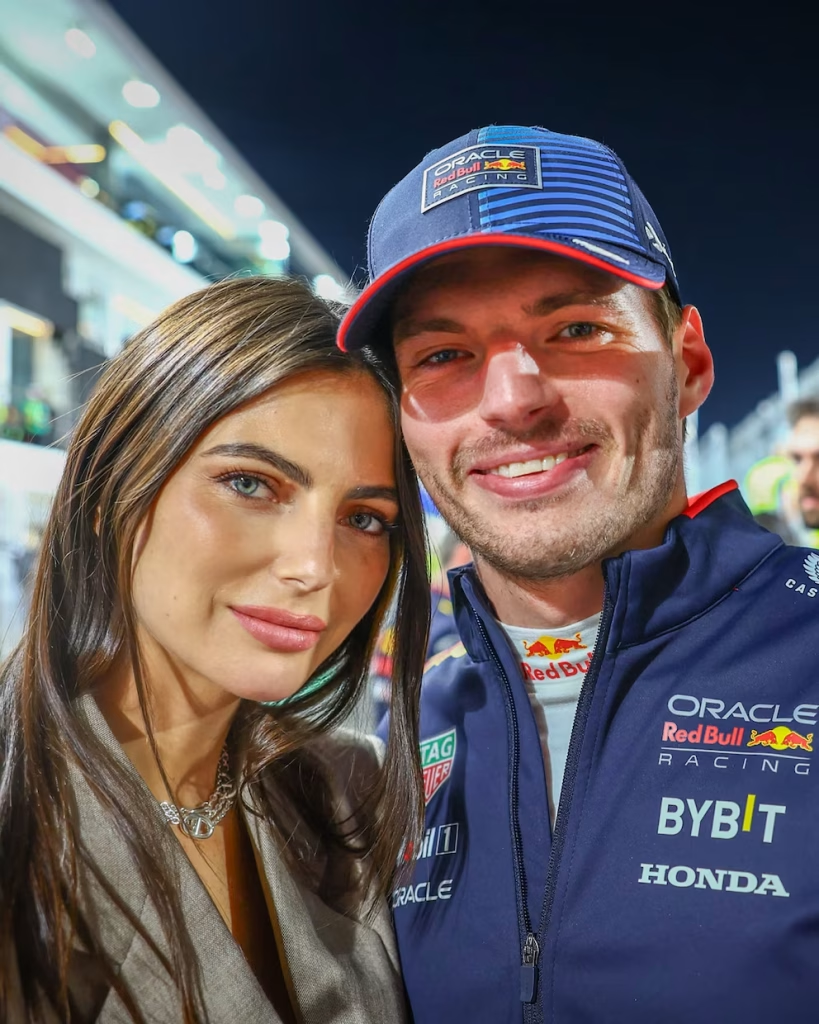
Max Verstappen revealed that even his partner questioned whether it was really necessary for him to keep racing during Formula 1’s forced lull, after cancellations disrupted the calendar and left top drivers facing an unusual stretch without regular Grand Prix action. His answer, however, points to something larger than personal restlessness. For Verstappen, inactivity is not recovery. It is interruption. That distinction matters because it exposes the mindset of an athlete shaped not only by speed, but by continuity, repetition, and permanent competitive motion.
What followed was telling. Rather than fully embracing the pause, Verstappen chose to remain active through another racing environment, using the gap to compete elsewhere instead of simply waiting for Formula 1 to resume. This is more than a side story about a driver who dislikes stillness. It reveals the deeper culture of elite motorsport, where rhythm is not a luxury but a performance condition. When that rhythm is broken by external crises and calendar instability, drivers do not merely lose races. They lose the structure around which concentration, preparation, and identity are built.
The broader context makes the episode more significant. Formula 1 has already been forced to absorb the consequences of geopolitical disruption, including cancellations tied to instability in the Middle East. That means the modern calendar is no longer governed solely by sport, logistics, and commercial optimization. It is increasingly vulnerable to the same shocks reshaping global transport, security, and strategic planning. In that setting, even a champion’s private conversation becomes a small window into a much larger system under stress.
Verstappen’s reaction also highlights the psychology of top-level dominance. The most successful competitors are often those least capable of tolerating inactivity, because stillness threatens the internal machinery that sustains edge, instinct, and control. His choice to keep competing suggests that for certain athletes, downtime is not restorative in the conventional sense. It can feel like erosion. The partner’s question sounds ordinary and human. His response sounds like the logic of someone whose life is calibrated around perpetual motion.
There is another layer here as well. Formula 1 increasingly presents itself as a refined global product, disciplined in branding and governed by meticulous planning, yet the recent disruptions have reminded everyone that even the most polished championship remains exposed to external volatility. When races disappear from the calendar, the illusion of seamless modern spectacle fractures. What emerges instead is a sport still dependent on unstable geographies, strategic corridors, and a world that does not always cooperate with commercial design.
That is why this episode resonates beyond celebrity curiosity. Verstappen is not simply a driver filling time. He is acting out a deeper truth about contemporary elite sport: when institutions pause, the high-performance individual often refuses to. The machine may stop for a moment, but the competitive psyche keeps searching for motion. In a disrupted Formula 1 season, that instinct says as much about the sport’s hidden tensions as any official statement.
Detrás de cada dato, hay una intención. Detrás de cada silencio, una estructura.
Behind every data point lies an intention. Behind every silence, a structure.