

 Phoenix 24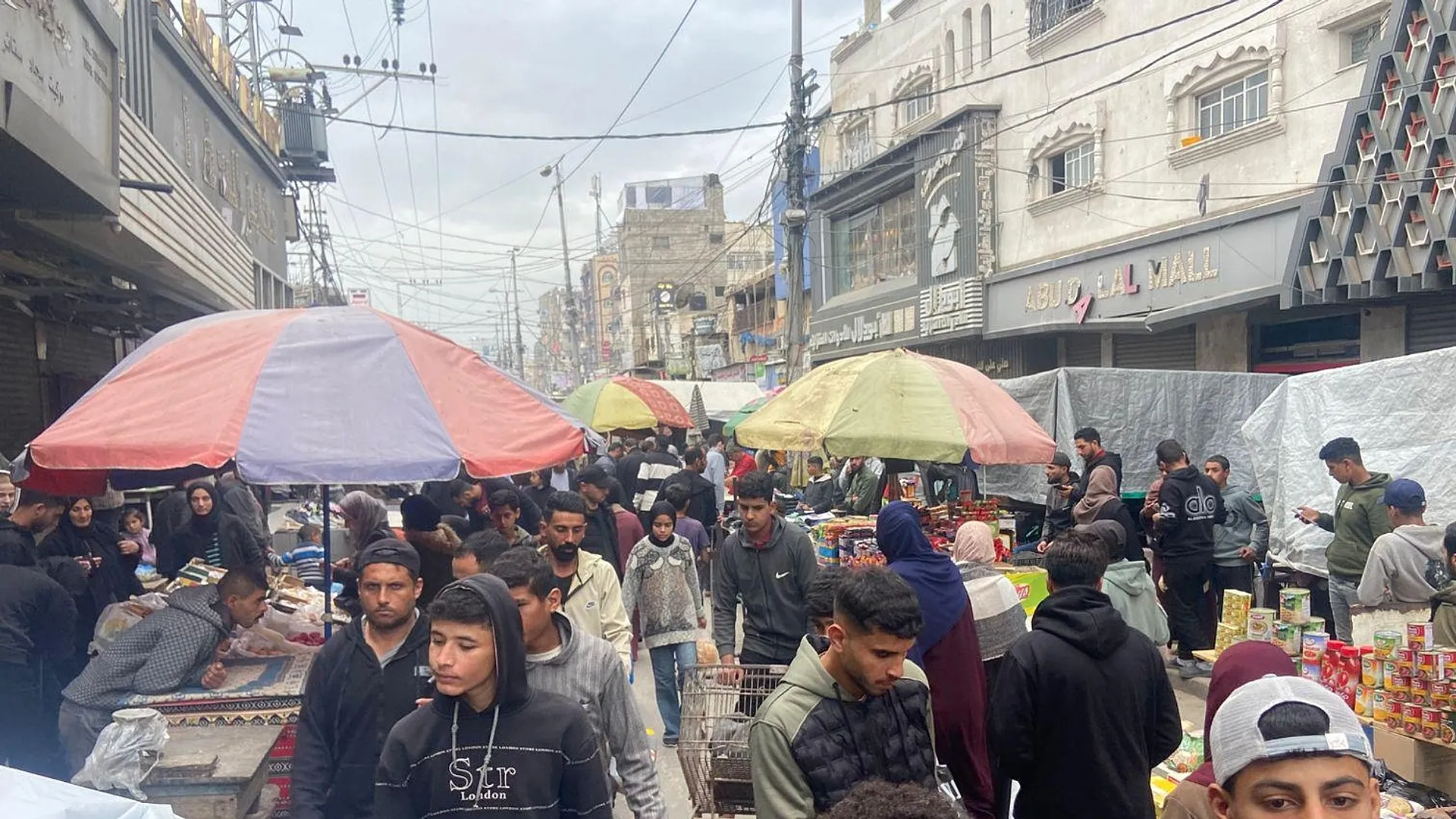
Money still exists, but exchange no longer works.
Nuseirat, March 2026.
In Gaza, the shortage is no longer measured only in food, fuel or shelter. It is now also measured in something more basic and, in some ways, more destabilizing: the ability to make small payments in a society where daily life still depends on cash but cash itself has stopped circulating in usable form. Even routine purchases have become uncertain because low denominations are scarce enough that people can hold money in their hands and still be unable to complete a simple transaction.
That distinction matters because it reveals a different kind of economic breakdown. This is not only about poverty or lack of income. It is about the internal mechanics of exchange failing. Large banknotes remain present in circulation, particularly higher-value shekel bills, but their usefulness has diminished in everyday contexts where small transactions dominate. Vendors frequently cannot provide change, and buyers are forced to either abandon purchases or accept improvised compensation in goods instead of currency.
Once that happens, the problem ceases to be strictly monetary and becomes structural. A functioning cash economy depends on fluidity across denominations, trust between participants and the ability to convert value quickly into usable exchange. Gaza is losing that flexibility. Daily routines are now shaped not only by scarcity of goods, but by the availability of usable money in the right format. The inability to break a bill is beginning to dictate mobility, timing and access to essentials.
The imbalance in the monetary system deepens the distortion. Liquidity is concentrated in higher-value notes that do not align with the scale of daily consumption. When the dominant form of cash is also the least practical for small purchases, the system begins to malfunction from within. Exchange slows, informal practices expand and pricing behavior becomes inconsistent. In this environment, value is no longer determined only by what something costs, but by whether payment can be executed at all.
This distortion is feeding the emergence of parallel mechanisms. Informal cash-conversion networks have gained prominence, allowing people to transform bank balances or large bills into usable money in exchange for steep commissions. These fees can reach levels that effectively tax survival itself. Access to liquidity becomes a form of power, and those who control conversion channels begin to influence the rhythm of economic life.
Behind this dynamic lies a deeper contraction. War has damaged financial infrastructure, interrupted banking operations and restricted the flow of new cash into the territory. The result is not simply less money, but a broken circulation system. Notes disappear from the channels that sustain everyday transactions, and what remains becomes trapped in forms that do not match the needs of the population.
Digital alternatives offer partial relief, but they are unevenly accessible. Some individuals rely on applications or informal accounting between merchants and customers, but these systems require connectivity, devices and a level of adaptation that many cannot afford. As a result, a new layer of exclusion emerges. People may possess nominal value, yet remain unable to convert it into food, transport or basic services.
This is one of the less visible ways prolonged conflict reshapes civilian life. War does not only destroy infrastructure or reduce income. It alters the invisible rules that allow exchange to function. Money becomes hierarchy, payment becomes negotiation and everyday transactions become moments of uncertainty. The inability to make change, trivial in stable environments, becomes a multiplier of vulnerability under conditions of collapse.
What is unfolding in Gaza is therefore more than a shortage of small banknotes. It is the shrinking of the everyday economy. Once circulation loses its smallest functional units, daily life begins to stall at the point where survival is most immediate. The system does not fail all at once. It erodes gradually, through friction, until even the simplest exchange becomes conditional.
Más allá de la noticia, el patrón. / Beyond the news, the pattern.