

 Phoenix 24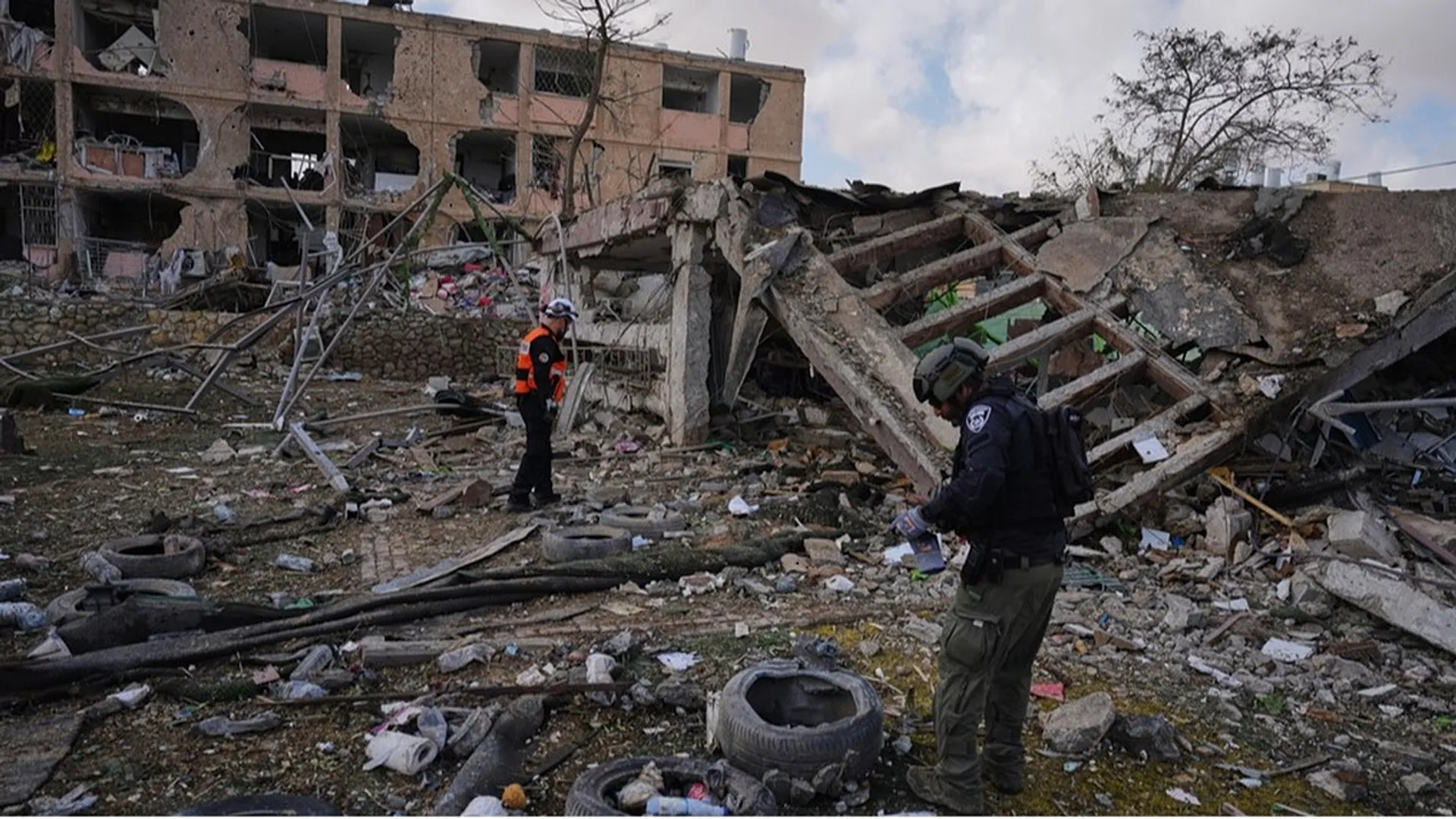
Fear has not broken the war consensus.
Tel Aviv, March 2026. Iranian cluster munitions are now landing over Israeli residential areas, extending the conflict beyond strategic infrastructure into the psychological terrain of civilian life. The reported use of multi-warhead and cluster-capable missiles has intensified concern, not only because of their immediate destructive capacity, but because of the dispersion effect that increases risk across broader urban zones and leaves behind unexploded remnants that continue to threaten civilians even after impact.
And yet the more revealing development is not strictly military. Public support inside Israel for continuing the campaign against Iran remains strikingly resilient despite the escalation. Even under conditions of sirens, casualties and visible damage to neighborhoods, a significant majority of the population continues to back the offensive posture. This persistence suggests that the conflict is being interpreted less as a discretionary war and more as a perceived necessity rooted in long-term security calculations.
That framing matters. When a society internalizes a conflict as existential, the threshold for dissent rises. Civilian exposure to danger does not automatically translate into opposition; in many cases, it reinforces the belief that the threat must be confronted more decisively. In this context, the logic shifts from risk avoidance to risk management, where enduring the present cost is seen as preferable to facing a potentially greater threat in the future.
The daily reality described is one of compressed normality under sustained pressure. Families adapt routines around alerts, shelters and contingency plans, building a form of disciplined resilience. This does not imply stability, but rather a capacity to absorb disruption without immediate collapse of social cohesion. The implication is strategic. Attacks designed to generate fear within civilian populations may not necessarily erode political support; under certain conditions, they can consolidate it.
However, this apparent cohesion is not uniform. There are clear internal asymmetries in perception and protection. Differences in infrastructure, access to shelters and levels of institutional trust create uneven experiences of the same conflict. These disparities reveal that while a majority may support the broader war effort, the distribution of risk and security is not equally shared across all segments of society.
What emerges, then, is a dual-layer dynamic. On the surface, a population that remains aligned with its government’s strategic direction. Beneath it, a more complex social landscape shaped by inequality, perception gaps and differentiated vulnerability. This tension does not immediately fracture support, but it does introduce long-term variables that can influence how sustained conflict is processed internally.
The significance of the moment lies in this contradiction. Civilian exposure has increased, yet political resolve has not proportionally weakened. Fear is present, but it has not displaced the dominant narrative of necessity. As long as that balance holds, the conflict extends beyond military exchanges into the realm of perception, where endurance becomes as critical as firepower.
La narrativa también es poder. Narrative is power too.