

 Phoenix 24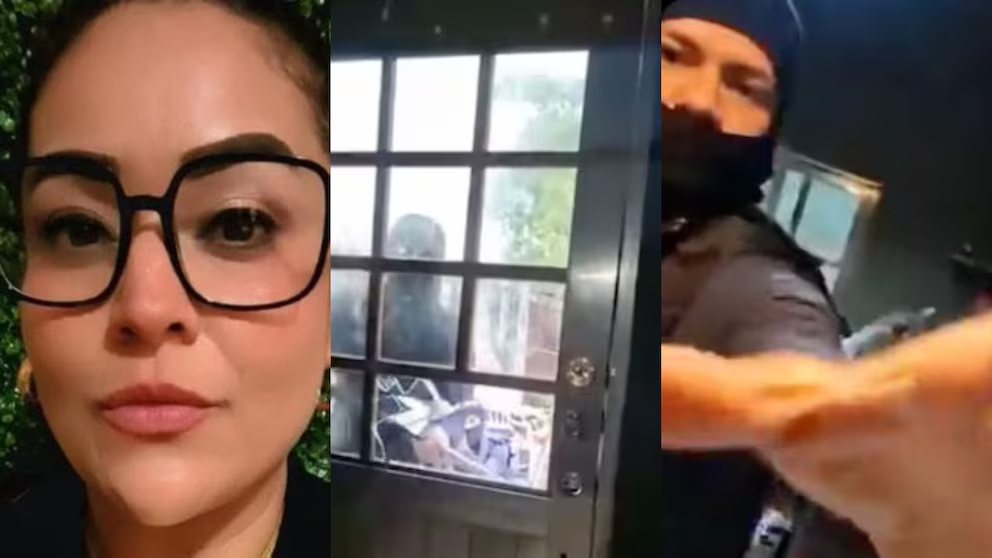
The capture marks a significant development, but the journalist remains missing.
Veracruz, June 2026
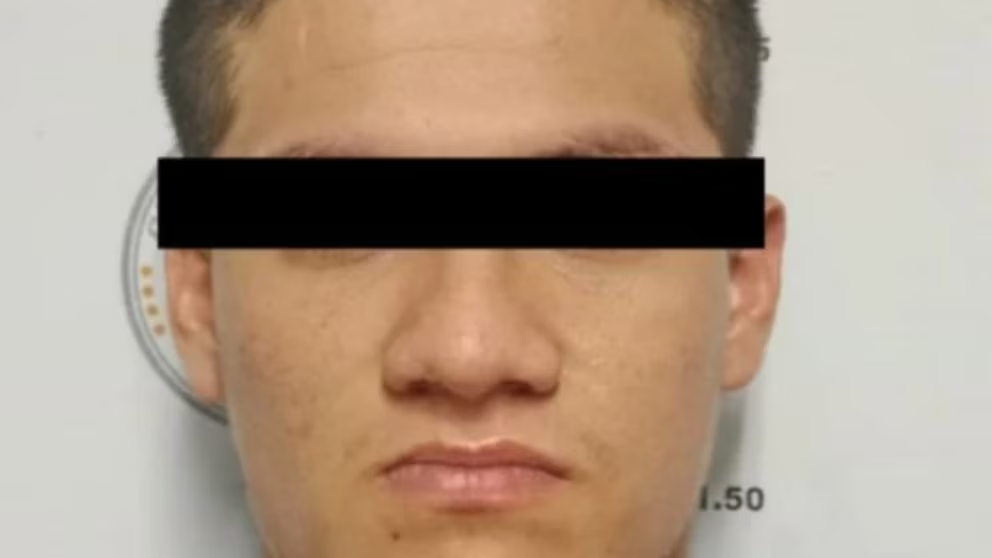
Mexican authorities arrested José del Carmen Cadena Escayola, known as “Delta 7,” over his alleged involvement in the kidnapping of journalist Roxana Berenice Guzmán Ramírez in southern Veracruz. The suspect was detained in Coatzacoalcos following several weeks of naval intelligence operations coordinated with state security agencies.
Authorities identify Cadena Escayola as an alleged member of Grupo Sombra, a criminal organization operating in Veracruz. Investigators believe he participated directly in the abduction, although the allegations must still be proven through judicial proceedings. His arrest represents the first publicly reported detention connected to the case since Guzmán was taken from her home on June 2.
The operation involved the Mexican Navy and the Veracruz Public Security Secretariat, with additional coordination among federal and state institutions. Security personnel had been examining intelligence, images and other evidence gathered after the kidnapping. The investigation remains active as authorities attempt to identify and locate the other people suspected of participating in the attack.
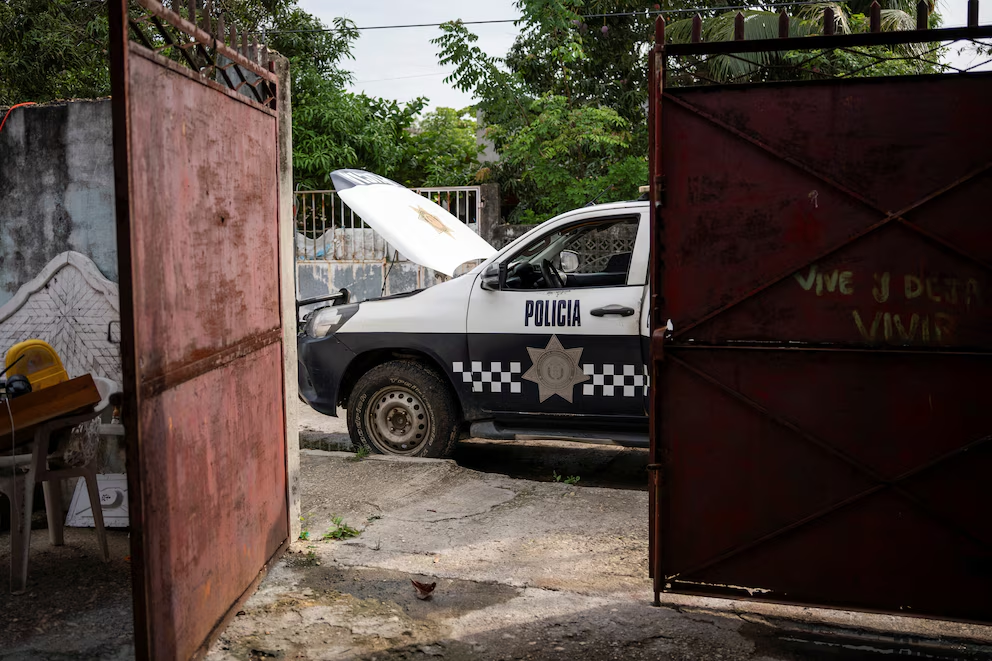
Guzmán was abducted at approximately 6:00 a.m. from her family residence in Nanchital, an industrial municipality near Coatzacoalcos. Armed and masked men dressed in dark clothing entered the property while she and several relatives were present. The attackers subdued members of the family before taking the journalist away in a vehicle.
Part of the assault was recorded on a mobile phone. The footage showed the armed men striking and forcing their way through a door while Guzmán’s brother warned them that children, including a baby, were inside the home. One attacker pointed a long firearm toward the occupants before entering and taking the phone that was recording the incident.
The images circulated widely and intensified public pressure for an immediate investigation. They also provided authorities with visual information that could assist in identifying the suspects. Relatives later recognized one of the detained men as someone who had been present during the violent raid, according to reports surrounding the arrest.
The kidnappers reportedly told the family that they were taking Guzmán to a police station. No authority subsequently confirmed that she had been detained through any legal procedure. Her family has received no verified information explaining where she was taken or whether she remains alive.
The journalist’s disappearance has now extended beyond three weeks. Search operations have involved the Navy, the National Guard, state police and investigative personnel. Although the arrest may provide new information, authorities have not announced that Guzmán has been located.
The case was initially handled by the Veracruz Attorney General’s Office, which opened an investigation on the day of the kidnapping. The Federal Attorney General’s Office later assumed control through the specialized unit responsible for crimes against freedom of expression. State authorities have continued cooperating with the federal investigation.
Guzmán founded Pulso Informativo del Sureste, also known as Pulso Nanchiteco, a digital outlet focused on community affairs in southern Veracruz. The publication covered public complaints, municipal services, local security incidents and other issues affecting residents. Its social-media audience had grown rapidly, giving Guzmán a visible role within the region’s local information environment.
Before establishing the platform, she worked for Diario del Istmo. She returned to Veracruz in January 2026 after having previously left the state because of security concerns. Her career and personal history had already been marked by violence before the latest attack.
Her husband, Carlos Fernández Escalante, was shot dead in Nanchital in March 2017. The killing occurred near the area where Guzmán was located, and she later left Veracruz for safety reasons. Authorities did not formally establish that his murder was connected to her journalistic work.
In 2019, Guzmán requested assistance from the Veracruz commission responsible for supporting and protecting journalists after reporting alleged harassment by a municipal official. There had been no recent publicly documented threats immediately before her kidnapping. Colleagues also said that she had not warned them of a specific danger.
Her recent reporting included neighborhood complaints and demands directed at local authorities. None of those publications publicly revealed an obvious motive for the abduction. Press-freedom organizations have insisted that her work as a journalist must remain a priority line of investigation rather than being excluded without evidence.
ARTICLE 19 urged authorities to apply the specialized protocol for investigating crimes against freedom of expression. The organization also demanded immediate and effective action to locate Guzmán. Other journalist groups activated support networks for her family and called for greater transparency from investigators.
The disappearance has again drawn attention to the risks faced by local reporters in Mexico. Journalists working outside the country’s largest cities frequently cover organized crime, corruption and municipal disputes with limited institutional protection. Many operate small digital outlets without the legal, financial or security resources available to national media organizations.
Veracruz has accumulated a particularly serious record of violence against journalists. Murders, disappearances and threats have created an environment in which reporting on local power can carry severe personal consequences. The persistence of impunity in previous cases has reinforced distrust among journalists and victims’ families.
The arrest of “Delta 7” could help investigators reconstruct the operation, identify additional participants and establish where Guzmán was taken. It may also clarify whether the attack was connected to organized crime, her journalistic activity, a personal dispute or another motive. Authorities have not yet presented a definitive explanation.
The suspect is entitled to the presumption of innocence until a court determines responsibility. His detention nevertheless creates an opportunity for investigators to secure evidence and pursue other members of the group allegedly involved. The immediate priority remains locating the journalist and protecting her relatives.
For Guzmán’s family, the arrest provides a possible lead rather than closure. They continue demanding that she be found alive and that the authorities communicate verified information about the search. Their uncertainty remains the central reality of a case that has shocked Mexico’s journalistic community.
The detention is an important investigative step, but its value will ultimately depend on whether it leads to Guzmán’s location and the prosecution of everyone responsible. Until that happens, the case remains an unresolved disappearance and another warning about the dangers surrounding local journalism in Mexico.
La justicia comienza con la búsqueda, pero solo avanza con la verdad. / Justice begins with the search, but moves forward only with the truth.