

 Phoenix 24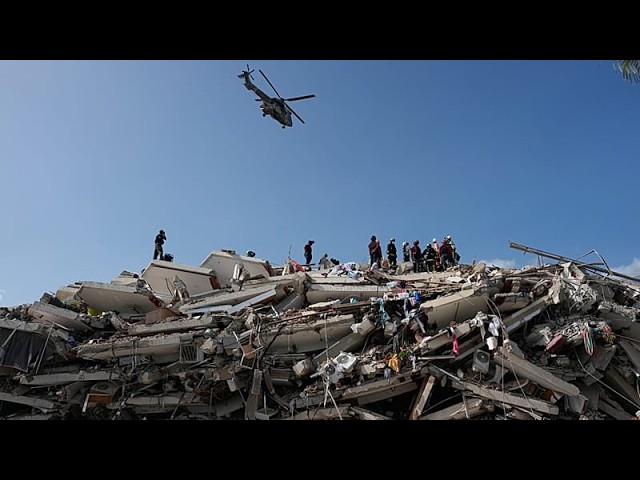
Specialists, medical personnel and search dogs are arriving as the race to find survivors enters its most critical phase.
Brussels, June 2026
European countries have deployed urban search-and-rescue teams to Venezuela after two powerful earthquakes devastated northern areas of the country, causing widespread building collapses and leaving thousands of families searching for missing relatives. The European Union activated its Civil Protection Mechanism after receiving a formal request for international assistance from Venezuelan authorities.
The earthquakes, with magnitudes of 7.2 and 7.5, struck on June 24 within seconds of each other. La Guaira, the coastal state north of Caracas, suffered some of the heaviest destruction, while serious damage was also reported across parts of the capital and surrounding communities. Venezuelan authorities said the death toll had risen above 1,400 by Saturday as emergency crews continued examining unstable structures and removing debris.
Spain, Italy, France, the Czech Republic and other European nations mobilized personnel, equipment and medical support. Their contributions include firefighters trained in collapsed-structure operations, engineers capable of evaluating damaged buildings, emergency physicians and dogs trained to detect people beneath rubble.
Spain prepared one of the largest European deployments, including military rescue specialists, firefighters from the Madrid region and plans for a field hospital. France sent a search-and-rescue unit composed of medical personnel, engineers and canine teams, while Italy mobilized its civil protection service, firefighters, defense resources and air transport capabilities.
Switzerland also sent approximately 80 rescuers, eight search dogs and tonnes of specialized equipment. The Netherlands prepared a team of around 65 specialists with dogs and technical resources, while the United Kingdom announced financial assistance for the broader emergency response. These efforts form part of an international operation involving teams from Latin America, North America, Europe and Asia.
The European Civil Protection Mechanism allows participating countries to coordinate offers of equipment and expertise through a central structure rather than sending disconnected missions. It helps determine which teams are needed, how they will be transported and where they can operate without duplicating work already underway.
Urban search-and-rescue operations require precise organization. Specialists must identify possible voids inside collapsed buildings, monitor movements in concrete and steel, and protect survivors from further injury during extraction. Search dogs, acoustic devices and cameras can locate signs of life that are impossible to detect from the surface.
Time remains one of the most important factors. The probability of finding survivors generally declines as hours pass, particularly when people are trapped without water, medical care or protection from unstable debris. Rescue teams must nevertheless continue working cautiously because aftershocks can cause damaged structures to collapse again.
Hundreds of aftershocks have complicated the operation and increased fear among survivors. Many residents have avoided returning to their homes, choosing instead to sleep in vehicles, parks and other open spaces. Even buildings that remain standing may require professional inspection before families can safely reenter them.
In several devastated neighborhoods, residents began searching before international teams arrived. Families used shovels, ropes, construction tools and their bare hands to remove concrete while calling for heavy machinery and specialized equipment. Their efforts exposed the limited emergency capacity available in some of the hardest-hit communities.
Venezuela entered the disaster with infrastructure weakened by years of economic instability, limited investment and recurring failures in public services. Power interruptions and damaged transport routes have complicated communication and slowed access to affected areas. The country’s principal international airport also sustained damage, creating additional logistical difficulties for incoming assistance.
Authorities restricted access to La Guaira to prevent civilian traffic from obstructing ambulances, cranes and rescue convoys. The coastal state contains densely populated areas, hotels and apartment buildings, making the scale of the search especially demanding.
The government has moved thousands of displaced residents into temporary shelters and begun restoring electricity in parts of the disaster zone. Hospitals are treating large numbers of injured people while also coping with damaged facilities, supply shortages and the possibility of further seismic activity.
International assistance has continued expanding. More than 1,600 foreign rescue personnel were reported to have reached Venezuela by Saturday, while additional units remained in transit. The United States committed significant humanitarian funding and deployed specialized teams, and several Latin American governments sent rescuers, aircraft, medical supplies and search dogs.
The United Nations is helping coordinate the global response, with immediate priorities including search and rescue, emergency healthcare, shelter, clean water and reliable information about missing people. Humanitarian organizations have warned that the scale of displacement could produce longer-term public health and housing challenges after the rescue phase ends.
European officials said further assistance could be provided as Venezuela’s needs become clearer. Medical teams, temporary hospitals, generators, water-purification systems and shelter materials may become increasingly important once the possibility of finding survivors begins to diminish.
The disaster has also affected foreign communities living in Venezuela. European governments are attempting to identify missing citizens, contact relatives and provide consular assistance. Spain and Portugal reported citizens among the victims and additional nationals whose whereabouts had not yet been confirmed.
Information about the number of missing people remains uncertain. Government figures, opposition-supported databases and family reports have produced widely different totals. Communications failures, displacement and the destruction of homes can cause the same person to appear on several lists or remain unregistered for days.
The international response has temporarily placed political divisions behind the immediate objective of saving lives. Venezuela’s relationship with several Western governments has been marked by sanctions, diplomatic disputes and competing claims over political legitimacy, but rescuers now operate according to humanitarian priorities.
For families gathered around destroyed buildings, those geopolitical questions remain distant from the urgent search for relatives. Every arriving team brings additional technical capacity, but also the possibility that someone may still be found alive beneath the concrete.
Europe’s deployment represents only the first stage of a response likely to continue for months. Once rescue work concludes, Venezuela will face the enormous challenge of caring for survivors, rebuilding homes and restoring essential infrastructure across communities already struggling before the earthquakes occurred.
La solidaridad cruza fronteras cuando cada minuto puede salvar una vida. / Solidarity crosses borders when every minute can save a life.