

 Phoenix 24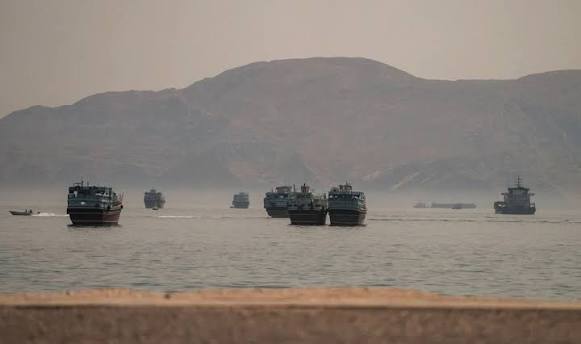
The attack damaged the vessel’s bridge and renewed fears that commercial shipping could again become trapped inside the Gulf.
London, June 2026
British maritime authorities raised the security warning for the Strait of Hormuz after an oil tanker was struck by an unidentified projectile, intensifying concern over the safety of vessels using one of the world’s most important energy corridors. The incident occurred as military exchanges between the United States and Iran threatened to dismantle a fragile agreement that had allowed commercial traffic to begin recovering.
United Kingdom Maritime Trade Operations reported that the tanker’s master had confirmed an impact while the vessel was navigating through the strait. The projectile damaged the ship’s bridge, but all crew members were reported safe. Initial information did not identify the weapon, its point of origin or the party responsible for launching it.
The Joint Maritime Information Center subsequently increased the regional threat assessment to “substantial.” The classification indicates that another security incident is considered a realistic possibility and advises shipowners, captains and crews to apply stronger precautions before entering or crossing the area.
The tanker was reportedly transporting approximately two million barrels of crude oil when it was attacked. No significant spill was initially reported, and the vessel remained operational enough to receive assistance and continue safety assessments. The absence of casualties prevented a more serious human emergency, but the strike demonstrated how quickly a single projectile can endanger crews, cargoes and the surrounding marine environment.
The incident followed an attack two days earlier against the Singapore-flagged cargo vessel Ever Lovely, operated by Taiwan’s Evergreen Marine. That ship was hit near Oman while using a route recommended by British maritime authorities. Its crew was also reported safe, although the attack prompted international organizations to suspend an operation intended to help stranded vessels navigate out of the Gulf.
The two incidents occurred as Iran and the United States exchanged military strikes following accusations that Tehran had violated an interim peace arrangement. Washington attacked Iranian missile and drone facilities, storage areas and coastal radar systems, while Iran announced retaliatory operations against sites associated with American forces in the Gulf.
Bahrain reported that Iranian drones had targeted its territory, where the United States Navy’s Fifth Fleet is based. No major damage was initially disclosed, but Bahraini authorities described the operation as a serious threat to the security of citizens, residents and regional stability.
Iran’s Revolutionary Guard said it had delivered a response to American attacks but did not claim direct responsibility for the tanker strike. The absence of an immediate claim has not reduced concern among maritime operators because the incident occurred inside an increasingly contested navigation environment.
Iran has sought to assert greater control over shipping through the Strait of Hormuz. Tehran established an authority to coordinate vessel movements and warned that ships using routes it had not approved could not be guaranteed safe passage.
The United States and its partners reject Iran’s attempt to determine the conditions under which international vessels may cross. Washington has promoted a southern navigation lane closer to Oman, arguing that commercial traffic must remain free from Iranian authorization, political conditions or future transit fees.
The tanker attack illustrates the danger created by the competing systems. A vessel may follow guidance issued by Western maritime authorities while Iran considers the same route unauthorized. Captains are therefore being asked to navigate not only a geographically narrow waterway but also overlapping military instructions and political claims.
The Strait of Hormuz connects the Persian Gulf with the Gulf of Oman and the Arabian Sea. It carries a significant proportion of the world’s internationally traded oil and liquefied natural gas, making disruptions capable of influencing fuel prices, shipping rates and supply chains far beyond the Middle East.
Hundreds of vessels were stranded inside the Gulf after the conflict began earlier in 2026. Tankers, container ships and bulk carriers accumulated near ports as companies waited for security guarantees, insurance coverage and navigable routes.
Traffic had begun increasing during the previous two weeks as the interim agreement reduced hostilities. Oil-laden tankers started leaving the Gulf, while other vessels entered to collect crude and commercial cargoes. The rising flow contributed to lower oil prices and encouraged hopes that exports could gradually return toward normal levels.
The renewed violence now threatens that progress. Shipowners must determine whether they are prepared to expose vessels worth tens of millions of dollars, cargoes of even greater value and multinational crews to an environment in which attacks can occur without warning.
Insurance companies are likely to reassess premiums and coverage conditions following the latest incident. War-risk insurance can become prohibitively expensive during periods of active conflict, while some policies may exclude voyages through areas classified as exceptionally dangerous.
Crew members may also have the right to refuse passage through designated high-risk zones under certain employment agreements. Even when a company considers a voyage commercially necessary, the decision must account for the physical and psychological risks faced by seafarers.
The bridge damage is particularly significant because that area contains essential navigation, communication and command systems. An impact that disables equipment or injures officers can leave a large tanker difficult to control inside congested waters.
Navigation in the strait is already complicated by narrow shipping lanes, heavy commercial traffic and proximity to Iranian and Omani territory. Reports of electronic interference and unreliable satellite signals have added another layer of risk by affecting the systems vessels use to determine their location.
Maritime agencies have advised ships to maintain heightened surveillance, minimize unnecessary deck activity and ensure that emergency procedures are ready for immediate implementation. Crews are also expected to report suspicious objects, unusual radio communications and nearby military activity.
The British warning does not formally close the waterway or prohibit transit. Its practical effect is to provide shipowners with a stronger basis for delaying voyages, changing routes or requiring additional security measures.
For global energy markets, the essential question is whether traffic can continue in both directions at a level approaching normal conditions. Occasional successful crossings may move individual cargoes, but they do not establish the stability required for sustained trade.
The latest attack demonstrates that the strait is technically open while remaining operationally dangerous. Vessels continue to pass, but each journey depends on rapidly changing intelligence, political calculations and the willingness of crews and insurers to accept the risk.
The fragile agreement between Washington and Tehran was intended to create time for negotiations and stabilize maritime activity. Instead, both sides now accuse the other of violating its terms, while commercial vessels experience the consequences of disputes they cannot control.
The raised alert is therefore more than a procedural warning. It signals that confidence in the reopening of Hormuz has weakened and that another attack could again reduce traffic, increase energy prices and leave ships stranded on either side of the passage.
Una ruta puede permanecer abierta en los mapas mientras el miedo comienza a cerrarla en el mar. / A route can remain open on maps while fear begins closing it at sea.