

 Phoenix 24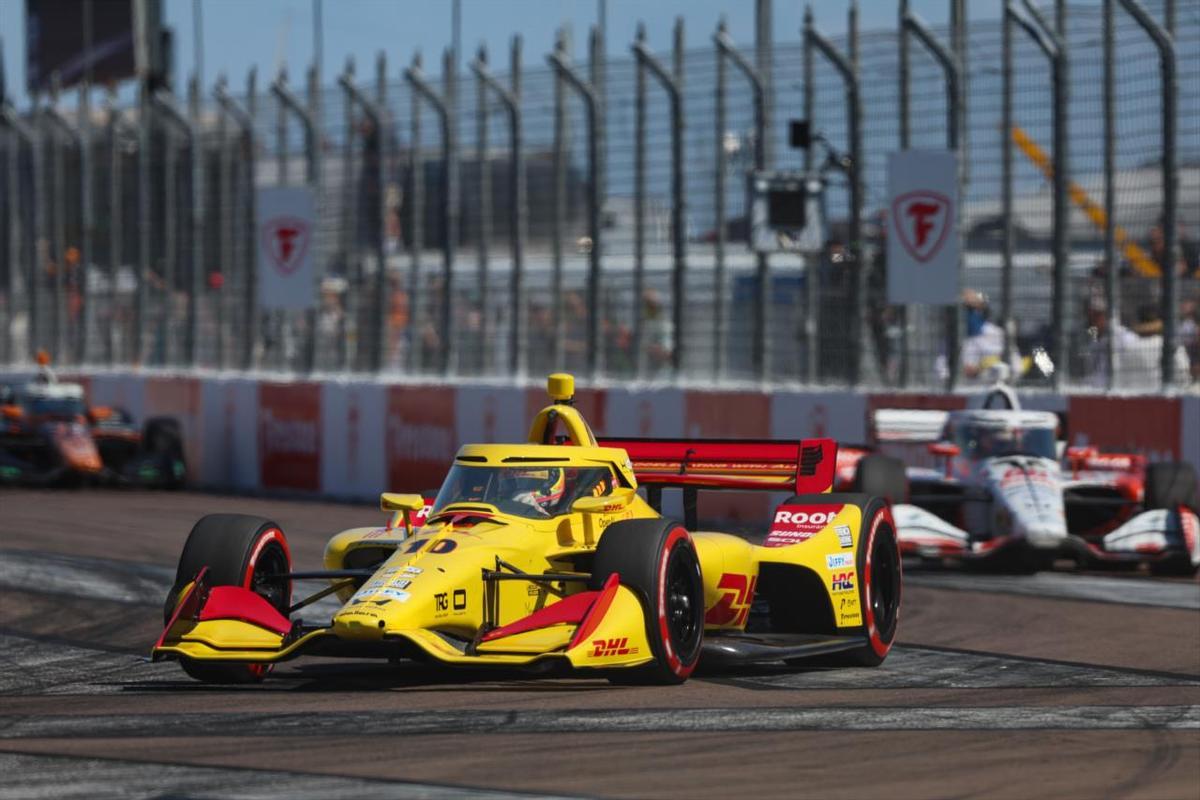
A new circuit can reorder old hierarchies.
Arlington, March 2026
Álex Palou heads into IndyCar’s new Arlington round carrying more than the usual weight of expectation. The Spanish driver arrives as the reigning series champion and one of the defining figures of the current era, but this weekend’s race is not simply another stop on the calendar. It is the debut of a new urban circuit built around the Arlington sports district, near AT&T Stadium and Globe Life Field, and it is being presented as a statement event for the category’s commercial and competitive ambitions. When a series launches a new venue under this level of visibility, the race stops being only about points. It becomes a test of narrative, format, and hierarchy.
The timing adds another layer. Palou opened the 2026 season by winning at St. Petersburg, extending the sense that IndyCar is still operating in what some Spanish motorsport coverage has called the “Alex Palou era.” Yet the momentum became less straightforward after Phoenix, where Josef Newgarden won and Palou’s day ended early following a crash. That matters because Arlington now arrives not as a comfortable continuation of early dominance, but as a reset point in a season that has already shown greater volatility than a simple title procession would suggest. Palou remains the central reference, but the field has already reminded him that the margin for control is thinner than reputation alone implies.
What makes Arlington especially important is that IndyCar is clearly trying to turn the event into more than a race weekend. The official schedule shows a full three day build, with practice on Friday, more running and qualifying on Saturday, and the race on Sunday, March 15. The circuit itself measures 2.73 miles and winds through one of the most commercially recognizable sports zones in the United States. That is not an accidental design choice. It reflects a broader effort to package IndyCar as a modern urban product, visually distinctive and commercially legible, rather than as a series confined to inherited racing geography. Arlington is being sold as location, spectacle, and television proposition at the same time.
For Palou, that setting creates both opportunity and risk. Street and temporary circuits reward precision, patience, and rhythm, qualities he has repeatedly demonstrated across his championship years. At the same time, a brand new venue reduces the value of accumulated memory. Everyone is learning at once. That compresses the competitive advantage held by established stars and opens space for aggressive challengers, especially drivers and teams willing to attack setup windows more boldly. Reuters has recently described Palou as a four time IndyCar champion, underlining the scale of his status, but prestige alone does not solve the fundamental uncertainty of a new track. In a debut event, authority has to be rebuilt session by session.
The series itself is also experimenting with presentation. Spanish reporting this week noted that Arlington would feature a revised qualifying approach for the Fast 6, with individual runs designed to heighten television drama and showcase technical precision. That adjustment may sound cosmetic, but it fits a larger pattern. Motorsport categories are no longer competing only on engineering or driving merit. They are competing on broadcast legibility, narrative clarity, and event identity. Arlington is therefore part race, part product redesign. The championship wants a new circuit, a more visible qualifying format, and a marquee urban backdrop to converge at once. That is ambitious, and ambition in motorsport always carries the risk of exposure if the sporting substance does not match the promotional frame.
This is where Palou becomes unusually important to the weekend’s meaning. He is not just another entrant. He is the driver most capable of giving the new event immediate prestige through performance. A win from Palou would reinforce the impression that IndyCar’s new showcase can still be anchored by elite craft and championship caliber execution. A defeat, especially at the hands of rivals such as Newgarden or the broader chasing group, would instead emphasize the championship’s competitiveness and unpredictability. Either outcome is useful for the series, but they tell different stories. Palou offers stability. The field around him offers disruption. Arlington is the stage on which the series will decide which message it wants to broadcast first.
There is a broader commercial subtext as well. In recent years, motorsport has leaned harder into destination events, urban settings, and media friendly race weekends that can travel beyond traditional fan bases. Arlington fits that template. By racing around iconic stadium infrastructure and giving the event a high profile network slot, IndyCar is signaling that it wants growth not just through sporting credibility, but through spectacle that can compete in the wider attention economy. That strategy has obvious appeal, yet it also raises the standard the event must meet. A new race in a new setting cannot afford to feel forgettable. It must look distinct, race well, and produce a story strong enough to justify its place.
So the question around Palou this weekend is larger than whether he can post the fastest lap or convert strong form into another podium. The deeper question is whether IndyCar’s most important driver can help legitimate one of its most important new bets. Arlington is a debut, but it is also an audition for a certain vision of the series: urban, broadcast conscious, commercially ambitious, and still serious enough to matter competitively. Palou arrives as the ideal protagonist for that experiment because he embodies precision without chaos and excellence without theatrical excess. Yet new circuits have a way of resisting scripts. That is why Arlington matters. It will not only tell us whether Palou can master another track. It may also tell us whether IndyCar’s next chapter can sell novelty without losing sporting weight.
Information that anticipates futures. / Information that anticipates futures.