

 Phoenix 24
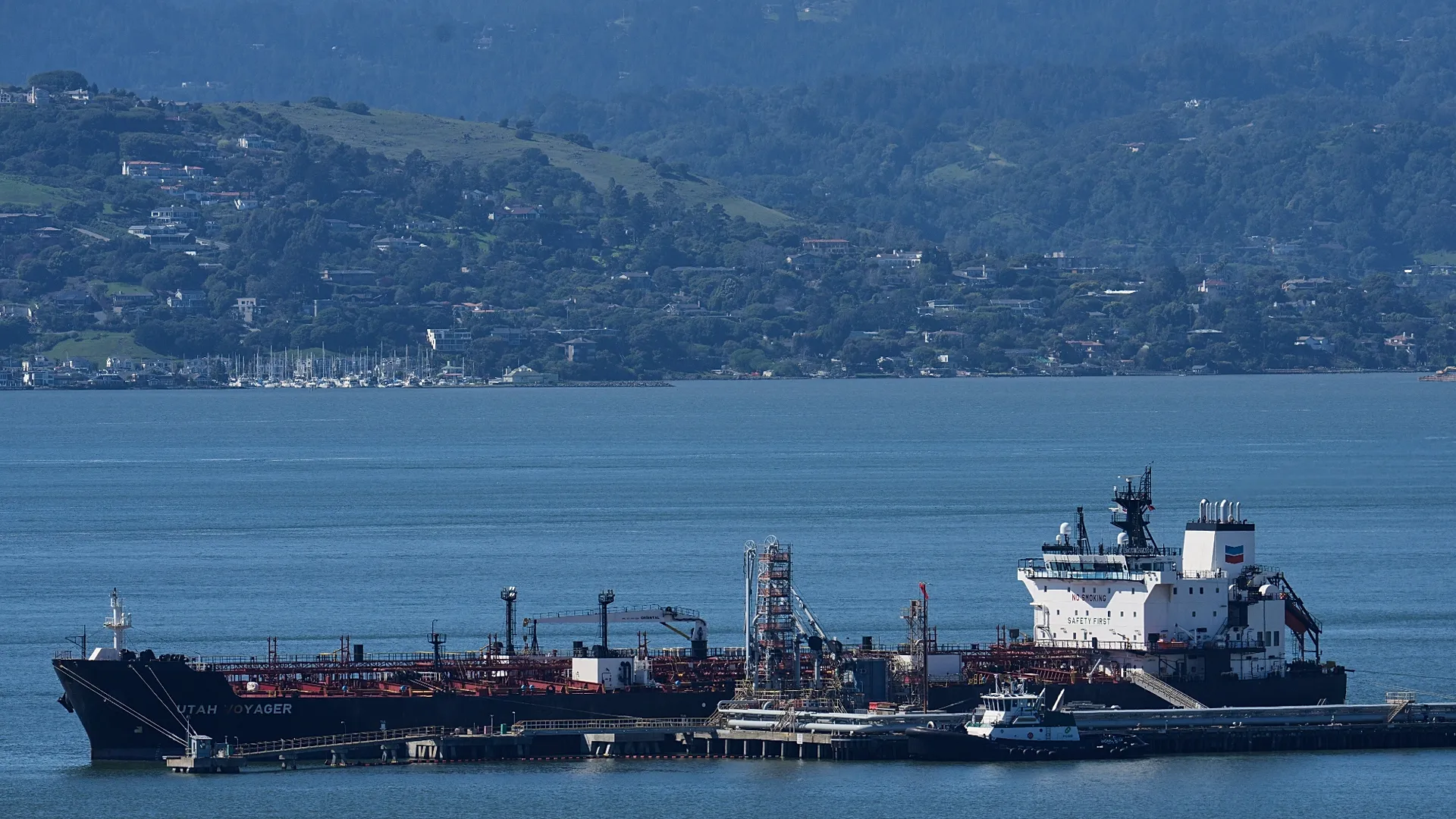
Price shocks expose dependencies faster than wars do.
London, March 2026
The continued rise in oil prices after the disruption of traffic through the Strait of Hormuz is not just a market reaction to war headlines, but a structural reminder of how quickly global trade, inflation expectations, and political risk pricing can tighten around a single maritime chokepoint. Euronews reported that more than 200 vessels were blocked and that Brent crude had climbed above 64 euros, with some analysts warning that the barrel could move toward 85 euros if the disruption persists. The report frames the immediate trigger in the context of the U.S. and Israeli campaign against Iran and the resulting paralysis in one of the world’s most sensitive energy corridors. What matters here is not only the scale of the price move, but the speed with which shipping disruption is being translated into household cost anxiety, industrial planning stress, and renewed fear of energy-driven inflation. In moments like this, markets stop pricing only supply and demand, and begin pricing uncertainty, duration, and political credibility at the same time.
Reuters reporting from March 4 shows that the market is already behaving in that dual mode of fear and calibration. One dispatch noted that oil prices were volatile but relatively steady on the day, with Brent around the low 80-dollar range and WTI in the mid-70s, even as shipping through Hormuz remained snarled for a fifth consecutive day amid ongoing U.S. and Israeli strikes on Iran. That combination may look contradictory, but it is analytically coherent: traders are pricing a real disruption while still assuming some path to partial de-escalation or emergency logistics support. Another Reuters report highlighted that major financial institutions are revising forecasts upward, including UBS raising Brent expectations and warning that a prolonged closure or escalation against regional energy infrastructure could push prices far higher. This is how geopolitical shocks mature in real time, first as volatility, then as revised baseline assumptions.
The deeper issue is that Hormuz is not a symbolic route, but a throughput artery for global energy flows. Reuters and other coverage in the current cycle repeatedly emphasize that more than one-fifth of global oil supply moves through the strait, which means the market is reacting to a concentration risk rather than a marginal export interruption. When a corridor with that level of traffic becomes unstable, even countries not directly involved in the conflict are forced to recalculate freight costs, insurance exposure, and refining schedules. Reuters has also reported signs of adaptation efforts, including alternative supply routing and tanker protection discussions, but those are mitigation tools, not substitutes for normal passage. In practice, the shock widens because each day of disruption compounds with logistics backlogs, contractual friction, and uncertainty over how much production can actually be rerouted in time. That is why the question facing governments and traders is no longer whether there is disruption, but how long the system can absorb it without repricing growth.
Europe, in particular, has reason to treat this as more than a commodity story. Recent Euronews coverage has already connected the Iran conflict and Hormuz disruption to broader concerns about energy vulnerability, while Reuters reporting has described simultaneous pressure on oil and gas markets after attacks and shipping disruption across the region. Once oil rises, the effects do not remain inside crude benchmarks, because they flow into transport costs, power generation economics, industrial margins, and eventually consumer sentiment. The transmission is uneven across countries, but the political consequence is often similar: governments that were discussing fiscal discipline and growth strategy suddenly find themselves managing public anger over fuel and bills. This is one reason geopolitical shocks in energy corridors often produce secondary political turbulence far from the battlefield. The map of the conflict may be regional, but the inflation signal is global.
What also stands out is the gap between physical disruption and narrative control. In crises of this kind, every actor has an incentive to describe the situation in terms that support its strategic objective, whether that means projecting resilience, amplifying deterrence, or pressuring allies to align. Markets, however, do not respond only to official statements; they respond to shipping data, insurance behavior, refinery decisions, storage levels, and the credibility of military guarantees. Reuters commentary and reporting on March 4 captured that tension by describing both potential escort plans and the practical difficulty of restoring confidence quickly in a war zone. In other words, reopening a route on paper is not the same thing as normalizing risk pricing in practice. The energy system can continue functioning under stress, but at a cost, and that cost is now being distributed across consumers, firms, and governments that had no direct role in triggering the confrontation.
What changes on the wider board is the hierarchy of vulnerability. The Hormuz episode is reinforcing a pattern that policymakers have discussed for years but often treated as abstract: supply chains remain deeply exposed to maritime chokepoints, and geopolitical conflict can convert that exposure into inflationary pressure within days. It also reactivates a strategic debate that spans multiple regions, from Europe’s energy resilience and Asia’s import dependence to U.S. naval burden-sharing and producer-state leverage in the Gulf. Euronews presents the immediate price surge as the visible symptom, and Reuters reporting fills in the market and logistics mechanics behind it, but the larger pattern is political and structural. When a corridor closes and prices rise this fast, the market is not only pricing barrels. It is pricing the fragility of the system built around them.
Phoenix24: clarity in the grey zone. / Phoenix24: clarity in the grey zone.