

 Phoenix 24
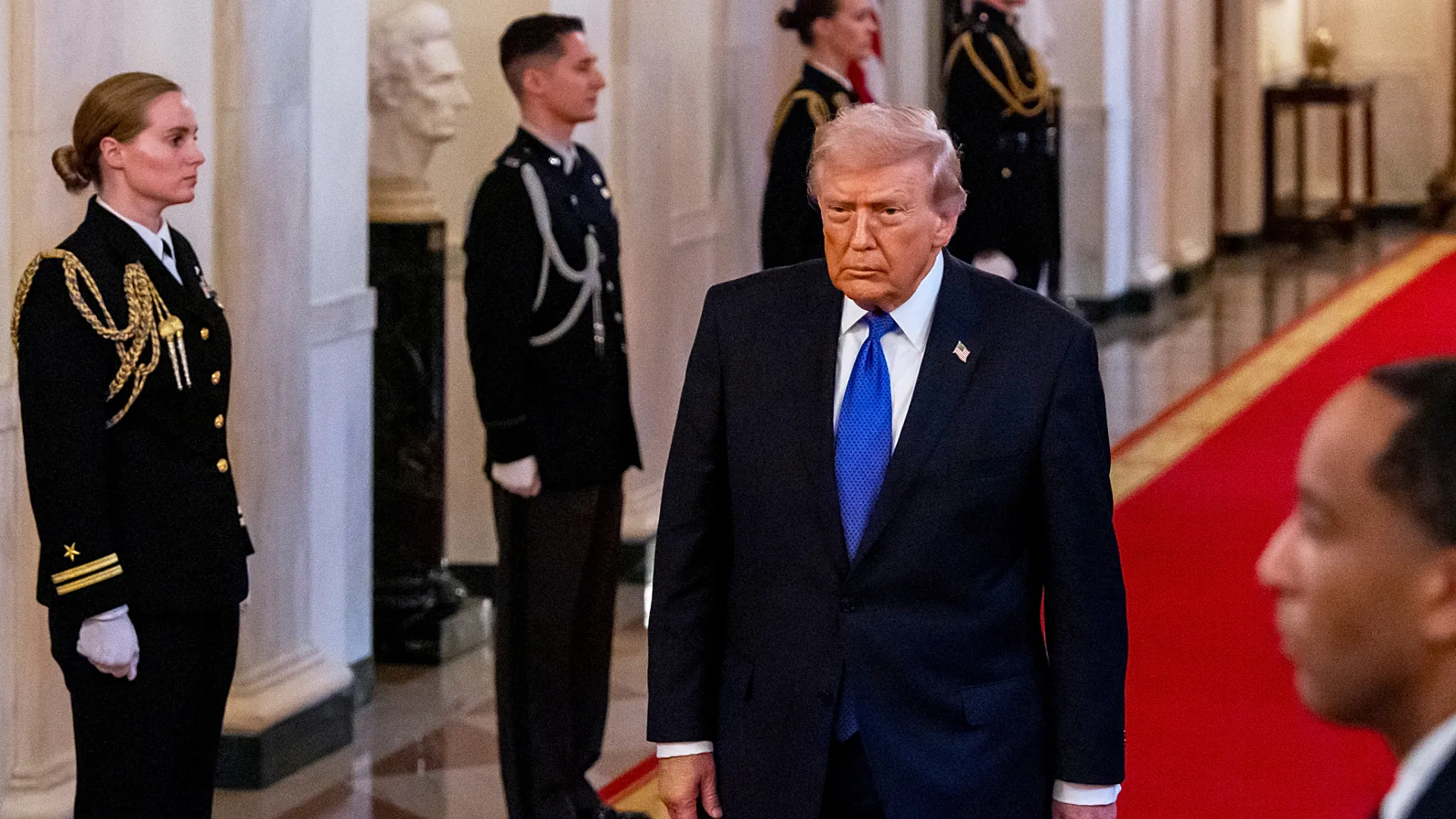
Alliance language hardens fastest when military access is denied.
Brussels, March 2026
Donald Trump’s public attack on Spain, calling it a “terrible ally” and saying the United States wanted nothing to do with the country, is not just another burst of rhetorical volatility. It is a strategic signal about how the White House is now framing alliance behavior under wartime pressure. Euronews reported the remarks after Trump was asked about countries that had not authorized the use of U.S. bases, placing Spain at the center of a widening dispute tied to the current escalation with Iran.
What makes the episode more consequential than a standard diplomatic insult is the policy threat attached to it. Multiple reports indicate Trump went beyond criticism and floated the idea of cutting off trade or “all dealings” with Spain, language that shifts the dispute from military cooperation into economic coercion. Even if such a move would face legal, political, and institutional limits, the signal itself matters because it shows the administration is willing to treat base access and alliance compliance as part of a broader coercive toolkit rather than as a compartmentalized defense issue.
The immediate trigger appears linked to Spain’s refusal to authorize the use of U.S. bases on Spanish territory for operations connected to strikes on Iran, a position echoed across Spanish coverage and linked in reporting to Madrid’s insistence on de escalation and a diplomatic track. That refusal does more than complicate logistics. It directly challenges Washington’s expectation that allied infrastructure remains available during rapid military escalation, especially when time sensitive operational planning is involved. In practice, access denial by an ally transforms geography into leverage.
There is also a deeper alliance management story in the staging of the remarks. Euronews and other outlets place Trump’s comments in a public appearance alongside German Chancellor Friedrich Merz, which means the target was Spain, but the audience was larger. Publicly disciplining one ally while praising or coordinating with another is a classic hierarchy signal inside coalition politics. It tells partners that military cooperation is being measured not only in formal treaty terms, but in operational responsiveness during crisis. In this framing, refusal is not treated as a policy disagreement. It is recoded as disloyalty.
This dispute also connects to an older and still unresolved pressure line: burden sharing inside NATO. Reuters had already reported in 2025 that Trump used highly confrontational language toward Spain over defense spending targets, calling Spain’s position “terrible” and threatening to make the country “pay” in trade terms after Madrid resisted the 5 percent spending benchmark. The continuity in tone matters. It suggests the current clash is not an isolated reaction to Iran, but an escalation within a pre existing framework in which Spain had already been coded by Trump as a problematic ally.
From a European perspective, the episode exposes a structural vulnerability that becomes visible during war crises. U.S. military reach in adjacent theaters depends not only on force capacity, but on distributed allied permissions, overflight rules, and basing arrangements. When one node says no, the logistical cost rises and the political cost can rise even faster. Trump’s own remarks, as reflected in live coverage excerpts, indicated frustration with the time needed to determine where U.S. operations could land or stage. That detail is operationally revealing. It suggests the dispute is not symbolic. It is being experienced in planning timelines.
The economic threat toward Spain, meanwhile, opens another layer of tension because trade policy with an EU member is not simply a bilateral lever in the way presidential rhetoric often implies. The European Union’s trade architecture complicates any attempt to selectively punish one member state without broader legal and diplomatic repercussions. Even so, the threat can still function politically. It can unsettle markets, pressure domestic audiences, and signal to other allies that refusal may carry costs outside the defense domain. In coercive diplomacy, feasibility and signaling do not always move together.
Spain’s position also carries its own strategic logic. By restricting base use for attacks not covered by specific legal frameworks, Madrid protects domestic political legitimacy, limits entanglement risk, and preserves room for a diplomatic posture in a rapidly expanding regional conflict. That stance may be read in Washington as obstruction, but in European capitals it can also be read as sovereign risk management under conditions of escalation. The same decision, in other words, produces opposite narratives depending on whether the priority is alliance speed or legal political containment.
For Phoenix24, the key pattern is larger than one insult aimed at one country. This is a live example of how modern alliances fracture under the combined weight of military urgency, domestic constraints, and transactional leadership. Trump’s comments about Spain convert a basing dispute into a hierarchy test, an economic threat signal, and a message to Europe about the price of selective cooperation. In moments like this, the alliance is not only measured by treaty language. It is measured by who can say no, and what happens next when they do.
Geopolitics, unmasked. / Geopolitics, unmasked.