

 Phoenix 24

Your wrist may spot relapse before you do.
Hamilton, February 2026.
The promise of wearable health tech has always been seductive: a device that quietly tracks your body, then translates signals into foresight. In mental health, that promise has been harder to defend because mood is not a pulse and despair is not a step count. Yet a new line of research is narrowing the gap, suggesting that relapse in major depression may leave measurable traces in sleep and daily activity rhythms before a person feels the full return of symptoms. The implication is not that a watch can diagnose depression, but that it may detect the early drift in routine that often precedes clinical deterioration.
In a peer reviewed study reported through McMaster University, researchers followed adults who had recovered from depression and then wore a research grade actigraphy device for extended periods, generating large volumes of sleep and activity data. The work, published in JAMA Psychiatry, linked relapse risk to patterns that are easy to underestimate in daily life: irregular sleep timing, weaker separation between daytime movement and nighttime rest, and more time awake during the night after initially falling asleep. The study’s headline finding was not a single magical biomarker, but the cumulative signal of destabilized rhythms. Benicio Frey framed the practical end state as an early warning that prompts a check in with care before the episode fully lands.
This matters because depression relapse is often treated as an event rather than a process. Clinically, relapse is usually recognized after subjective distress becomes unmistakable, sleep collapses, appetite changes, motivation evaporates, or function drops enough to trigger a visit. That approach is reactive by design, and it leaves a long interval where physiology and behavior may already be shifting while the person is still trying to interpret what they feel. Passive monitoring attempts to shrink that interval by treating routine itself as a signal, not a background detail. In systems terms, it is the difference between measuring the crash and measuring the wobble.
Sleep sits at the center of this because it is both deeply biological and deeply social. A person can maintain performance for a time while sleep becomes inconsistent, but the body keeps score, and the cognitive cost accumulates. Irregular sleep timing can reflect stress, overwork, social disruption, or emerging symptom change, and wearables are unusually good at capturing timing and continuity at scale. Activity rhythms tell a parallel story, not just how much someone moves, but whether their day has a stable shape. When the day night boundary blurs, the underlying risk profile may be changing even if the person is still outwardly functional.
Still, the leap from “detectable signal” to “actionable care” is where many health technologies fail. A warning that is too frequent becomes noise, and noise produces disengagement, not prevention. A warning that is too opaque invites mistrust, especially in mental health where users may already be fatigued by self monitoring. World Health Organization has emphasized in its digital health strategy that adoption depends on trust, equity, and meaningful integration into care, not novelty. If the signal cannot be explained in human terms, it will not survive contact with real life.
Regulation is also shifting under these pressures, and it matters because the same smartwatch can be marketed as wellness one day and treated as a medical device the next. U.S. Food and Drug Administration has clarified that many low risk wellness functions sit outside the strictest oversight as long as they avoid explicit disease claims, while software that influences clinical decisions may face a different regulatory posture. That boundary is not academic. If a wearable tells a person they are likely to relapse, it is no longer just encouraging exercise, it is steering behavior in a potentially vulnerable moment. Systems that deliver such alerts will have to show not only accuracy, but safety in how the information is delivered and acted upon.
Europe has been moving in parallel on the evidence side, including work funded by National Institute for Health and Care Research that explores digital phenotyping and remote monitoring in mental health. The caution from this ecosystem is consistent: signals can be meaningful, but mental states do not map cleanly onto single physiological measures. Research out of Leiden University and other European groups has highlighted how consumer wearables can struggle with constructs like stress, where the same heart rate change can mean fear, excitement, exercise, or caffeine. That is a warning against simplistic interpretation, not a rejection of the field. Depression relapse prediction may work better precisely because it leans on patterns across days, not a momentary readout.
The data governance layer may become the real battleground. Continuous monitoring produces an intimate behavioral archive: when you sleep, how consistently you move, how often you are awake at night, and how your routines shift under pressure. If that data is treated as a monetizable profile rather than a protected health signal, public trust will collapse. The most defensible model will be privacy by design, clear consent, local processing where possible, and user control over sharing. Without those safeguards, relapse prediction risks becoming a surveillance product in clinical clothing.
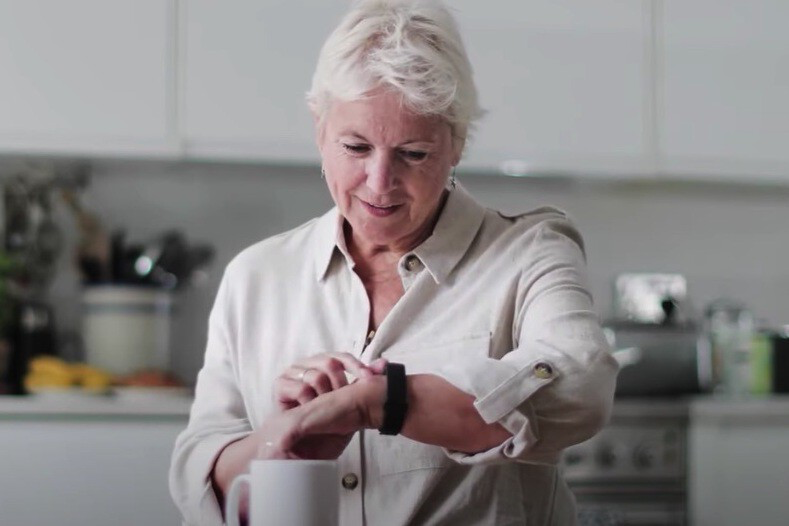
The clinical reality also needs humility. A wearable alert should never be positioned as a verdict, and it should not replace therapy, medication management, or clinician judgment. Its best use case is triage and timing: nudging someone to check in earlier, helping a care team prioritize follow up, or prompting practical stabilizers like sleep regularity, routine repair, and support activation. Some people may find that empowering, others may find it anxiety provoking, especially if they have lived through repeated episodes. Any real deployment must be psychologically literate, not merely technically impressive.
What is emerging is a new bargain between technology and mental health care. The bargain is not that devices will replace human care, but that they can make the invisible drift of relapse more visible, earlier, and in a way that supports timely intervention. If the field gets the science right but the governance wrong, it will fail. If it gets the governance right but the product experience wrong, it will still fail. The only durable path is a system that treats prediction as a prompt for care, not a headline, and treats the person as the owner of the signal, not the subject of the data.
Phoenix24: claridad en la zona gris. / Phoenix24: clarity in the grey zone.