

 Phoenix 24
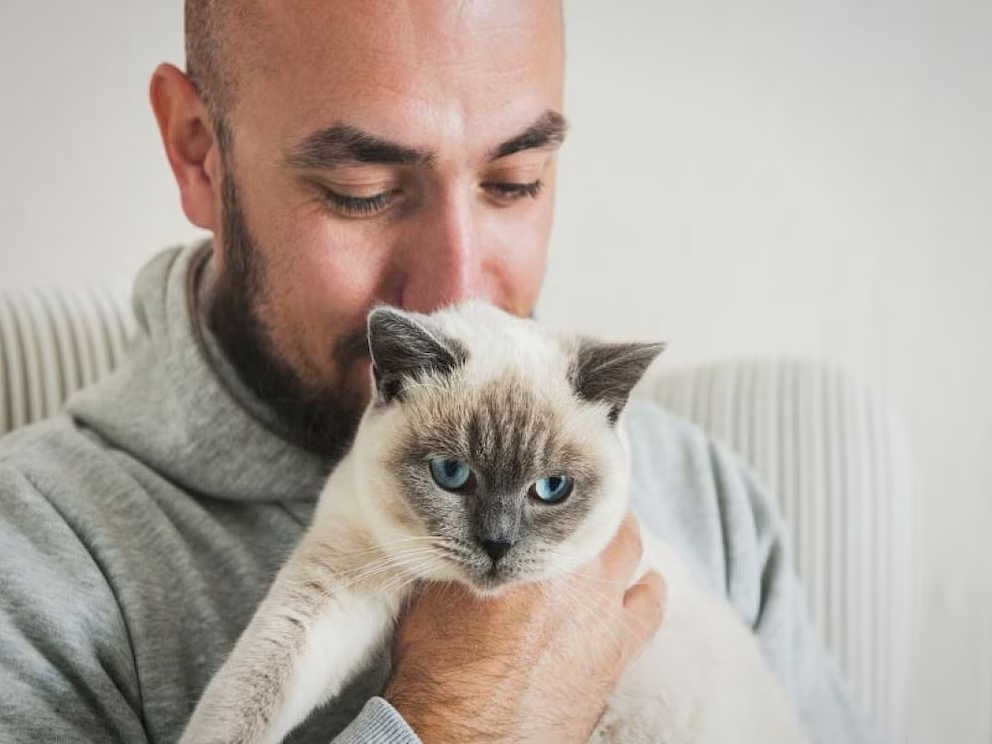
Your cat’s purr carries a signature.
Berlin, February 2026.
Cat owners tend to treat meowing as the main “language” and purring as background noise, a simple marker of comfort. New research pushes against that assumption by suggesting the opposite in one narrow but important sense: a purr may carry a more stable individual fingerprint than a meow. In other words, if you want to distinguish one cat from another by sound alone, the purr can be the more informative signal. That finding matters because it reframes purring from a generic mood soundtrack into a structured vocal pattern that can encode identity.
The study’s logic is built on a basic contrast between two call types that serve different social purposes. Domestic cats meow primarily toward humans, and they do it flexibly, adapting tone and timing to context and to what they want from you. Purring, by comparison, appears more rhythmic and internally consistent within the same individual, which makes it easier to classify. That stability is not a poetic claim, it is an acoustic property that can be measured and compared. When you combine many recordings with statistical modeling, the “evenness” of purring becomes a technical advantage for recognizing who is vocalizing.
Researchers analyzed acoustic parameters and used classification methods to estimate how well each call type preserves an individual signature. The reported outcome is that purrs supported higher identification accuracy than meows, while meows carried less individual information overall. Even when meows did contain cues about the caller, their variability made them less reliable as an identity marker. The broader point is subtle but powerful: meowing seems optimized for communication with a listener, while purring looks better suited for being consistent across time. That divergence is exactly what you would expect if domestication shaped meows into a more adaptive tool for negotiating with humans.
To test whether domestication played a role, the research compared domestic cat vocalizations with those of several wild relatives. The finding reported in coverage of the paper is that domestic cats show greater variability in meows than wild felids, consistent with the idea that meowing became more plastic in the human environment. Purring did not exhibit the same kind of domestication-driven volatility, which supports the argument that it retains a more species-typical stability. This is not claiming that wild cats “do not communicate,” it is highlighting how human proximity can select for signals that are more context-dependent and strategically deployed. In that frame, the meow becomes less a fixed “cat sound” and more a negotiated interface.
It is tempting to turn that into a simple translation, purr equals identity, meow equals demand, but real animal behavior is messier. Cats purr when they are content, but also when they are anxious, injured, or seeking self-soothing, which means purring is not a single-emotion signal. Meanwhile, meows can express everything from greeting to frustration to solicitation, and they can be shaped by reinforcement, especially in homes where humans respond quickly. The lesson is not to overinterpret one sound in isolation. The lesson is that the purr may be less improvisational than we assumed, which makes it more “legible” to analysis.
This also helps explain why humans often misread cats compared with dogs. Dogs have been selected for overt, readable social signals that synchronize with human attention, while cats tend to communicate in subtler combinations of posture, gaze, distance, and vocalization. Meows grab attention because they are salient and variable, so we treat them as the core message. Purring fades into the background because it is steady, so we treat it as ambiance. The research suggests that steadiness is exactly what makes purring a richer identity cue, even if it feels emotionally ambiguous to a human listener.
There are practical implications beyond curiosity. If purring contains stable individual markers, it may become useful in welfare and veterinary contexts where monitoring stress and well-being can benefit from non-invasive signals. It also opens the door to better behavioral research methods, where recognizing individuals accurately is foundational. In homes with multiple cats, it hints at why owners sometimes sense “different purrs” even if they cannot describe the differences. The sound may be carrying more consistent structure than we consciously notice, and our brains may be picking up patterns informally.
At a systems level, this is another example of how domestication reshapes communication without needing to rewire everything. Cats did not become dogs, they adapted selectively, strengthening a vocal channel that works well on humans while retaining older patterns for other functions. Meowing becomes a flexible lever, a way to push, pull, and negotiate. Purring remains more anchored, a rhythmic output that can accompany multiple internal states while still preserving the caller’s acoustic identity. That split is not contradictory, it is efficient, one signal for influence, another for continuity.
For owners, the highest-value takeaway is to treat your cat’s vocalizations as part of a broader communication package. A purr can signal comfort, but it can also signal coping, so context and body language matter. A meow can be affectionate, but it can also be strategic, tuned to what reliably moves you. If the new research is right, then your cat has been “signing” its presence more clearly than you realized, especially when it purrs. The sound you dismiss as background may be the most personal audio pattern your cat produces.
Detrás de cada dato, la intención. / Behind every data point, the intention.