

 Phoenix 24
Trump’s Miami Summit Puts China on Notice in the Americas
Minerals, ports, and votes now share one map.
Miami, February 2026.
When Donald Trump calls a presidential summit at the Trump National Doral, the venue is part of the message. The White House is signaling that its Latin America strategy will be built through a short list of aligned partners, fast deals, and visible political theater, not through slow consensus building. The stated objective is blunt: assemble a regional block to blunt China’s advance in critical resources, food logistics, and strategic infrastructure. The deeper objective is control of leverage points that matter in a rivalry where influence is increasingly measured in supply chains, not speeches.
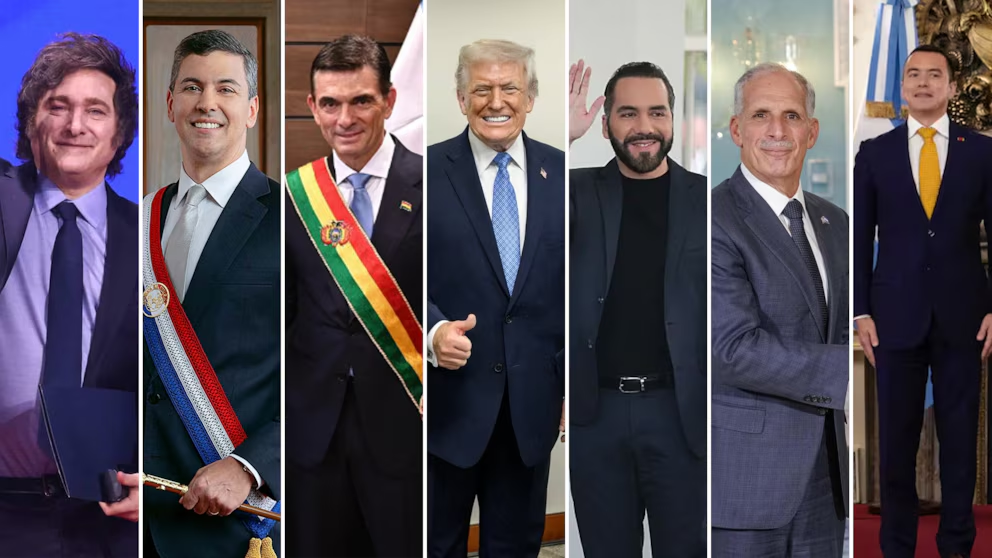
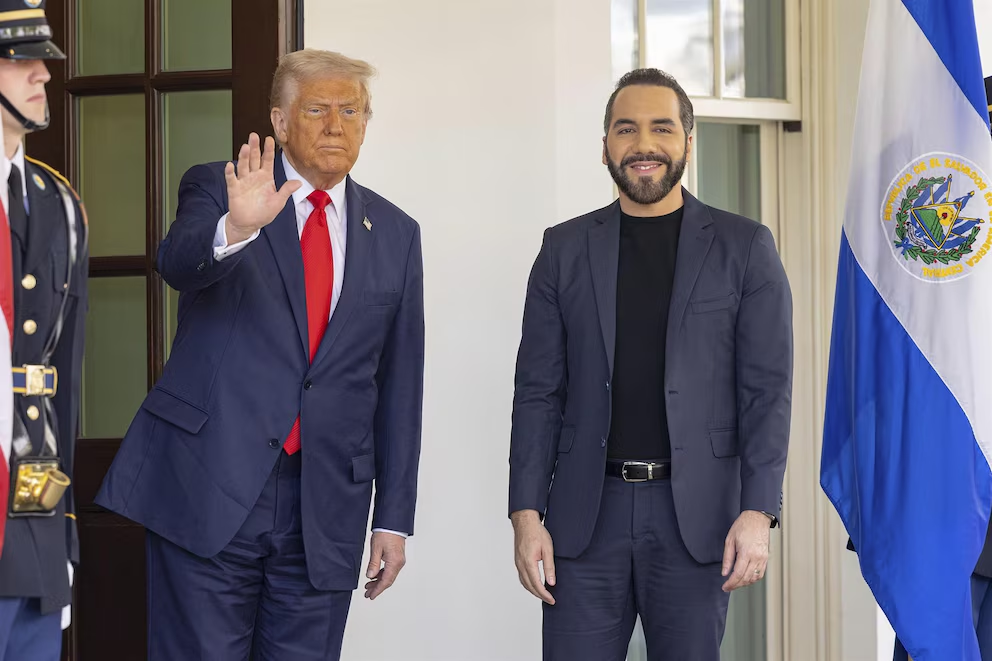
The summit, scheduled for March 7, is designed around a specific coalition profile rather than continental representation. Invitations were extended to Javier Milei, Santiago Peña, Rodrigo Paz, Nayib Bukele, Daniel Noboa, and Nasry Asfura. The common denominator is political proximity to Trump’s worldview and a willingness to operationalize it through trade, security, and investment decisions. That matters because the mechanism being offered is preferential access to capital and projects, while the price is alignment against Beijing in concrete contracts. This is bloc-building by incentives, calibrated for speed and loyalty.
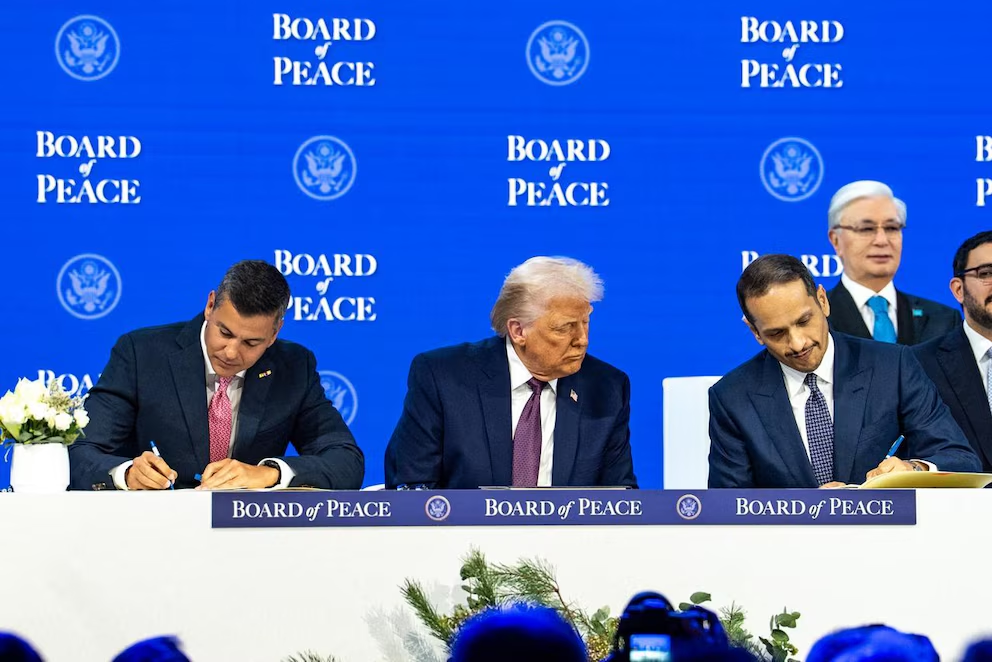
Underneath the headline, the summit is anchored to an already moving critical-minerals agenda. Washington has been building new bilateral agreements and “trusted supply” language with partners in the hemisphere as a way to reduce dependence on China’s dominant role in processing and trade. The messaging has shifted from abstract “nearshoring” to specific inputs that feed batteries, defense systems, grid equipment, and advanced manufacturing. That shift is not cosmetic, it marks a strategic redefinition of national security as an industrial problem. In this framework, minerals policy becomes the new trade policy, and trade policy becomes the new containment architecture.
A key instrument in this push is “Project Vault,” a US-backed strategic stockpile concept designed to cushion supply shocks and pull private firms into a government-shaped reserve model. The program’s financing structure, including the role of the Export-Import Bank of the United States, signals that Washington intends to use state leverage to de-risk procurement and accelerate investment decisions. The story is not only about storage, it is about creating predictable demand and controlling the rules for who gets counted as a reliable supplier. Once you define a “trusted” network, you also define who is outside it. For Latin American governments, that can look like opportunity and constraint at the same time.
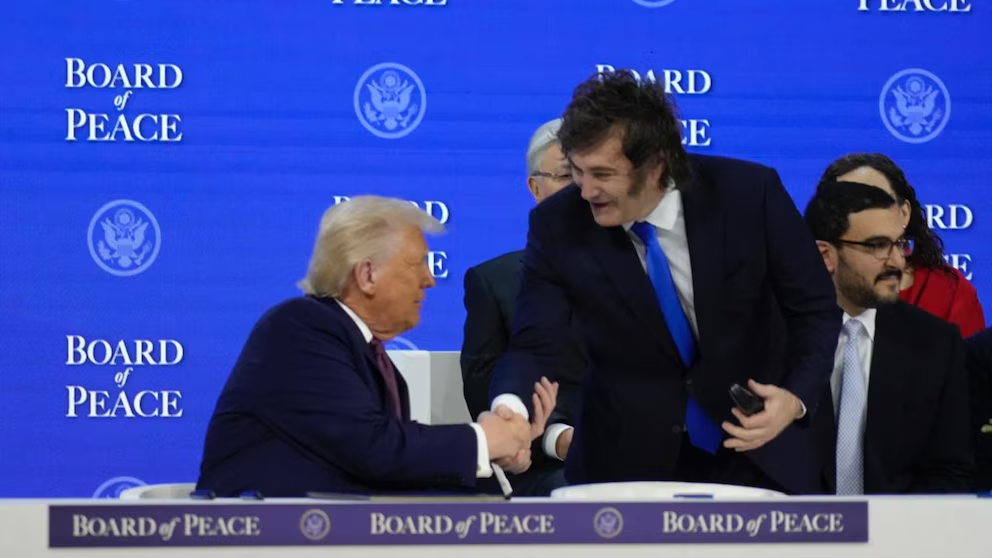
The summit’s anti-China framing reflects a broader pattern: Beijing’s influence in the Americas increasingly runs through ports, rail corridors, telecom layers, commodity offtakes, and long-term financing that can outlast election cycles. Even when China’s approach is presented as “development cooperation,” it often results in structural dependencies that are hard to reverse without economic pain. This is why the Trump team is not focusing only on tariffs or rhetoric, but on contract-level denial strategies: block certain infrastructure awards, constrain technology footholds, and redirect mineral flows into US-preferred channels. It is a doctrine aimed at friction points, not at ideology alone. The bet is that the fastest way to slow Beijing is to change the terms of business, not the language of diplomacy.
The coalition design also creates immediate regional tension because it implicitly ranks partners and sidelines others. Countries that prefer strategic autonomy, or that balance relationships with multiple powers, may read the Miami summit as an attempt to impose binary choices. That can provoke quiet resistance, especially where publics are skeptical of foreign pressure or where business sectors depend heavily on Chinese demand. It also risks turning Latin America into a compliance arena, where domestic politics are reframed as loyalty tests to Washington. In that environment, policy coherence becomes fragile because every mining concession and port tender becomes a political signal.
There is also a credibility problem that Washington must manage: promising alignment is easier than delivering prosperity. Mineral and infrastructure deals take time, face social opposition, and require governance capacity that many states struggle to sustain. If promised investment does not materialize, the coalition can fracture, and China can regain ground through faster financing and fewer political conditions. The Trump administration appears to be addressing that by tying the summit to visible instruments of support and preferential treatment for aligned partners. Yet the durability of the bloc will still depend on whether citizens see tangible improvements or only geopolitical choreography.
From Beijing’s perspective, this summit is likely to be treated as containment by another name, even if it is framed as supply-chain resilience. Xi Jinping has repeatedly pushed a narrative of multipolarity and expanded South-South economic ties, including deeper engagement with Latin American trade blocs. If Washington moves to block contracts or restrict technology ecosystems, China can respond by tightening export controls, redirecting investment, or offering sweetheart terms to states that refuse US alignment. That is how economic statecraft escalates: not with one decisive strike, but with incremental restrictions that reshape market options. The Miami summit is therefore less a single event than an opening move in a rolling bargaining campaign.
Europe and parts of Asia will be watching closely because a US-led hemisphere strategy changes global sourcing logic. The European Union has its own critical-minerals security agenda, and Japan has long treated resource access as a national resilience priority. Meanwhile Taiwan has been searching for ways to reduce exposure to China-dominated supply chains in rare earths and related inputs. If Washington constructs an Americas-first sourcing system, it could attract partners, but it could also create new competition over the same finite projects. In other words, the Miami summit may ripple beyond the hemisphere into a wider reordering of industrial diplomacy.
The strategic meaning is straightforward: Trump is turning the Americas into a controlled depth zone, using minerals, infrastructure, and financing as the hard levers of alignment. The risks are equally clear: bloc politics can polarize domestic debates, invite retaliation from Beijing, and amplify governance failures in sectors already prone to corruption and social conflict. But the direction is unmistakable. The competition is no longer only about whose model sounds better, it is about who secures the bottlenecks that make modern industry possible.
Phoenix24: inteligencia para audiencias libres. / Phoenix24: intelligence for free audiences.