

 Phoenix 24
Violence now tests the state’s reaction time.
Culiacán, February 2026.
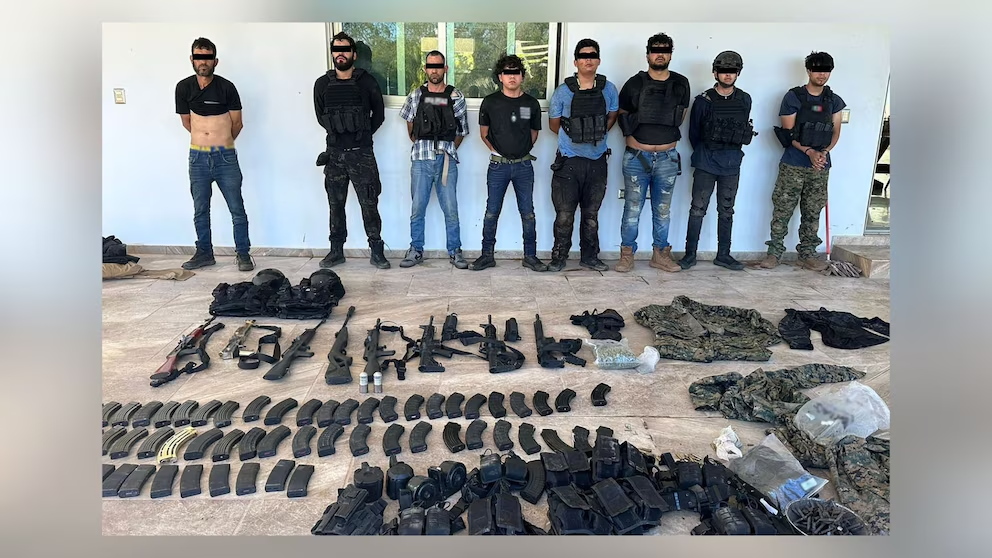
Federal authorities reported the arrest of nine people after an armed attack on Navy personnel during surveillance patrols in the area, an episode that ended with one alleged attacker killed in the exchange. Security officials said the troops were conducting routine operations aimed at preventing crimes when they came under fire, triggering an immediate response and a follow-on operation to secure suspects and materiel. In official messaging, the emphasis was not only on the confrontation itself, but on the scale of what was seized afterward, suggesting the engagement was tied to a group moving with military-style capabilities rather than opportunistic street-level actors.
Details released by federal sources placed the clash in the locality of El Limoncito, within the broader Culiacán zone, and described a sequence that has become familiar in high-friction corridors: patrol presence, ambush attempt, return fire, rapid detention, then a public inventory of seized equipment as proof of operational impact. Authorities reported the confiscation of high-caliber weapons, ammunition, tactical gear, and vehicles, and some local and national reporting described the recovery of explosives and launch-capable weaponry. Those specifics matter because they shift the frame from a conventional public security incident toward an insurgent-adjacent profile, where the objective is not only to evade capture but to impose deterrence on state forces.
Omar García Harfuch, head of the federal security portfolio, publicly confirmed the nine arrests and noted that an operation remained active in the area following the confrontation. That kind of follow-through language is designed to signal persistence, yet it also reveals the structural pressure on the state: a single clash is not treated as a closed event, but as a node in a continuing contest over territorial control, mobility routes, and local intelligence networks. In places where criminal groups can regenerate quickly, the operational success of a detention count is only one metric. The deeper metric is whether the state can sustain presence without triggering an escalatory cycle that simply relocates violence.
Culiacán’s security environment has been shaped by the logic of fragmentation, where internal splits and competing leadership nodes can convert older command discipline into more erratic, high-visibility aggression. In that model, violence functions as internal signaling as much as external intimidation, and attacks on federal forces become a way to demonstrate capacity, loyalty, or audacity. The Navy’s role is also notable because maritime forces in Mexico have increasingly been used as high-capability assets on land, especially in operations that require rapid mobility, superior firepower, and disciplined command. That deployment choice communicates that the federal government views certain zones as requiring a harder edge than conventional policing can reliably provide.
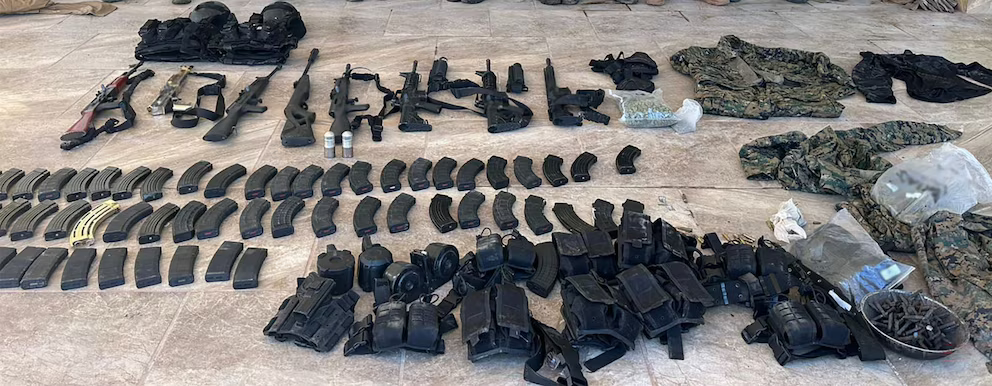
The seizure narrative is doing additional political work. When officials highlight explosives and heavy weaponry, they are not only describing evidence, they are building a legitimacy shield against criticism that enforcement is either performative or selective. It is a way to argue that the state is confronting actors whose arsenals threaten public order at a level that justifies militarized engagement. At the same time, such inventories raise uncomfortable questions about supply chains, because sophisticated weapons and explosives do not appear in isolation. They imply procurement routes, intermediaries, and points of leakage that are rarely addressed in the same public breath.
International frameworks help explain why these episodes persist even after tactical wins. UNODC has long documented how illicit markets adapt when enforcement tightens, shifting routes, pricing risk, and recruiting capacity in response to pressure. Interpol has repeatedly stressed that transnational criminal ecosystems thrive on logistics, corruption vulnerabilities, and cross-border demand, not only on local firepower. In the hemispheric context, the OAS has warned that governance gaps and institutional capture can turn security operations into short-term oscillations unless paired with durable justice capacity. Those lenses do not excuse violence, but they clarify the pattern: arrests and seizures can disrupt a cell, yet the market logic and network resilience often remain.
That is why the operational headline should be read alongside the institutional challenge. Sustained security requires prosecution pathways, credible detention processing, and intelligence continuity that survives political cycles, otherwise confrontations become episodic punctuation rather than strategic turning points. It also requires careful public communication, because exaggerated claims invite backlash while understated claims erode trust. The state is attempting to thread that needle by providing concrete figures, nine detainees, one deceased aggressor, plus seized assets, while keeping the broader narrative framed as crime prevention rather than open conflict. This is a rhetorical posture aimed at preserving governability, even as the facts look increasingly like irregular warfare.
For residents, the reality is less abstract. A clash involving federal forces, heavy weapons, and explosives signals that the boundary between organized crime and paramilitary behavior has blurred in practical terms, regardless of what labels officials prefer. It also reinforces a deeper social cost: every high-intensity encounter raises the risk of fear-driven economic slowdown, reduced mobility, and normalized emergency routines, which can quietly reshape civic life. Public trust is influenced not only by whether the state arrests suspects, but by whether daily life becomes predictably safer afterward. When it does not, the perception of control fractures even if enforcement statistics improve.
The arrests in the Culiacán area will now move into a second arena where credibility is tested differently: legal process. If prosecutors can convert detentions into durable cases, the operation gains strategic value beyond the immediate clash. If cases weaken, suspects return, or violence migrates, the incident becomes another loop in a cycle that the public has learned to distrust. The state’s strongest argument is the combination of rapid response and tangible seizures, but its real victory condition is institutional follow-through that outlasts the firefight.
La verdad es estructura, no ruido. / Truth is structure, not noise.