

 Phoenix 24
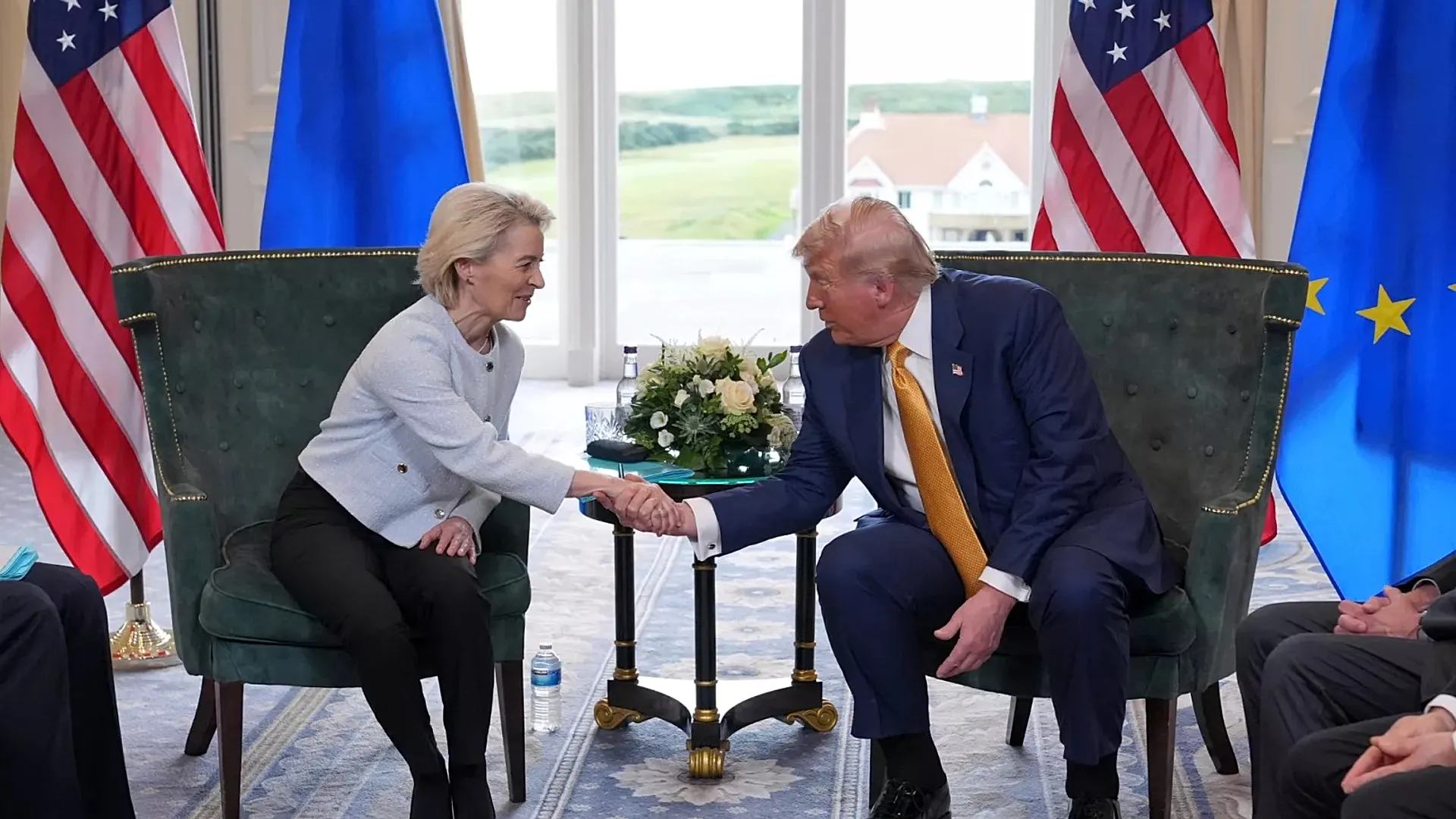
Economic leverage exposes alliance fault lines.
Brussels, January 2026.
Members of the European Parliament moved to freeze the ratification process of the European Union United States trade agreement after what they described as tariff threats that crossed from commercial negotiation into political coercion. The decision reflects a growing unwillingness within EU institutions to separate economic policy from strategic pressure, particularly when trade instruments are used to influence sovereign or security related positions.
The trade agreement, provisionally negotiated in 2025, was already facing skepticism among European legislators who questioned its balance and long term implications. That skepticism hardened once tariff threats were linked to broader geopolitical disputes, reinforcing the perception that economic access was being leveraged to extract strategic concessions. For many lawmakers, this shifted the agreement from a technical trade framework into a test of institutional autonomy.
By halting the process, the Parliament signaled that trade liberalization cannot proceed under conditions perceived as asymmetric or coercive. The move was framed not as retaliation, but as a defensive assertion of legislative authority and rule based exchange. In this context, freezing the deal serves as a warning that economic integration remains contingent on political restraint and respect for negotiated boundaries.
The episode also exposes deeper structural tension within the transatlantic relationship. Trade has increasingly become an extension of strategic competition rather than a neutral domain of mutual benefit. When tariff threats are deployed alongside diplomatic pressure, they erode the separation between commerce and power politics that underpinned earlier phases of economic cooperation.
For Brussels, the freeze is less about immediate economic cost and more about precedent. Allowing a trade agreement to advance under overt pressure would normalize a model in which market access becomes conditional on geopolitical alignment. European institutions have spent years constructing defensive mechanisms precisely to counter that dynamic, and the current decision reflects a willingness to use them.
The reaction across member states has been cautious but supportive of the parliamentary stance. While governments remain interested in preserving transatlantic economic ties, there is growing consensus that institutional credibility requires clear limits. Trade agreements, once politicized, lose their stabilizing function and become instruments of volatility.
Beyond Europe and North America, the signal is being read carefully. Other regions observe how advanced economies respond when trade and security are deliberately intertwined. The outcome will influence perceptions of whether multilateral trade frameworks can withstand strategic pressure in an increasingly fragmented global system.
What makes this episode significant is not the suspension itself, but the logic behind it. The Parliament is asserting that economic openness cannot survive if it is subordinated to episodic leverage. In doing so, it reframes the debate from one of negotiation tactics to one of structural governance.
The freeze does not close the door on a future agreement. It conditions it. Any resumption will require not only technical adjustments, but a recalibration of how power is exercised within economic relationships. Until that occurs, the agreement remains paused, not as a procedural delay, but as a political boundary.
La verdad es estructura, no ruido. / Truth is structure, not noise.