

 Phoenix 24
When rescue gives way to accountability.
Adamuz, January 2026.
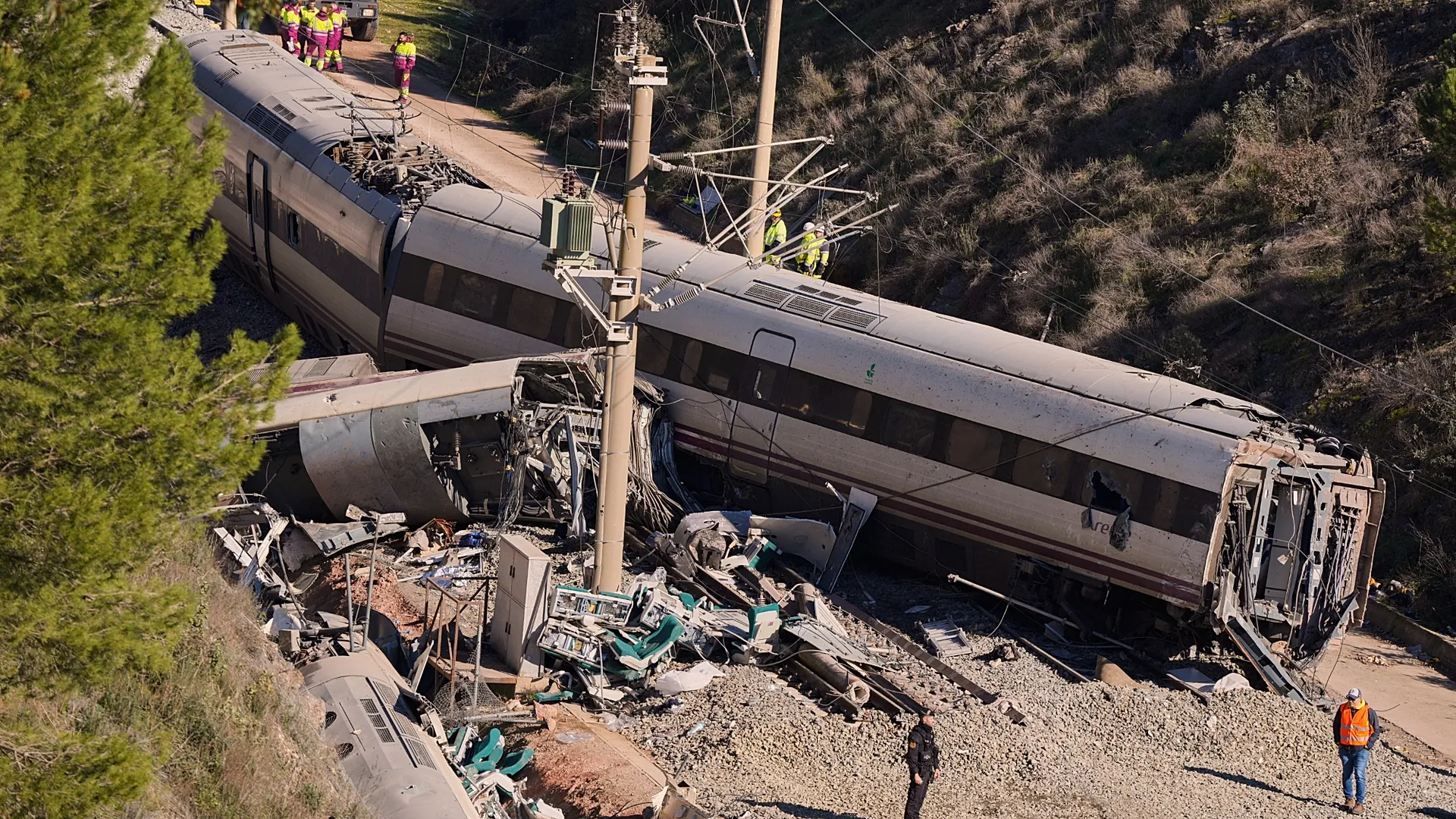
Spanish authorities confirmed that two passengers remain missing following the derailment of an Alvia train near the town of Adamuz, as recovery operations move into what officials describe as the final and most complex stage. The statement, issued by the Guardia Civil, reframes the incident from an emergency response to a recovery and investigative process, where precision replaces urgency and institutional responsibility comes into focus.
The crash site has become a zone of methodical extraction rather than rescue. Specialized units continue to work through severely damaged railcars, where structural deformation and debris accumulation complicate access. The remaining missing persons are believed to be trapped within sections of wreckage that require controlled dismantling, a process that prioritizes forensic integrity alongside humanitarian closure. At this stage, speed is no longer the primary metric. Accuracy is.
The scale of the incident has already positioned it among the most severe rail tragedies in recent Spanish history. Dozens of fatalities and a high number of injuries have placed sustained pressure on emergency services, forensic teams, and judicial authorities. As identification processes near completion, the unresolved status of the final victims underscores the prolonged human dimension of large scale infrastructure failures, where impact persists long after the initial shock subsides.
Institutionally, the Guardia Civil’s role has expanded from immediate coordination to evidentiary stewardship. Each extraction now carries legal weight, feeding into parallel inquiries examining mechanical integrity, operational conditions, and infrastructure oversight. The transition from rescue to investigation is not procedural formality. It marks the moment when accountability mechanisms begin to activate.
Public attention has shifted accordingly. Families remain present near controlled perimeters, supported by psychological services as uncertainty narrows but does not disappear. Their presence exerts a quiet pressure on authorities to conclude recovery efforts without compromising transparency. In such contexts, the handling of the final phase often defines public trust more than the speed of the initial response.
The derailment has also reopened broader debates about rail safety and systemic risk management. High speed rail systems operate on assumptions of redundancy, monitoring, and predictive maintenance. When those systems fail, the question is rarely confined to a single fault. It extends to inspection regimes, decision chains, and the capacity of institutions to anticipate low probability, high impact scenarios. Adamuz now joins a growing list of cases prompting that reassessment.
What distinguishes this moment is its liminal character. The emergency is officially over, yet closure remains incomplete. The search for the last missing passengers is as much about restoring dignity as it is about concluding an operation. Until that task is finished, the incident resists archival distance and remains an open wound within the public record.
As recovery teams continue their work, the outcome will shape more than casualty figures. It will influence judicial proceedings, policy reviews, and the credibility of safety assurances across the rail network. In disasters of this magnitude, the final steps often carry disproportionate symbolic weight. They demonstrate whether institutions can sustain rigor once attention fades.
The Adamuz derailment is no longer a breaking event. It is a structural test. How it concludes will determine whether the response is remembered as merely reactive or as a foundation for systemic learning in the aftermath of irreversible loss.
La verdad es estructura, no ruido. / Truth is structure, not noise.