

 Phoenix 24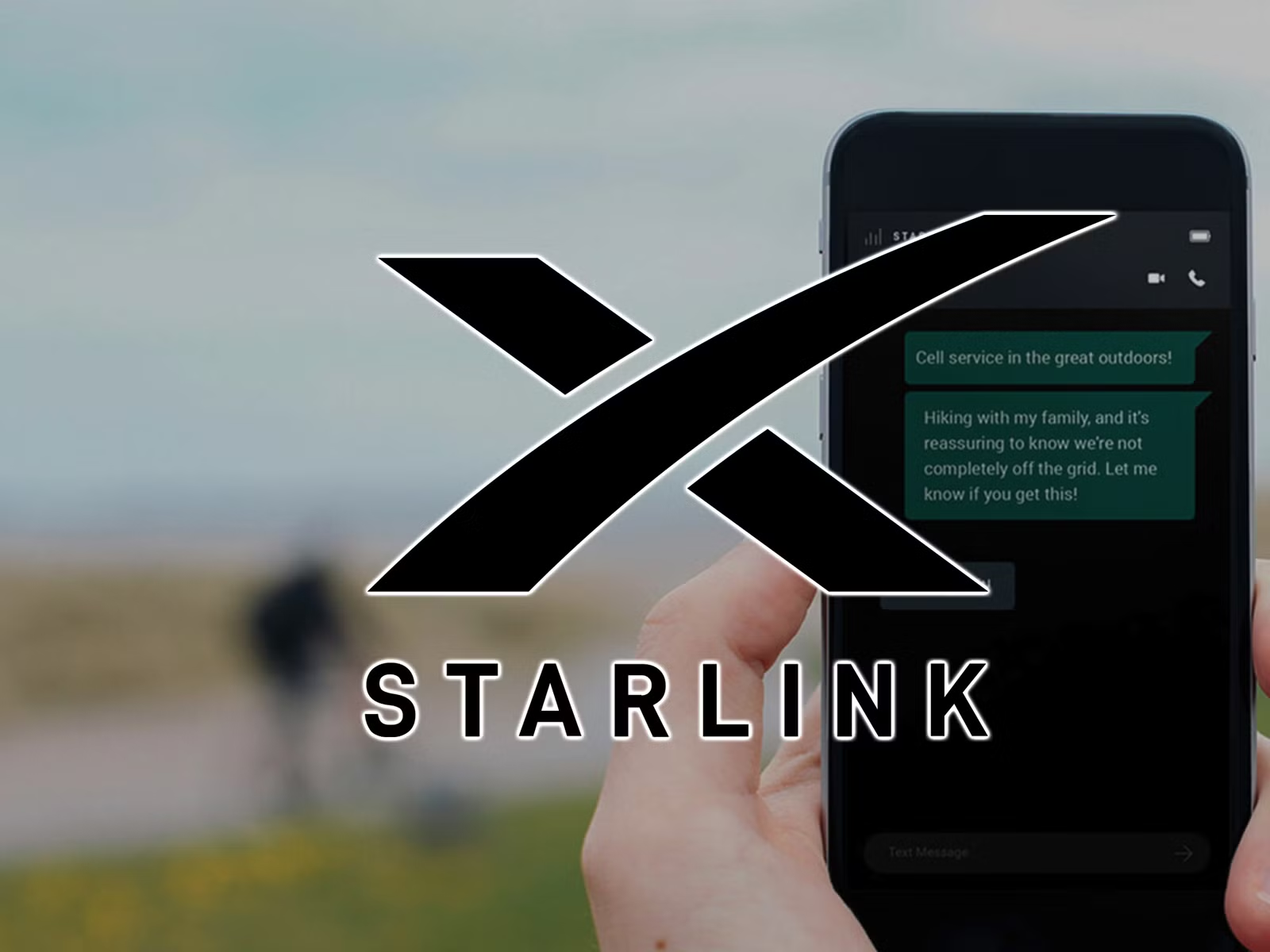
When satellite internet moves from fixed terminals to handheld devices, the implications extend beyond coverage maps into how people connect, communicate and compete in a shifting digital ecosystem.
Madrid, January 2026. Starlink, the satellite internet service developed by a private space-technology company, has launched its mobility-enabled network officially in Spain, marking a major step in expanding direct-to-device satellite connectivity. The new service allows mobile phones to connect directly to orbiting satellites without relying on terrestrial cell towers. This innovation aims to provide coverage in rural, remote and underserved areas, but also introduces new dynamics for operators, regulators and consumers in a market long defined by ground-based infrastructure.
The mobile satellite option works by using a combination of low-Earth-orbit satellites and advanced handset software to establish connectivity where conventional cellular networks are weak or nonexistent. Users with compatible devices will be able to send and receive voice, text and data directly via satellite, bypassing the need for nearby cell towers. This functionality is particularly relevant in expansive rural regions, mountainous terrain and maritime zones, which have historically posed challenges for continuous coverage.
On the technical side, the system integrates space-based relay with terrestrial network handoff. When a user’s phone detects weak terrestrial signals, it can automatically switch to the satellite link, which maintains a direct connection with satellites overhead. The satellite network employs adaptive routing, allowing devices to maintain communication even as satellites move across orbital paths. This design contrasts with traditional geostationary systems by reducing latency and improving responsiveness, factors that are central for real-time applications.
Regulators and industry observers note that the service has required significant coordination with national authorities to ensure compliance with spectrum allocation, interference management and mobile service standards. Implementing satellite-to-mobile connectivity raises questions about spectrum sharing among terrestrial operators, emergency communications, and existing satellite services. Authorities in Spain have worked with the provider to define operational parameters, usage guidelines and safety protocols to minimize conflicts and maximize public benefit.
From a market perspective, the arrival of satellite-based mobile services introduces competitive pressure on traditional mobile network operators. These companies have built extensive ground networks over decades, but they now face a new paradigm where coverage is less tied to physical infrastructure. Operators may respond by enhancing their own service offerings, forming strategic partnerships, or investing in hybrid models that integrate satellite connectivity into their portfolios.
For users, the experience promises greater continuity of service, particularly in areas where connectivity has been unreliable. Hikers, remote workers, emergency responders and travelers could gain direct access to phone services even far from conventional networks. At the same time, device manufacturers will need to ensure that mobile handsets support the necessary hardware and software for seamless switching between terrestrial and satellite modes. Compatibility testing, firmware updates and handset certification are all part of the rollout process.
Concerns about service quality and capacity have emerged in discussions among telecom analysts. Satellite networks have finite bandwidth, and accommodating a large number of mobile users simultaneously can strain resources. The provider has indicated plans to expand its constellation and upgrade ground stations to support increased loads, but capacity management and prioritization will remain central topics as adoption grows.
The service also intersects with emergency and public safety systems. In situations where terrestrial infrastructure is damaged or overloaded — such as natural disasters or large-scale events — satellite mobile connectivity could offer a critical fallback. Authorities are evaluating how such systems might be integrated into national emergency communication frameworks, ensuring that first responders and affected populations have access to communication channels when traditional networks fail.

Cost considerations are also important. Satellite services typically involve higher operating expenses compared with terrestrial networks, which could translate into different pricing models for users. Subscription plans, data limits and tiered access options will influence adoption rates and user behavior. Analysts anticipate that initial uptake may be strongest among specialized use-cases before broader consumer adoption occurs.
From a regulatory standpoint, mobile satellite services challenge existing frameworks that have traditionally separated terrestrial and satellite telecommunications. Policymakers will need to consider licensing, cross-border interoperability, privacy protections and international coordination as similar services expand globally. Spain’s early adoption provides a testing ground for how these issues might be addressed in other markets.
The arrival of satellite mobile connectivity also resonates with broader trends in global telecommunications. Demand for always-on connectivity is rising as digital services become integral to everyday life. Technologies that can bridge gaps in coverage while maintaining performance and reliability are increasingly valued, particularly in contexts where economic and social inclusion depend on access to information.
Critics caution that satellite mobile should not be seen as a wholesale replacement for terrestrial networks, but rather as a complementary layer that enhances resilience and reach. Maintaining a balanced ecosystem, where multiple technologies support different needs and environments, is a central theme in industry planning.
As Starlink’s mobile service unfolds in Spain, observers will be watching how users adopt the technology, how costs evolve and how the competitive landscape responds. The expansion marks not just a technical milestone, but a shift in how connectivity is conceptualized: not as a set of fixed points on a map, but as a fluid and continuous resource that follows users wherever they go.
Information that anticipates futures.
Información que anticipa futuros.