

 Phoenix 24
Biometrics are becoming infrastructure.
San Francisco, May 2026. Keyring is emerging as one of the most important invisible systems inside modern smartphones because it stores and protects the credentials that allow users to unlock devices, authorize payments, access apps and validate identity without repeatedly exposing passwords. Its relevance grows as phones become not only communication tools, but personal identity terminals connected to banks, cloud services, health apps and workplace platforms.
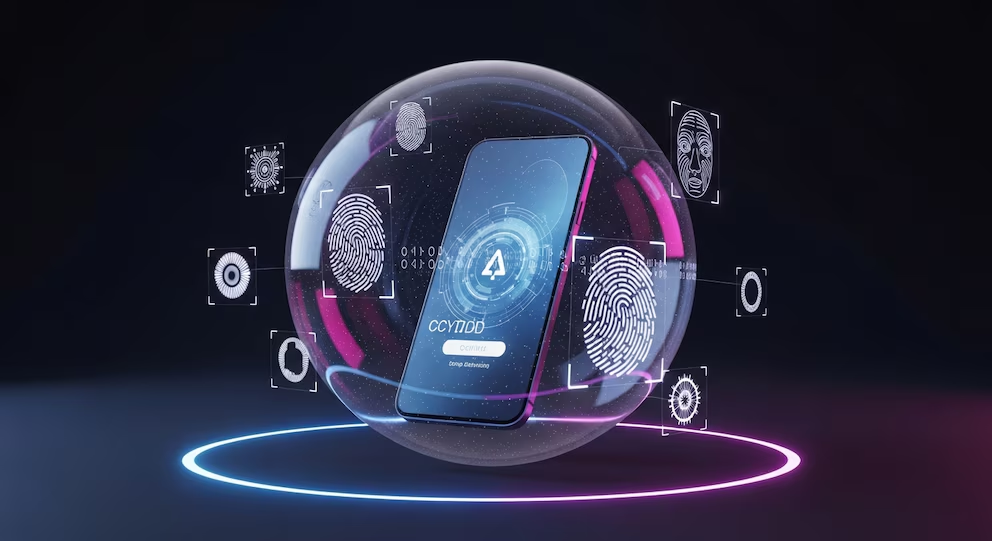
The concept is simple, but strategically powerful. Instead of leaving sensitive data scattered across applications, keyring systems isolate credentials, encryption keys and biometric references inside protected areas of the device. Fingerprints and facial recognition data are not supposed to circulate openly through apps; they are transformed into secure mathematical references and kept inside hardware-backed environments designed to resist extraction.

This architecture matters because biometric data cannot be changed like a password. If a password leaks, it can be replaced. If a fingerprint or facial pattern is compromised, the damage becomes permanent and deeply personal. That is why keyring systems operate as a layer of containment between the user’s body, the operating system and the applications requesting authentication.
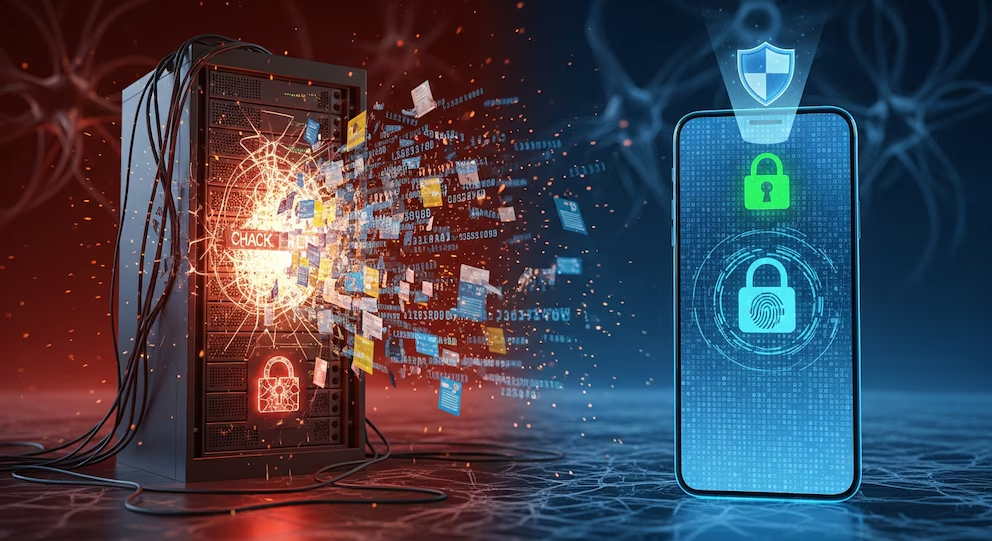
The deeper issue is trust. Users increasingly authorize their phones to mediate money, identity, memory, mobility and private communication, but most people never see the security machinery that makes this possible. Keyring represents that hidden pact: the device promises convenience while silently managing some of the most sensitive markers of personal existence.

For the technology industry, the challenge is no longer only to make authentication faster. It is to make invisible security understandable enough for people to trust it without surrendering control. In an era of biometric normalization, the safest phone is not the one that knows more about the user, but the one that knows how to protect what cannot be replaced.
La verdad es estructura, no ruido. / Truth is structure, not noise.