

 Phoenix 24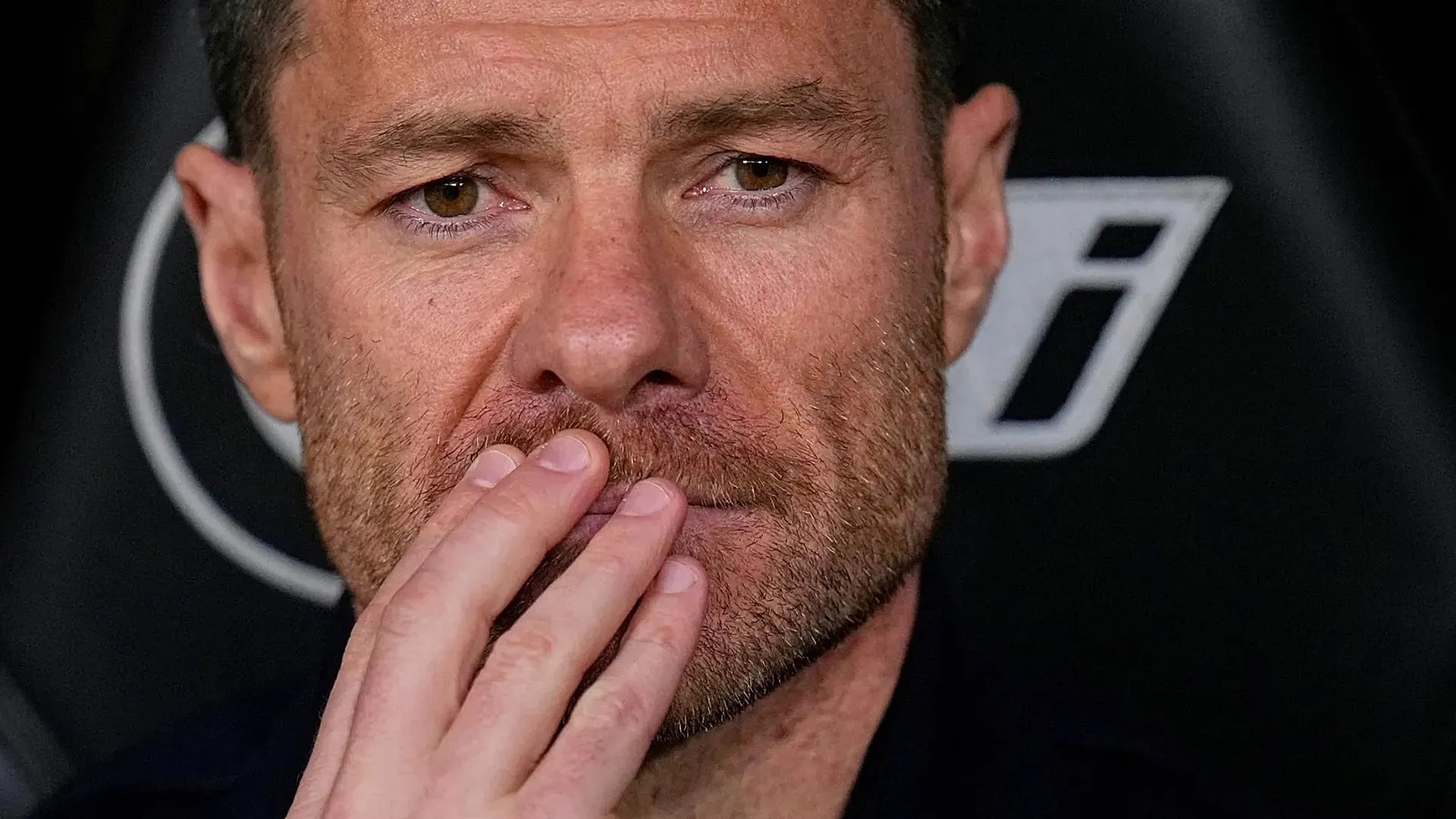
At the Bernabéu, failure is never slow: it falls suddenly, in front of everyone, with the scoreboard still warm.
Madrid, January 2026. Real Madrid announced the departure of Xabi Alonso as first-team coach after barely seven months in charge and confirmed that Álvaro Arbeloa will assume the role immediately. The decision comes under maximum pressure, fueled by the accumulation of irregular results and, above all, by the political and symbolic impact of a recent defeat against the rival that defines the club’s institutional self-esteem. In an organization where excellence is not a goal but a requirement, defeat is not processed as a sporting stumble: it is read as a signal of loss of control.
Alonso’s exit closes a chapter that began with promise. His arrival, driven by high expectations and by his prestige as a rising coach, offered a perfect narrative for contemporary Madridismo: a former player with tactical intelligence, modern credentials, and white blood, capable of carrying the weight of the most demanding bench in European football. But real football rarely respects scripts. As the season progressed, the team’s production did not consistently translate into results, and the emotional curve began to bend. What in other clubs would be a natural period of adjustment, in Real Madrid is perceived as vulnerability.
The breaking point is rarely a single match; it is the story that activates afterward. In Madrid, losing is serious, but losing in a high-visibility scenario, with global resonance and a crisis reading, is lethal. The recent defeat against Barcelona in a final that magnifies rivalry worked as a catalyst. Not because one trophy alone determines a project’s fate, but because in this club finals are thermometers of legitimacy. When the team stops transmitting control, the institution acts to recover it, even at the cost of cutting processes before they mature.
The replacement is also a message. Álvaro Arbeloa does not arrive as an external market technician or as a laboratory bet. He arrives as a man of the house, formed within the internal structure, with experience in youth categories and with a cultural understanding of what “being Real Madrid” means beyond schemes. In the short term, this profile has a clear strategic utility: it decompresses the environment, reduces institutional friction, and buys time. The club does not only change the coach; it changes the climate.
Arbeloa also assumes with a psychological advantage. He does not arrive with the grand promise of reinventing the team, but with the practical expectation of stabilizing it. In high-pressure environments, that matters. The dressing room perceives the change not as ideological rupture, but as a reset of discipline and order. In a club where internal leadership of the squad weighs as much as the tactical board, the new coach will need less to explain who he is and more to show what he controls.
Alonso’s departure, for its part, leaves a structural lesson about the Madrid ecosystem. The Real Madrid bench does not reward only tactical talent. It demands political management, ego administration, media reading, and resilience to noise. A coach may have advanced ideas, but if the team does not translate those ideas into timely victories, the system expels him. The institution operates with a logic of conditional continuity: you can build, as long as you win. If not, the hierarchy of the project is reordered with surgical brutality.
In sporting terms, the change seeks to impact three layers. First, the emotional layer: recover confidence, lower anxiety, and reorder the daily authority of the dressing room. Second, the tactical layer: simplify automatisms, prioritize solidity, and reduce unforced errors, especially in matches of maximum exposure. Third, the calendar layer: cross key weeks with a team that does not feel in permanent transition. In elite football, transition is a luxury that only exists when the scoreboard allows it.
The decision also opens a larger debate about sporting governance in hypercompetitive clubs. How much real time does a coach have to impose a model when the environment demands immediate results? How much tolerance is there for trial and error in a club that measures its identity in titles? Real Madrid answers with its historical practice: time is bought with victories. Without victories, there is no time. It is a simple and cruel equation.
Arbeloa receives a team with pressure and with opportunity. Pressure because any stumble will be read as confirmation of chaos. Opportunity because a change of command can reactivate dormant pieces, reorder roles, and above all, release competitive energy. The challenge will be to sustain the balance between authority and adaptation. He cannot limit himself to “being from the club.” He will have to win quickly, manage the environment, and give clear signals of command. In Madrid, the narrative always ends up asking for the same thing: control.
The club, in the end, does not only decide who coaches. It decides what story it wants to tell in the next stretch of the season. With Alonso, the story was project. With Arbeloa, the story becomes urgency again.
Behind every datum, there is an intention. Behind every silence, a structure.