

 Phoenix 24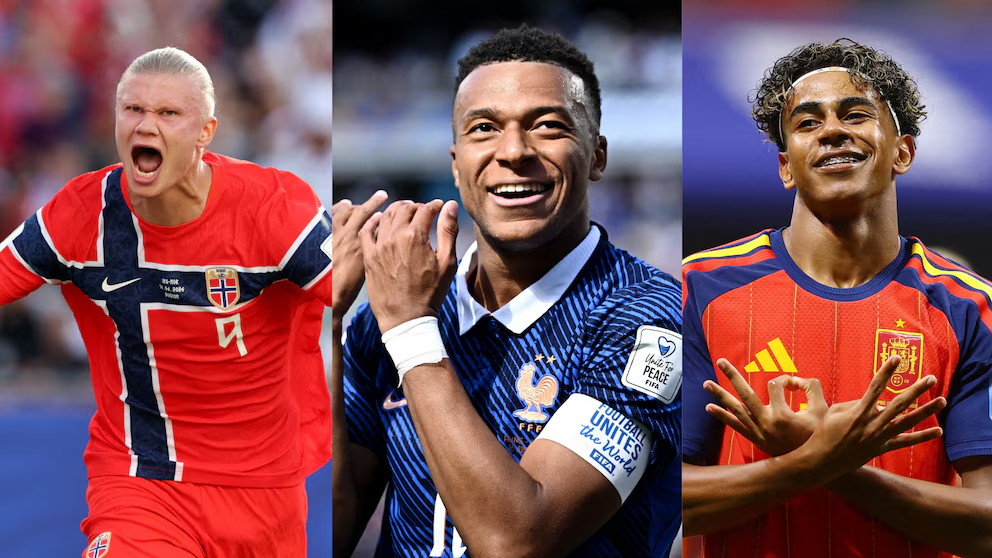
Transfer valuations expose football’s widening economic imbalance.
BUENOS AIRES, Argentina | June 2026
The 2026 FIFA World Cup has produced 11 group-stage matches in which the estimated market value of one individual player exceeds the valuation of the opposing team’s entire squad. The comparison, based on figures compiled by Forbes, reveals the enormous concentration of financial power around a small group of elite footballers. Erling Haaland, Lamine Yamal and Kylian Mbappé generate the most dramatic disparities. The numbers do not predict results, but they illustrate the economic distance separating global superstars from several national teams.
The most extreme comparison involves Haaland and Iraq. The Norwegian striker is valued at approximately $229 million, while Iraq’s complete squad is estimated at around $24 million. Haaland alone is therefore worth about 9.4 times more than the entire Iraqi team. No other matchup in the list presents a larger proportional difference.
Mbappé also faces Iraq with an extraordinary individual advantage in valuation. The French captain is estimated at $206 million, approximately 8.5 times the value assigned to the Iraqi squad. His figure reflects age, performance, commercial importance, contractual position and long-term sporting potential. Iraq’s lower total, by contrast, reflects a roster largely operating outside Europe’s most valuable leagues.
Lamine Yamal appears twice among the 11 matches. The Spanish attacker carries an estimated value of $229 million, matching Haaland at the top of the tournament’s individual rankings. Against Cape Verde, whose squad is valued at roughly $62 million, Yamal’s figure is approximately 3.7 times greater. Against Saudi Arabia, valued at $47 million, the gap rises to about 4.9 times.
The scale of Yamal’s valuation is especially striking because of his age. His price is based not only on current performance but also on the expectation that he could remain among football’s leading players for more than a decade. That future potential increases his theoretical transfer value beyond that of experienced players with shorter careers ahead. A national squad composed of less commercially prominent footballers may therefore be collectively valued below one teenage star.
Argentina’s Julián Álvarez creates another major contrast in the match against Jordan. His estimated value of $115 million is almost five times greater than Jordan’s squad valuation of approximately $23 million. The difference reflects his experience at the highest club and international levels, including major titles and consistent production in elite competitions. Jordan’s collective strength cannot be reduced to its transfer value, but the comparison demonstrates the different economic environments surrounding the two teams.
England midfielder Jude Bellingham is valued at approximately $149 million, compared with about $40 million for Panama’s entire squad. His individual figure is therefore around 3.8 times higher. Bellingham’s status comes from his performances, age, leadership role and importance to one of the world’s most commercially powerful clubs. Panama approaches the match with a far smaller financial profile but with the tactical cohesion available to a national team.
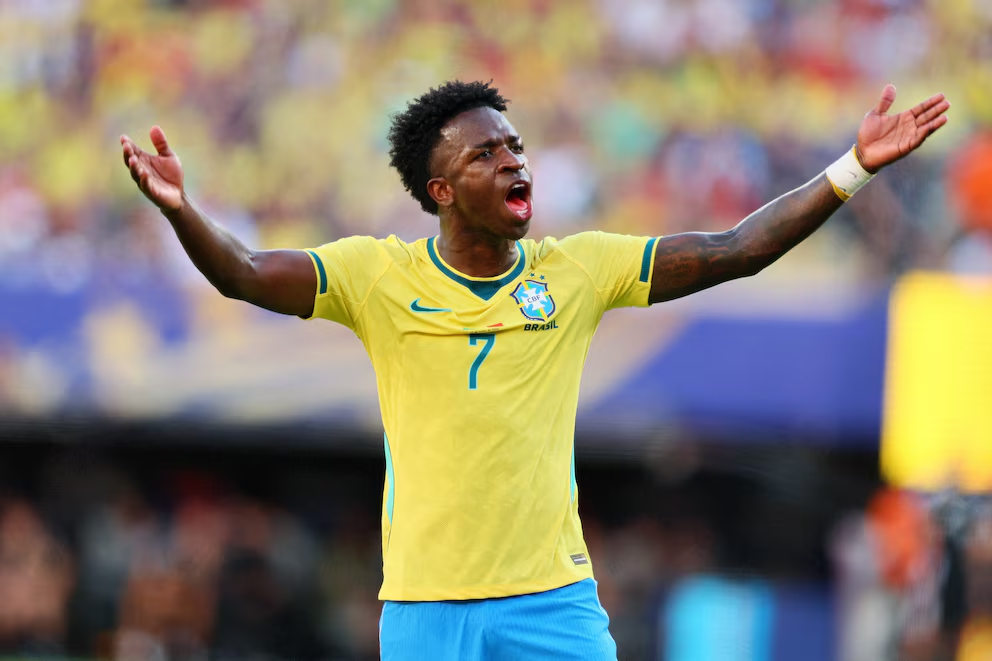
Vinícius Júnior also exceeds an opposing squad by himself. The Brazilian forward is valued at around $160 million, while Haiti’s complete roster is estimated at $64 million. His figure is approximately two and a half times larger. The comparison highlights how a player competing at the highest level of European club football can carry a valuation far beyond teams whose members are spread across less lucrative competitions.
Haiti appears again in its match against Morocco. Achraf Hakimi is valued at approximately $92 million, surpassing Haiti’s $64 million squad total by a narrower margin of around 1.4 times. Hakimi’s value reflects his speed, versatility, experience and status as one of the leading full-backs in international football. This is the smallest proportional gap among the 11 identified fixtures.
Belgium winger Jérémy Doku appears in two separate comparisons. His estimated $86 million valuation exceeds Iran’s squad total of approximately $37 million by around 2.3 times. Against New Zealand, whose team is valued at about $39 million, the difference is roughly 2.2 times. Doku’s explosive attacking profile and position within elite European football sustain a valuation higher than either complete national roster.
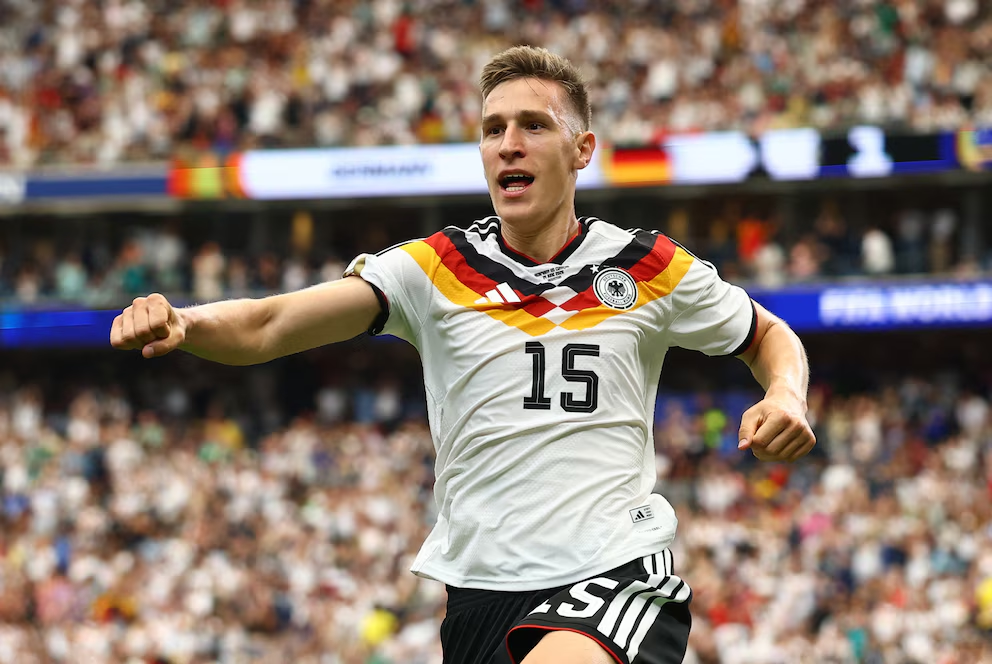
Portugal midfielder João Neves is valued at approximately $160 million, compared with $98 million for Uzbekistan. His individual figure is about 1.6 times greater than the opposing squad’s combined estimate. The gap is less dramatic than those involving Haaland or Mbappé, but it remains remarkable that one player can financially outweigh all 26 opponents. It also reflects how rapidly young midfielders can gain market value after succeeding at major European clubs.
These figures should not be confused with salaries, career earnings or actual transfer fees. Market valuations are estimates influenced by age, contract duration, performance, position, injury history and expected resale potential. A player may earn enormous income while carrying a lower transfer value because of age or contractual circumstances. Cristiano Ronaldo and Lionel Messi, for example, remain among the tournament’s highest-paid athletes without leading the market-value ranking.
The distinction explains why younger stars dominate these comparisons. Yamal, Haaland, Mbappé, Bellingham, Neves and Álvarez combine elite performance with many potential seasons ahead. Clubs would be purchasing both immediate quality and future value. Older legends may generate greater commercial income while offering less theoretical resale potential.
Economic superiority also does not guarantee victory. Football depends on organization, defensive discipline, physical condition, tactical execution and the ability to convert limited opportunities. National teams with modest valuations can frustrate or defeat wealthier opponents because transfer estimates do not measure collective understanding. The World Cup repeatedly produces results that challenge financial expectations.
The list nevertheless reveals a structural imbalance within international football. Players concentrated in Europe’s richest clubs operate inside a transfer economy reaching hundreds of millions of dollars. Many national teams draw from leagues with smaller revenues, lower salaries and less global exposure. When those worlds meet at the World Cup, the financial contrast becomes visible within the same stadium.
The 11 matches therefore offer two parallel stories. One concerns extraordinary individual talent and the enormous value assigned to football’s youngest stars. The other concerns national teams attempting to compete collectively against opponents whose leading player is worth more than their entire roster. The tournament will determine whether sporting organization can overcome economic distance.
Football remains unpredictable when collective strength challenges market price. / El futbol conserva su imprevisibilidad cuando la fuerza colectiva desafía al precio de mercado.