

 Phoenix 24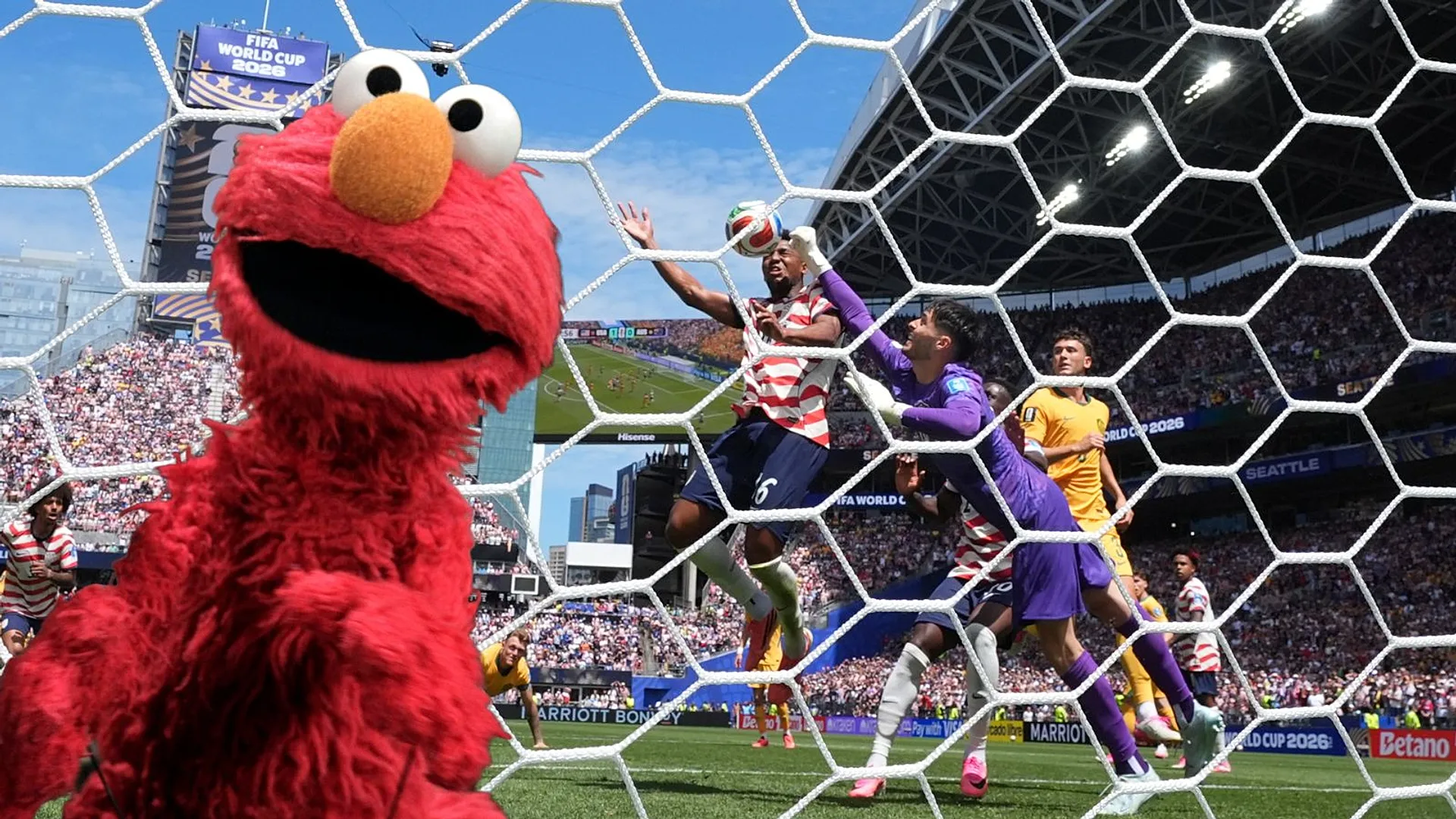
A playful patriotic message exposed a deeper political contradiction.
WASHINGTON, United States | June 2026
Elmo has become the unexpected center of a political controversy after publicly supporting the United States national team during the 2026 FIFA World Cup. The beloved Sesame Street character appeared wearing a Team USA jersey and clarified that he wanted the American side to win. The official social media account of House Republicans responded by calling him a certified patriot. That celebratory reaction quickly drew accusations of hypocrisy because Republican lawmakers had previously supported major reductions in federal funding connected to public broadcasting.
The video was designed as a humorous response to an earlier sports dispute. Before the NBA Finals, Elmo had wished both the New York Knicks and the San Antonio Spurs good luck, saying he hoped everyone enjoyed the game. Knicks supporters reacted angrily because they expected the character, whose fictional home is associated with New York, to show exclusive loyalty. Elmo’s World Cup message therefore emphasized that he supported Team USA while still loving everyone.
The distinction was presented in the character’s familiar language of kindness and inclusion. Elmo wanted to demonstrate national support without treating other teams or their fans as enemies. He even asked viewers not to turn the statement into another controversy. The appeal failed almost immediately once the message entered the highly polarized environment of American political communication.
House Republicans used the video to celebrate a simple patriotic image. Their response suggested that Elmo’s support for the national team represented the kind of unifying national pride political figures often promote during major sporting events. Critics, however, recalled that most Republican lawmakers had voted in 2025 for legislation that removed previously approved funding from the Corporation for Public Broadcasting. Only a small number of Republicans opposed that measure.
President Donald Trump had also issued an executive order directing the federal government to end direct and indirect support for PBS and National Public Radio to the maximum extent permitted by law. The administration argued that the organizations produced biased and partisan programming. Public broadcasting supporters rejected that characterization and warned that the cuts would particularly damage local stations, educational programming and access in rural communities. The confrontation transformed funding policy into another cultural conflict.
The controversy surrounding Elmo does not mean that Sesame Street depends exclusively on federal financing. The program is produced by Sesame Workshop, an independent nonprofit organization that has worked with commercial distributors, donors and public broadcasters. Its latest season is available globally through Netflix while new episodes continue to appear free of charge on PBS stations and PBS Kids platforms in the United States. The arrangement combines private financing with the universal access traditionally associated with public television.
PBS nevertheless remains central to the program’s history and public mission. Sesame Street first appeared on public television in 1969 and became one of the most influential educational programs ever created for children. Its lessons have addressed literacy, numbers, emotional development, cooperation and social differences. Generations of American families encountered Elmo, Big Bird and other characters through free television rather than a paid subscription.
That history explains why the Republican response generated such strong criticism. Social media users argued that politicians were attempting to claim the cultural popularity of a character while weakening the system that helped make him accessible to millions of children. The charge was not that every lawmaker personally opposed Elmo or Sesame Street. It was that public praise appeared disconnected from the financial decisions affecting the institutions carrying the program.
Republicans have defended their position by separating individual programs from the broader public broadcasting structure. Their argument is that popular educational content can survive through private agreements, charitable support and commercial platforms without requiring taxpayer funding. They also maintain that federal subsidies should not support news organizations they consider politically biased. Under this view, praising Elmo while cutting public broadcasting funds is not necessarily contradictory.
Opponents respond that this distinction overlooks how public media actually operates. Federal resources are distributed through a system that supports local stations, technical infrastructure and programming availability rather than simply transferring money to one famous television show. Smaller communities may not have enough advertising revenue or private philanthropy to maintain the same service. Removing funding can therefore affect educational access even when major programs find alternative commercial partners.
The Netflix agreement provides Sesame Street with broad international reach, but it does not eliminate the importance of free distribution. A subscription platform and a public television service perform different functions. Netflix can finance production and reach paying audiences around the world, while PBS ensures that American families can watch new episodes without a commercial subscription. The partnership demonstrates that private and public models can operate together rather than requiring one to replace the other.
Elmo’s message also illustrates the difficulty of maintaining politically neutral cultural spaces. Supporting a national football team might once have seemed largely nonpartisan. In the current environment, even a children’s character can become material for ideological branding and immediate counterattack. The original joke about sports loyalty was rapidly replaced by arguments about media funding, government power and political consistency.
The debate became more visible because Team USA had started the World Cup strongly. The national team defeated Paraguay and Australia in its first two matches and prepared to face Turkey in its final group game. Elmo’s support therefore aligned with growing public enthusiasm around the tournament. House Republicans attempted to participate in that positive momentum, but the reference to public broadcasting redirected attention toward their previous votes.
The episode reveals how political communication often depends on cultural symbols that carry meanings beyond their immediate use. Elmo represents childhood, kindness, education and the long history of public television. Calling him a patriot may generate a friendly and shareable message. It also invites scrutiny when the same political organization has supported policies that threaten the ecosystem connected to that symbol.
For Sesame Street, the controversy is another example of how its characters continue to occupy a significant place in American public life. Elmo has previously been drawn into debates over health, race, emotional well-being and online behavior. His simple language allows complex social questions to become accessible, even when the character never intended to enter a political argument. The current dispute says more about adult polarization than about the content of the video.
The broader issue will continue after the World Cup ends. Public broadcasting faces questions about financing, independence and its role in an entertainment market dominated by global streaming companies. Supporters see it as essential public infrastructure, while critics consider federal subsidies outdated and politically problematic. Elmo’s brief declaration of support did not resolve that debate, but it exposed the tension between celebrating public media’s cultural products and reducing the institutions that distribute them.
Symbols become political when public praise conflicts with public policy. / Los símbolos se vuelven políticos cuando el elogio público contradice la política pública.