

 Phoenix 24
Some betrayals do not end when the traitor is caught; they end when institutions stop repeating the same mistake.
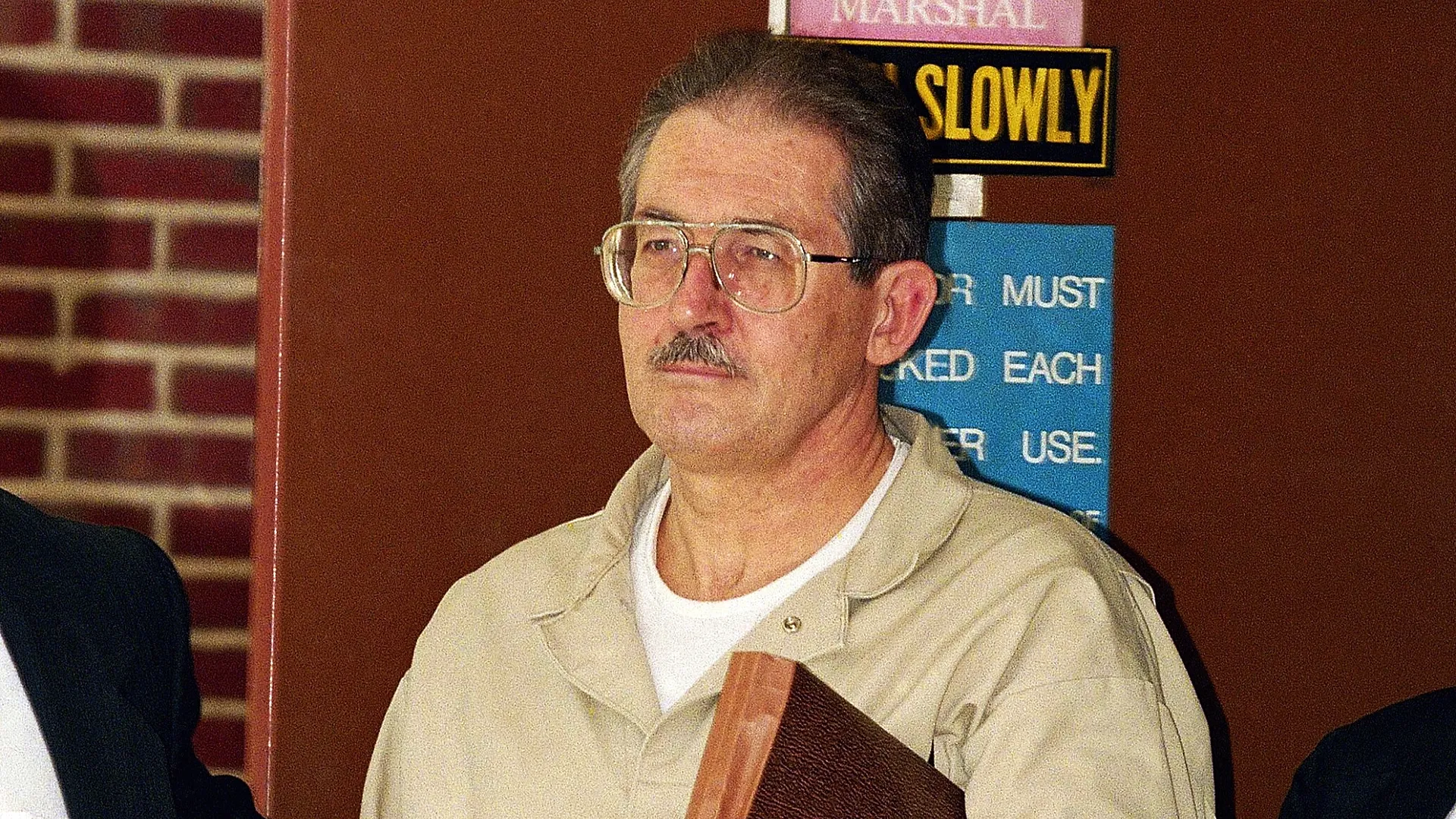
Washington, January 2026. Aldrich Hazen Ames, the former CIA officer whose espionage for the Soviet intelligence services and later for Russia detonated one of the most damaging counterintelligence failures in modern American history, has died in federal custody. The US Bureau of Prisons confirmed the death of the 84 year old inmate who had served a life sentence since the mid 1990s. With his passing, a personal story closes, but the operational damage he caused remains embedded in how intelligence agencies train, screen and distrust even their own.
Ames was not a peripheral employee. He worked inside the nerve center of Soviet and Eastern Europe targeting, a position that granted him visibility into human sources, operational tradecraft, and the mechanisms used to protect identities. That access made him uniquely lethal. When he decided to sell secrets, he did not merely pass documents. He revealed people. According to internal assessments long referenced in congressional and counterintelligence literature, the compromise of clandestine assets during that period triggered arrests across multiple theaters and shattered networks that had taken years to build.
The mechanics of his betrayal were brutally simple. He offered information to adversarial handlers, received large payments, and continued operating inside the same system that assumed he belonged. The FBI later described the case as a textbook example of insider threat dynamics, where motivation, access and weak internal friction align. Ames’s motivations were often framed as financial. That framing is important, because it removes ideological romance from the story and replaces it with a colder lesson: the most catastrophic damage can come from ordinary greed matched with extraordinary clearance.
For nearly a decade, he remained undetected. The warning signs, in retrospect, look obvious, yet at the time they were treated as tolerable anomalies. A lifestyle that outpaced official salary, sudden financial confidence, and social behavior changes did not trigger decisive intervention. The institutional failure was not a lack of suspicion. It was a failure to escalate suspicion into action. When the intelligence world speaks about Ames today, it is often less about his cunning and more about how many opportunities existed to stop him earlier.
His arrest in 1994 ended the operational phase but opened a longer era of introspection and reform. The CIA and the FBI reworked internal monitoring, reinvestigations, and financial review processes, while tightening compartmentation rules in sensitive programs. In the language of security governance, Ames accelerated a shift from trust based systems to risk based systems, where continuous evaluation became as important as the initial background check. Analysts at the International Institute for Strategic Studies have repeatedly used the case to illustrate how modern intelligence services must defend not only against foreign penetration, but against internal decay in oversight culture.
The human cost remains the darkest layer. Espionage at this level is not an abstract offense. It destroys lives in quiet ways that rarely become public. Sources disappear, families are harmed, and entire communities learn that cooperation with the West can be fatal. Even when the exact number of compromised assets is disputed across narratives, the core reality is stable: identities were exposed, operations collapsed, and the loss of trust radiated outward into allied partnerships.
That allied dimension matters. Intelligence is a coalition enterprise, especially among Western services that share collection burdens and operational risk. A breach of this magnitude forces partners to question what they shared, what was leaked, and whether their own people were endangered through another country’s failure. European security circles have treated Ames as a cautionary reference point for decades, precisely because one insider in Washington can set off consequences in capitals far beyond the United States.
There is also a contemporary resonance. The modern intelligence environment is saturated with digital exhaust, insider access to large repositories, and more complex personal pressures on staff. Yet the Ames case retains relevance because its core vulnerabilities are timeless. People can be bought. Systems can normalize anomalies. Institutions can avoid uncomfortable confrontations until damage becomes undeniable. Researchers in the Indo Pacific security community, including analysts at the Lowy Institute, have argued that the next major intelligence catastrophe is more likely to mirror Ames than to resemble a cinematic cyber raid, because it will emerge from access granted, not access stolen.
Ames died with his sentence unaltered, a fact that will satisfy those who view the case as a rare instance of accountability matching the scale of betrayal. Still, his death does not resolve the deeper question that the case imposed on democratic intelligence services: how to preserve secrecy without becoming blind to what secrecy enables. In the end, his legacy is not the money he took or the presidents he embarrassed. It is the institutional scar that forced a permanent change in how trust is measured inside the secret state.
Hechos que no se doblan.
Facts that do not bend.